About Buteo polyosoma (Quoy & Gaimard, 1824)
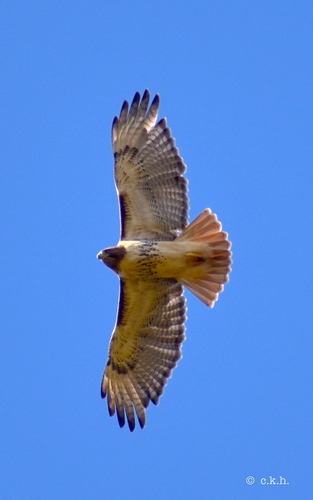
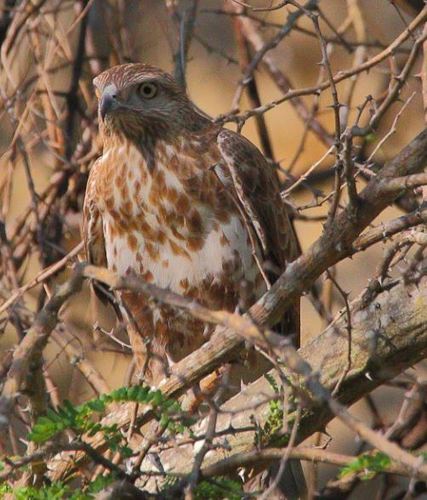
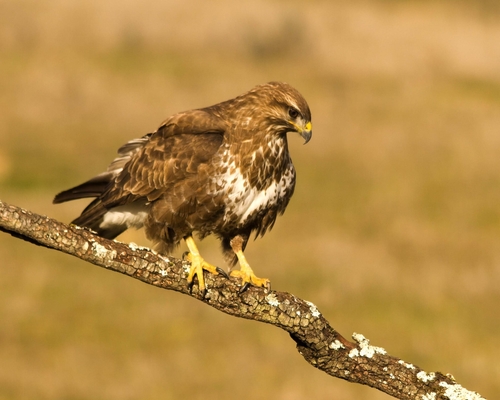
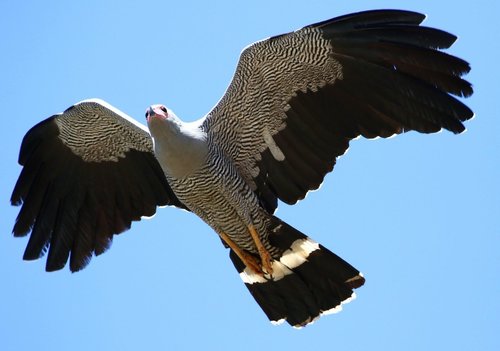
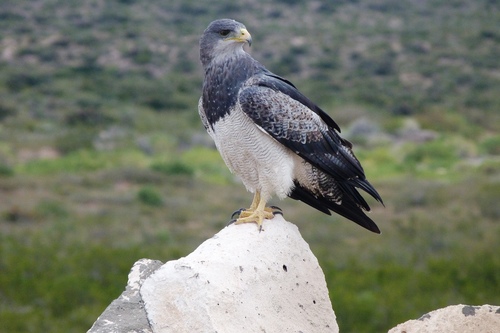
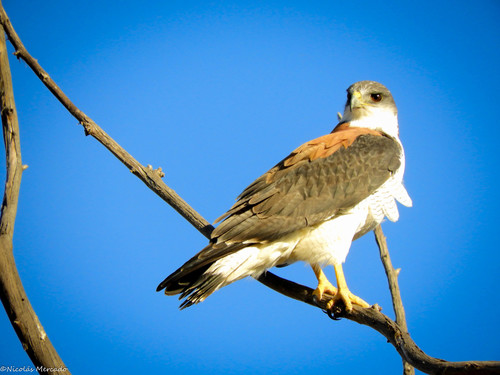
The variable hawk (scientific name Buteo polyosoma (Quoy & Gaimard, 1824)) truly lives up to its common name, as both sexes of the species appear in multiple different plumage morphs. All adult variable hawks share a few consistent traits: they have a white tail with a contrasting black subterminal band, and grey wings barred dark. When seen from below in flight, the flight feathers of the wings appear whitish with fine barring and a broad black tip. The rest of the bird's plumage ranges in color from very dark grey to whitish, and some individuals have reddish-brown coloration on their underparts. Females usually have a reddish-brown back, a trait that most males lack, though at least some males do have this colored back. The taxon exsul from the Juan Fernández Islands is far less variable than the rest of the species; adult individuals of both sexes are whitish below and grey above. At least 27 distinct adult plumages are known for this species, which is possibly the highest number of plumage types recorded for any raptor. The widespread red-tailed hawk and Eurasian buzzard are also noted for their plumage variation, but their variation forms a more uniform spectrum across their ranges. There is no link between variable hawk plumage morphs and morphometric traits, and only very minor geographic variation in plumage exists. Variable hawks live in open habitats across all elevations. The red-backed race of variable hawk occupies the widest range of habitats of any race of the species. Its habitat includes areas above the tree line in mountains, Pacific coastal foothills, Patagonian steppes, agricultural areas, and the edges of river gallery forests, beech woods, and humid premontane and lowland forests. Though this race is often the most likely to be found in lowlands, it is still uncommon below an elevation of 500 m, and can be found at elevations up to 3,000 m. The Juan Fernandez race lives on volcanic slopes and barren grazed grasslands across all elevations of the Juan Fernández Islands. The Puna race is often a common raptor in areas above tree line in páramo and puna habitat, and occurs at higher elevations (over 5,000 m) than almost any other raptor. Smaller numbers of the Puna race may visit mountain scrub and stunted Polylepis woodland at elevations as low as 900 m, but they rarely go below 2,900 m.