About Bursera microphylla A.Gray
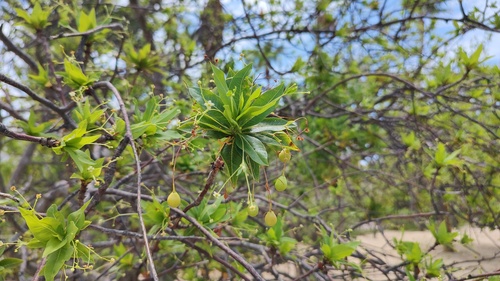
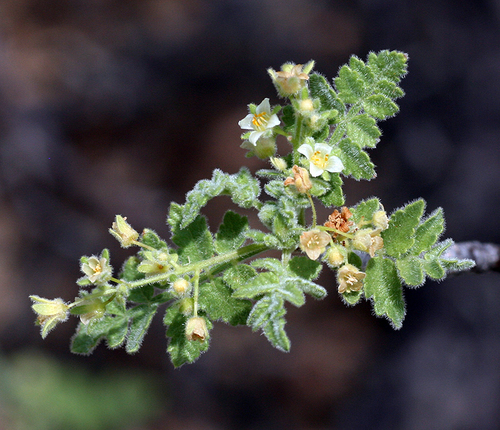
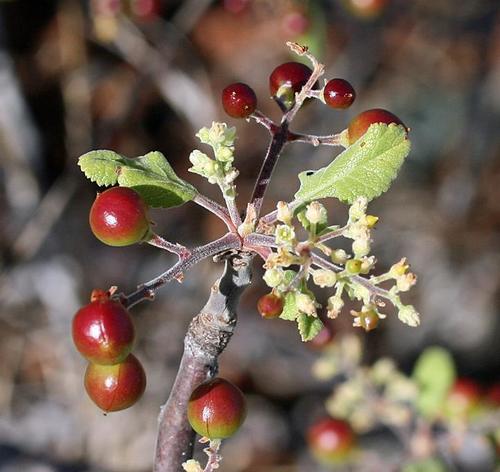
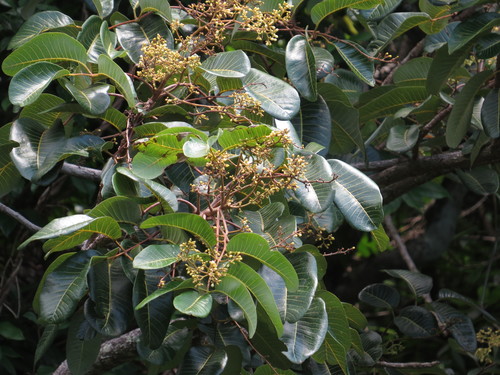
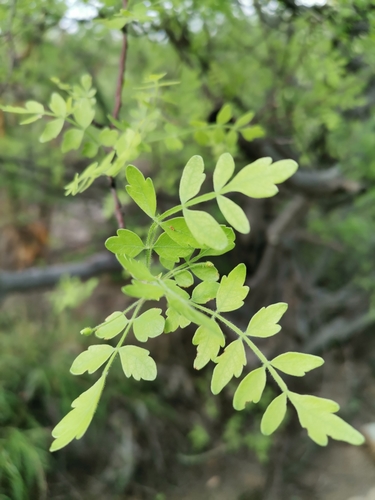
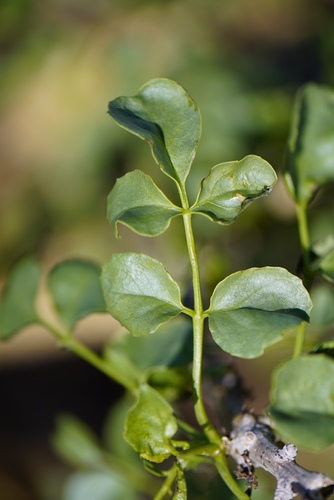
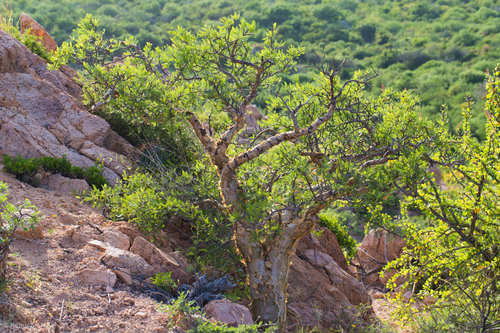
Bursera microphylla A.Gray is typically a small tree with a thickened trunk and relatively small branching structure compared to its trunk size. It is semi-succulent, storing water in the conductive and parenchymal tissues of its trunk, lower limbs, and wood. Shreve (1964) classified this plant as a sarcocaulescent tree, and the sarcocaulescent habit acts as a buffer against variation in environmental water balance (Turner et al., 1995). Its leaves are alternate, lack stipules, and are mostly once-pinnate or twice-pinnate, though they may be unifoliate or trifoliate (Rzedowski and Kruse 1979). This species can reach up to 10 m (33 ft) in height. Its bark is light gray to white, while younger branches have a reddish color. Its light foliage consists of long, straight, flat, legume-like leaves formed of paired leaflets. It flowers from rounded yellow buds that open into small, star-shaped, white or cream flowers. Its fruit is a drupe that contains a yellow stone. All Bursera leaves, including those of species found in tropical subhumid and humid forests, are deciduous (Becerra 2005). In response to rain and warmer temperatures, B. hindsiana, B. laxiflora, and other more tropical Bursera species in Sonora can produce new leaves at any time of year. Most Bursera species are drought deciduous, but B. microphylla keeps its leaves year-round, except during drought and cold weather. Most Sonoran Burseras flower in June and July, just before or as new leaves emerge. This timing is likely a response to low early summer rainfall before monsoon season, as B. microphylla grows in Sonora on the western edge of a region that regularly sees summer monsoon storms. Fruits of species in the genus Bursera are small, drupe-like capsules that each hold a single seed. In B. microphylla, fruits develop rapidly and ripen gradually, a few at a time. In some Bursera species, many fruits remain on trees when they begin flowering the following summer. Birds are primarily responsible for seed dispersal in the Bursera genus. In the Puerto Lobos region of Sonora, Mexico, Gray Vireos and Ash-throated Flycatchers feed heavily on ripe B. microphylla fruits during the winter months. The winter range of Gray Vireos in Sonora closely matches the distribution of Bursera microphylla, and birds do not eat unripe fruit. Rodents sometimes gather Bursera fruits and seeds, and ants have been observed carrying away B. microphylla seeds. Rzedowski and Kruse (1979) have suggested that the exfoliating papery bark of many trivalvate Bursera species may attract birds and other animals from a distance when it rustles in the breeze. Bursera microphylla is the northernmost member of the Burseraceae family in North America, and is likely the most xeromorphic, desert-adapted species within the Bursera genus. It thrives in extremely arid desert hills and mountains in northwest Sonora. This tree is native to northwestern Mexico (Baja California, Baja California Sur, Sinaloa, Sonora and Zacatecas) and the southwestern United States (southern California and Arizona), especially in desert regions. It can be found within Organ Pipe Cactus National Monument, Cabeza Prieta National Wildlife Refuge, Ironwood Forest National Monument, Sonoran Desert National Monument, El Pinacate y Gran Desierto de Altar Biosphere Reserve, Islas del Golfo de California Biosphere Reserve, Cabo Pulmo National Park, El Vizcaíno Biosphere Reserve, Valle de los Cirios Natural Protected Area, Sierra de San Pedro Mártir National Park, and Anza-Borrego Desert State Park. A small number of individuals grow in the Fish Creek Badlands of Anza-Borrego Desert State Park, between the Vallecito Mountains and Ocotillo Wells. This small population marks the northernmost extent of the species' distribution. Bursera microphylla is also found throughout South Mountain Park and Preserve, south of downtown Phoenix, on the rocky slopes of the Gila, Ma Ha Tuak, and Guadalupe ranges of the Salt River Mountains. The Cahuilla Indian people of the Colorado Desert region of California reportedly used the red sap of this elephant tree to treat skin disorders and other diseases. The Seri people use the plant in many ways, including using its wood to make boxes. It is also a popular landscape plant in the low warm deserts of the southwestern United States, where freezing temperatures do not occur.