About Bucephala clangula (Linnaeus, 1758)
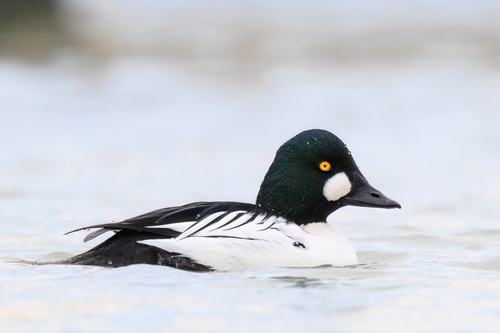
This species, scientifically named Bucephala clangula (Linnaeus, 1758), is commonly called the common goldeneye, and it gets its name from its distinctive golden-yellow eyes. Adult males measure 45 to 51 cm (18 to 20 inches) in length and weigh approximately 1,000 g (2.2 lb), while adult females measure 40 to 50 cm (16 to 20 inches) and weigh approximately 800 g (1.8 lb). The common goldeneye has a total wingspan of 77 to 83 cm (30.5 to 32.5 inches). Adult males have a dark head with a greenish gloss, a circular white patch located below the eye, a dark back, and white neck and belly. Adult females have a brown head and a mostly grey body, and both sexes have orange-yellow legs and feet. The recognized subspecies B. c. americana has a longer, thicker bill than the nominate subspecies B. c. clangula. The common goldeneye's breeding habitat is the taiga. It occurs in lakes and rivers of boreal forests across Canada, the northern United States, Scotland, Scandinavia, the Baltic States, and northern Russia. It is a migratory species; most individuals spend the winter in protected coastal waters or open inland waters at more temperate latitudes. It naturally nests in cavities of large trees, returning to the same nest site year after year, and it will readily use artificial nest boxes when available. Common goldeneyes are diving birds that forage for food underwater. Year-round, approximately 32% of their prey consists of crustaceans, 28% consists of aquatic insects, and 10% consists of molluscs. Insects are their predominant prey during the nesting season, while crustaceans are the predominant prey during migration and winter. In local areas, fish eggs and aquatic plants can also be important food sources.