About Brunnichia ovata (Walter) Shinners
Growth Habit
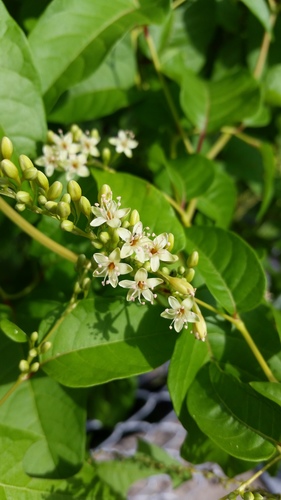
Brunnichia ovata (Walter) Shinners is a semi-woody vine. Its stems have woody proximal portions and herbaceous distal shoot portions, and the vine can grow up to 40 feet tall.
Leaf Characteristics
It has alternate, simple, deciduous leaves with oval (ovate) blades that measure 2 to 5 inches long, and its petioles are typically short.
Flowering Details
Flowers, which are greenish in color, usually appear from June to July.
Common Name Origin
Its fruit gives the species the common name "ear-drops" due to its resemblance to hanging earrings.
Germination Temperature
The optimal temperature for B. ovata germination is 35 °C, whether grown in soil or in Petri dishes. No germination or emergence occurs at temperatures below 25 °C or above 40 °C.
Altitude Range
This species grows at altitudes between 0 and 200 meters.
Native Distribution
Brunnichia ovata is a vine native to North America, specifically the coastal plains of south-central and southeastern United States, where its range extends from Texas to Alabama, north to southern Illinois, and east to Georgia.
Habitat Types
It grows in habitats including riverbanks, lake perimeters, wet woods, and thickets.
Apiculture Use
This species, also called redvine, is favored by beekeepers for honey production.
Herbicide Impact Case
In January 2019, Arkansas' largest honey producer, Crooked Creek Bee Company, announced it would close production due to damage to native wildflowers from the herbicide Dicamba, and cited B. ovata specifically as an example of the native vegetation being destroyed, which the owner stated led to an inferior honey product; the business also considered relocating to Mississippi.
Agricultural Pest Status
Redvine acts as a pest when it grows in agricultural crops, and it is a significant problematic pest for soybean crops in the Mississippi Delta.
Thigmotropism Example
Brunnichia ovata is often cited as an example of thigmotropism. Thigmotropism is a growth response where a plant grows around a supporting surface such as a wall, pot, or trellis.
Climbing Mechanism
For climbing vines like this species, tendrils coil around supporting objects. When touched, plant cells produce auxin and transport this hormone to untouched cells. Some untouched cells then elongate faster, causing cell growth to bend around the supporting object.
Seedling Triple Response
Some seedlings of the species also show the triple response, which is triggered by ethylene pulses that cause the stem to thicken and curve to begin growing horizontally.