About Brumus quadripustulatus (Linnaeus, 1758)
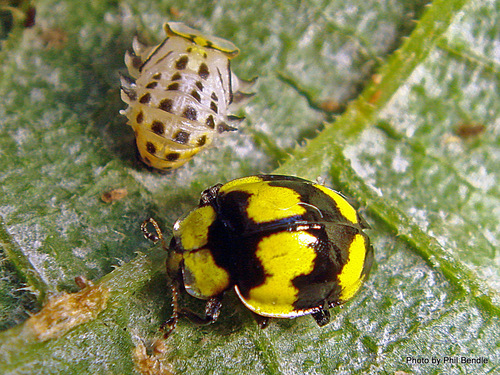
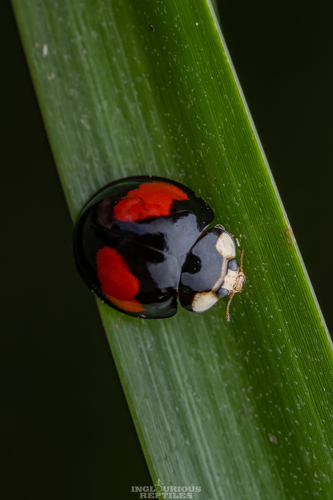
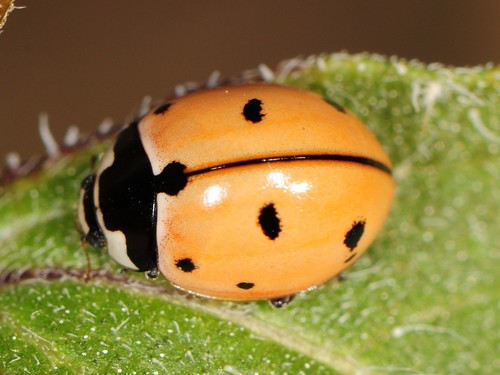
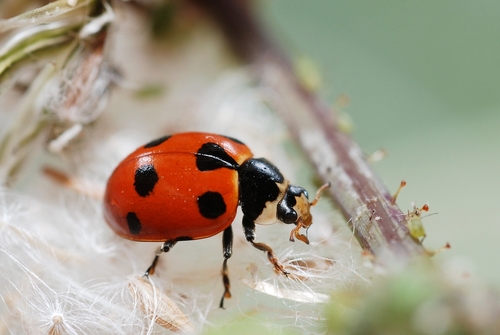
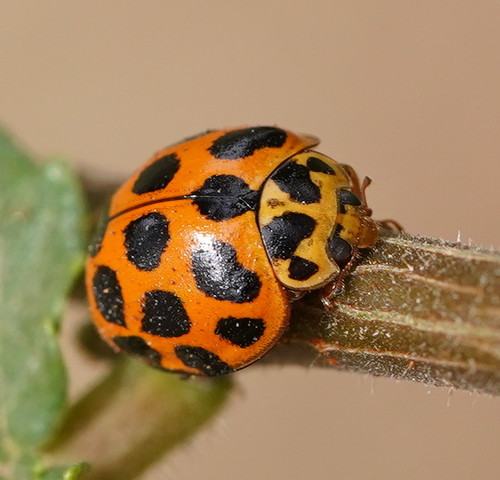
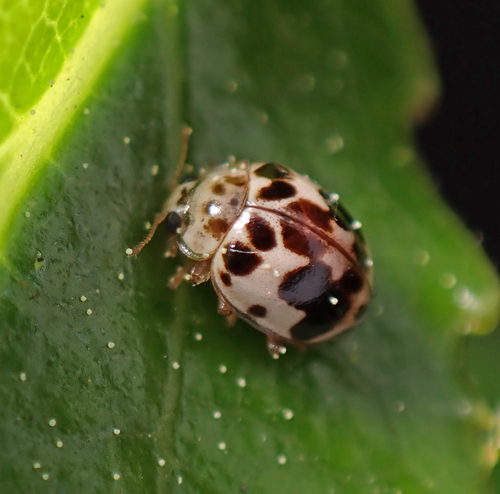
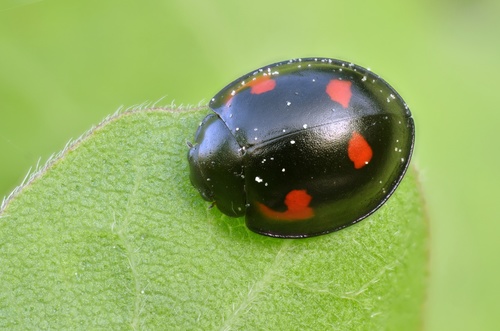
Exochomus quadripustulatus (synonym Brumus quadripustulatus (Linnaeus, 1758)) can reach a body length of around 4 to 6 millimeters. This ladybug has an almost circular, convex, shiny body, with a flange around its base. Its body color is quite variable and can change as the insect ages. Most commonly, its elytra are black, marked with two larger red comma-shaped spots and two smaller round red spots; these spots may also be orange or yellow, and entirely reddish brown specimens can occur. This species is widespread across most of Europe, the eastern Palearctic, and the Near East. It was first recorded in County Armagh, Ireland, in 2014. It was intentionally introduced to San Francisco between 1915 and 1930 to control hemlock woolly adelgid, and has since spread along the west coast of North America from California to British Columbia; it is also found in Massachusetts. This fairly common ladybug is active from April to October, and is most often found on conifers and in areas with deciduous trees. Both adult and larval pine ladybirds prey on aphids and scale insects, with a particular preference for Diaspidiotus perniciosus. Adults overwinter to survive cold seasons. In Italy, E. quadripustulatus shows strong potential as a biological control agent, acting as a candidate predator of Toumeyella parvicornis, an alien pest that infests stone pines. It has been observed to be more attracted to both conspecific and heterospecific ladybugs than Cryptolaemus montrouzieri, another candidate predator for this pest, and it responds to prey more quickly.