About Brownea grandiceps Jacq.
Common Name and General Growth Form
Commonly known as the rose of Venezuela, Brownea grandiceps Jacq. is a small, slow-growing tree with stout branches that ultimately reach around 6 metres (20 ft) in height.
Trunk and New Shoot Characteristics
Its trunk has greyish-brown, lightly furrowed bark, and its new shoots and leaf stalks are covered in downy hairs.
Leaf Arrangement and Structure
The leaves are opposite, elongated, and pinnate, with 12 to 18 pairs of oblong or lanceolate leaflets that each end in a bristle-like point.
Leaf Color Development During Maturation
When the drooping leaves first unfurl, they are pale green with tiny pink and cream spots; as they mature, they turn brownish-pink, and finally become a uniform green.
Inflorescence and Flower Traits
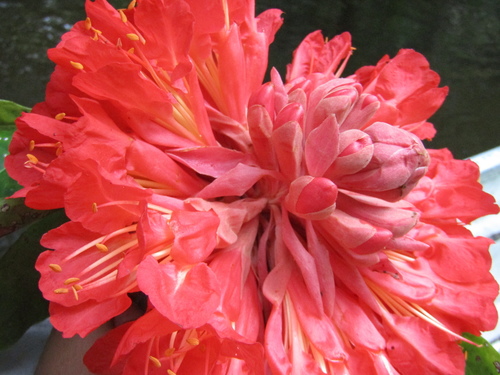
Globular inflorescences hold many crimson, red, deep pink or purple tubular flowers, each with projecting stamens and style.
Flower Head Size and Position
The flower heads can grow up to 20 centimetres (7.9 in) across, and typically dangle below the tree’s foliage.
Seed Pod Features
Seeds are held in groups of long, brown, furry pods.
Native Distribution and Primary Habitat
This species is native to Brazil, Ecuador, Venezuela, Peru and Colombia, where it grows in tropical rainforest.
Cultivation Temperature and Light Requirements
It requires a minimum temperature of 55 °F (13 °C), and grows well in both full sun and partial shade.
Preferred Habitat and Associated Plant Species
The rose of Venezuela thrives in seasonally inundated forest areas, and is often found growing alongside Virola duckei and Inga thibaudiana.
Epiphytic Associates
Many epiphytic plants and lianas grow among its branches.
Nectar Production and Pollinator Attraction
The flowers produce large amounts of nectar, which attracts hummingbirds and butterflies.
Diurnal Leaf Movement Function
At night, the leaves rise to expose the flowers to dew, then sink again in the morning to protect the flowers from the sun.