About Broussonetia papyrifera (L.) L'Hér. ex Vent.
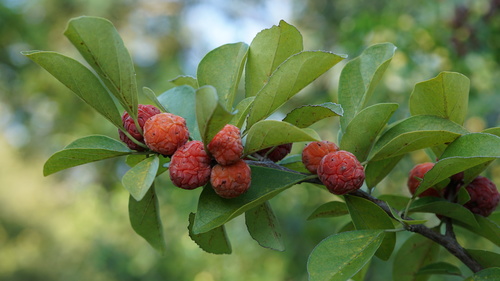
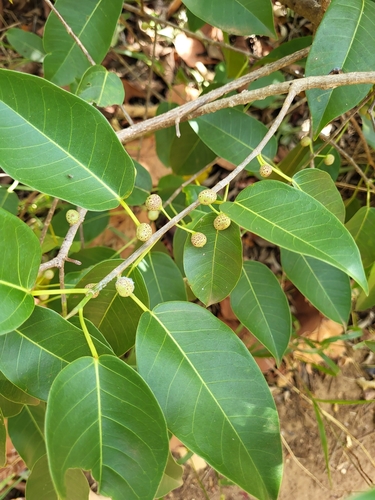
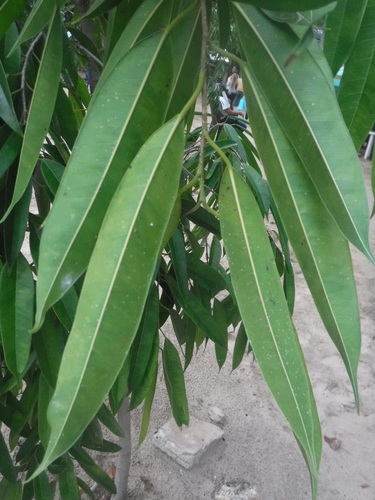
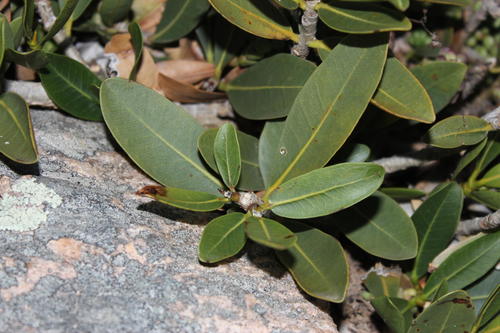
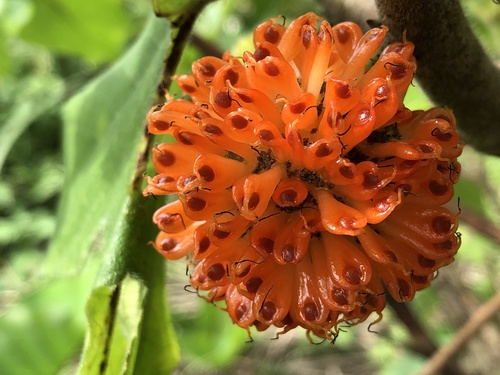
Broussonetia papyrifera (L.) L'Hér. ex Vent. is a deciduous shrub or tree that typically reaches 10–20 m (33–66 ft) in height, though specimens can grow as tall as 35 m (115 ft). Leaf shape varies even on a single individual: leaf blades may be lobed or unlobed, and most have toothed edges, light hairiness, pale undersides, and a rough texture. Leaves grow up to roughly 15–20 cm (5.9–7.9 in) long. This species is dioecious, meaning it produces male and female flowers on separate plants. Male (staminate) flowers are arranged in a fuzzy catkin inflorescence that can reach up to 8 cm (3.1 in) long. Female (pistillate) flowers form a spherical inflorescence head up to around 2 cm (0.79 in) wide, with each greenish female flower having a long protruding style. After pollination, it develops a spherical infructescence (fruit cluster) 2–3 cm (0.79–1.18 in) wide, filled with many red or orange fruits. Each individual fruit that protrudes from the cluster is a drupe. This plant has been cultivated in Asia and some Pacific Islands for many centuries for food, fiber, and medicine. Additional uses of the plant include its wood for making furniture and utensils, and its roots for use as rope. The fruit and cooked leaves are edible. Historically, leaves were used as fodder for deer, cattle, and sheep, which gives the species its Chinese nickname 鹿仔樹, literally 'little deer tree'. Its fruits contain abundant saponin and B vitamins. The fruit, leaves, and bark have all been used in traditional medicine systems. In rural Pakistan, the bark and fruit of the species, known locally as jangli toot, are used as a laxative and antipyretic. It is also grown as an ornamental plant. It tolerates disturbance and air pollution, so it is commonly used as a landscaping plant along roadsides. It is a pioneer species that easily colonizes forest clearings, and has been considered for use in reforestation projects. It grows well in many different climate types.