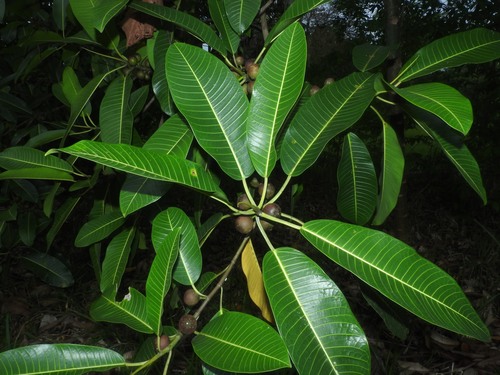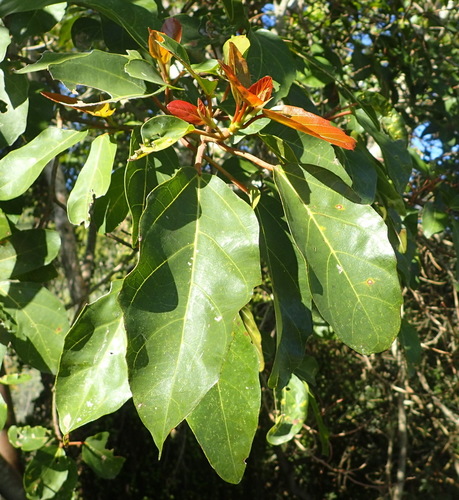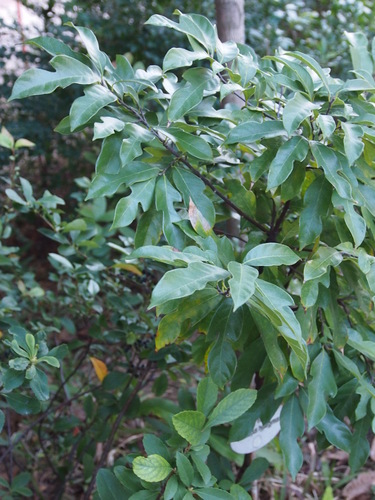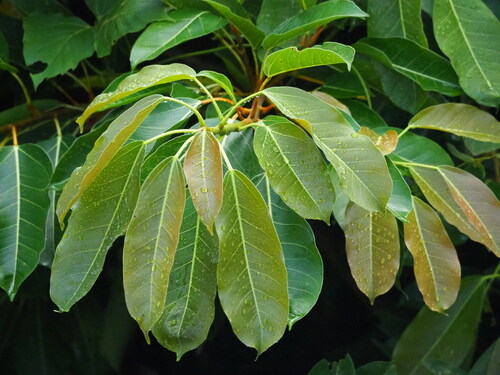
About Brosimum alicastrum Sw.
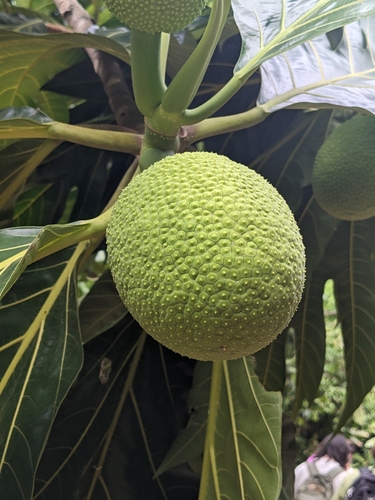
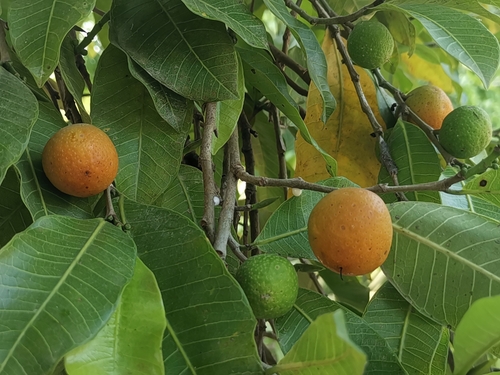
Brosimum alicastrum Sw. can be monoecious, dioecious, or hermaphroditic, and changes from female to male as it ages. Birds and bats disperse its seeds. A mature tree can produce 150–180 kilograms (330–400 lb) of fruits annually, and remains productive for 120–150 years. The tree can reach up to 45 m (150 ft) in height and 1.5 m (5 ft) in trunk diameter. It begins producing flowers and fruits when its trunk reaches 20 m (66 ft) tall; if planted from seed in full sun, fruiting can start as early as 3.5 years. This species occurs on the west coast of central Mexico, southern Mexico (Yucatán, Campeche), Guatemala, El Salvador, the Caribbean, and the Amazon basin. Large stands grow in moist lowland tropical forests between 300–2,000 m (980–6,560 ft) elevation, most commonly from 125–800 m. It grows in humid areas with 600–2,000 mm (24–79 in) of annual rainfall and an average annual temperature of 24 °C (75 °F). Fruits (called Maya nuts) fall to the ground at different times of year across the species' range. Each fruit holds a large seed covered by a thin, orange, citrus-flavored skin that is popular with many forest animals. It has been suggested that breadnut (another common name for this species) was part of the diet of pre-Columbian lowland Maya in Mesoamerica, but the extent of this role is debated by historians and archaeologists: no confirmed fruit remains or illustrations have been recovered from Mayan archaeological sites. Dennis E. Puleston claimed in multiple publications that it was a staple in the Maya diet, and demonstrated a strong correlation between ancient Maya settlement patterns and the distribution of relic stands of these trees (which are also called ramon trees). Other studies have downplayed the Maya nut's significance in ancient Maya food systems. In modern times, it has been a marginalized source of nutrition, often categorized as a famine food. The tree gives its name to the Maya archaeological sites of Iximché and Topoxte (both in Guatemala) and Tamuin, which reflects the Maya origin of the Huastec peoples. It is one of the 20 dominant species of the Maya forest, and the only dominant species in this community that is wind-pollinated. It is also grown in traditional Maya forest gardens. A high density of sown seeds offsets the reduced viability of young plants, leading to good seedling yields. Seed storage is a common problem in commercial seedling production: long storage negatively impacts germination rate, for example dropping by 10% after three weeks of storage. Refrigeration does not solve this issue, as it risks killing the seeds. The Maya nut is high in fiber, calcium, potassium, iron, zinc, protein, and B vitamins, has a low glycemic index (<50), and is very high in antioxidants and prebiotic fiber. Fresh seeds can be cooked and eaten, or dried in the sun, roasted, and milled into a powder with a chocolate-like flavor. Stewed nuts taste like mashed potato; roasted nuts taste like chocolate or coffee, and the nut can be prepared in many other dishes. In Petén, Guatemala, breadnut is cultivated for local use and export as powder, used in hot beverages and bread. The large edible seed can also be boiled, or dried and ground into meal for porridge or flatbread. In Central America, breadnut leaves are commonly used as livestock forage during the dry season; the fruits and seeds are also used to feed all types of animals. Brosimum alicastrum is suitable for carbon farming as a nut crop or fodder. It is an oxalogenic tree, meaning it forms a bacterial-fungal endosymbiosis that supports the oxalate-carbonate pathway (OCP), specifically the biomineralization reaction of biocalcification, which produces calcium carbonate (CaCO3) from atmospheric CO2 and stores it in soils. This means the tree acts as a carbon sink while producing usable resources for humans and animals. This property was first documented in 2006 by biogeochemist Eric Verrechia, a researcher at the University of Lausanne. The species can also be used to restore damaged soils: it prevents erosion and acts as a wind barrier. It tolerates poor, damaged, dry, or salty soils, and requires very few inputs after planting. Additionally, its oxalogenic activity increases soil pH and the amount of organic matter in soil once it is well established in an agricultural system, leading to increased fertility via a buffering effect. Active research projects are currently ongoing to develop this crop within its existing native distribution.