About Bromus squarrosus L.
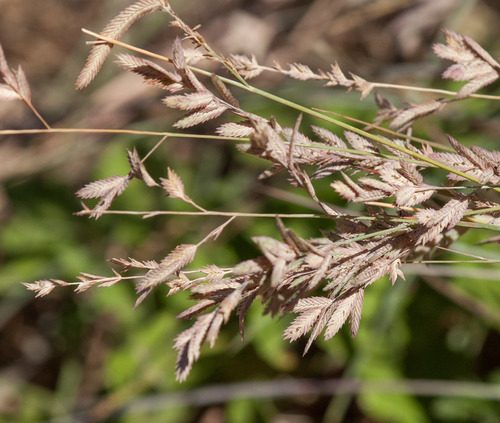
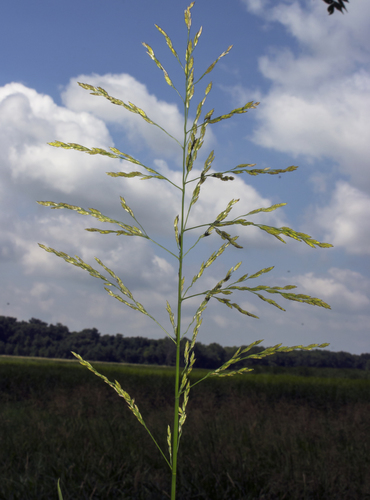
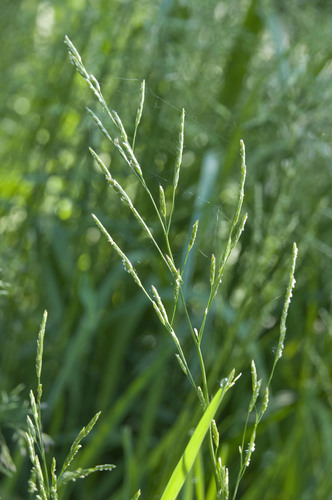
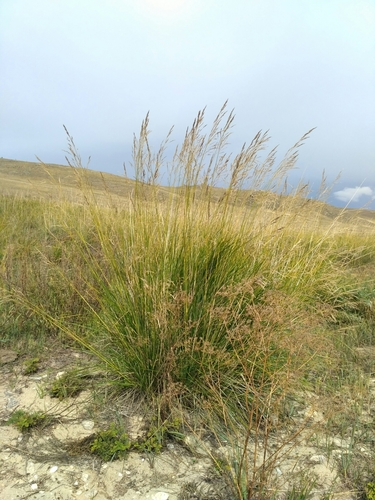
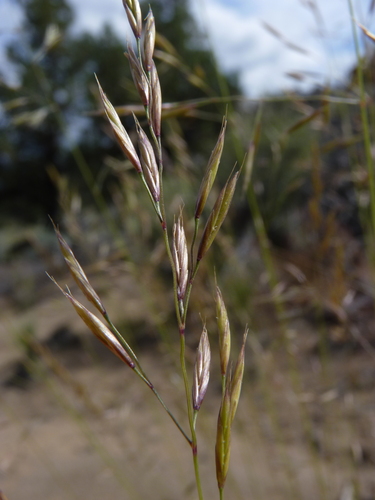
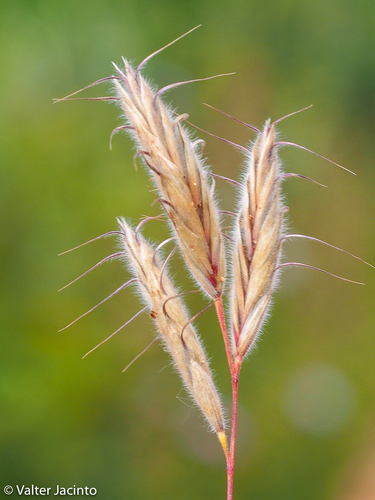
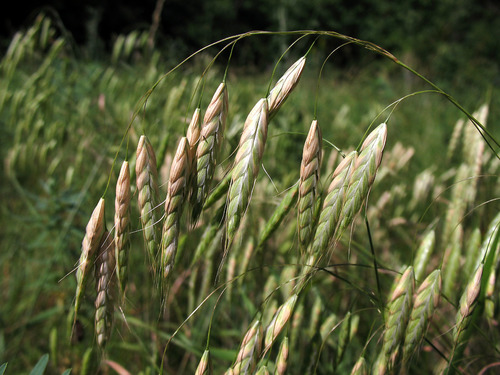
Bromus squarrosus L. is an annual grass species. Its culms reach 20–60 cm (7.9–23.6 in) in height, are hollow, and carry four to five leaves, with leaf sheaths that are shorter than the leaf blades. Both leaf sheaths are pubescent; leaf blades are most often pubescent, though they are occasionally glabrous. Leaf blades measure 5–15 cm (2.0–5.9 in) long and 4–6 mm (0.16–0.24 in) wide. Prominent, ragged, shaggy ligules are 1–1.5 mm (0.039–0.059 in) long. This species produces unilateral, lax panicles that hold few spreading or ascending branches: branches are erect when young, and tend to nod when the plant reaches maturity. These racemose panicles measure 7–20 cm (2.8–7.9 in) long and 4–8 cm (1.6–3.1 in) wide, and branches are typically longer than the species' spikelets. Spikelets are usually solitary, lanceolate when young and grow more ovate as they mature. They are 2–4 cm (0.79–1.57 in) long and 5–10 mm (0.20–0.39 in) broad. Densely flowered, each spikelet holds 10 to 20 individual flowers, with floret bases hidden once the spikelet reaches maturity. Glumes may be either smooth or scabrous. Lower glumes have three to five veins and measure 4.5–7 mm (0.18–0.28 in) long, while upper glumes have seven veins and measure 6–8 mm (0.24–0.31 in) long. The unequal, ovate lemmas have nine faint nerves and broad, translucent margins up to 1 mm (0.039 in) wide. Unlike most other Bromus species, Bromus squarrosus lemmas do not roll inwards at maturity. Lemmas themselves measure 8–11 mm (0.31–0.43 in) long and 2–2.4 mm (0.079–0.094 in) wide. Twisted, strongly divergent awns are 6–10 mm (0.24–0.39 in) long. Small anthers are roughly 1 mm (0.039 in) long, with notches at their tips. Caryopses are the same length as the paleas, and are either flat or slightly rolled inwards. The species can be distinguished from most other Bromus species by its long nine-ribbed palea and oblong spikelets. Bromus squarrosus flowers during June and July. It grows in overgrazed pastures, fields, and road verges, and prefers loamy or alluvial soils. It is native to central Russia and southern Europe, and has become naturalized across southern Canada and the northern United States.