About Bromus nottowayanus Fernald
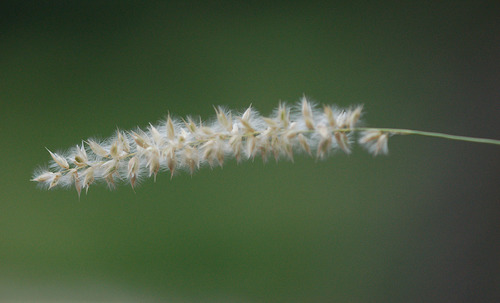
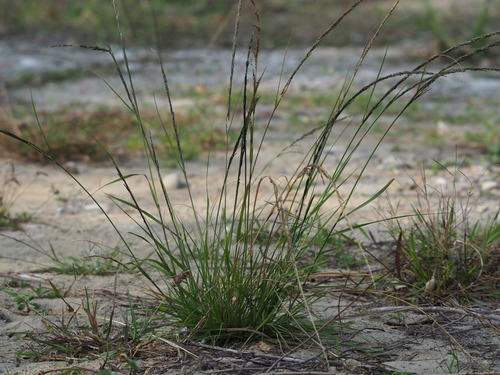
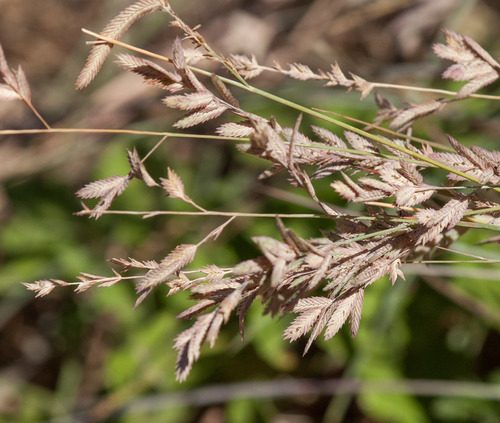
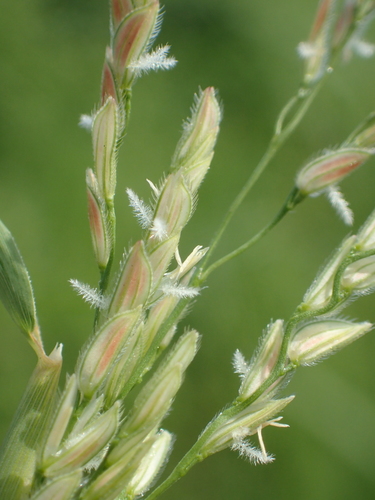
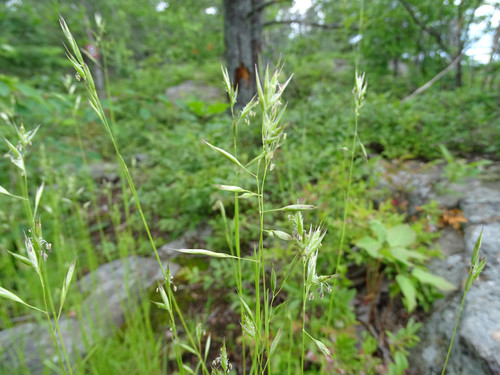
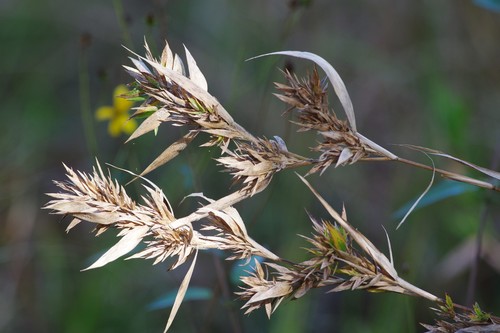
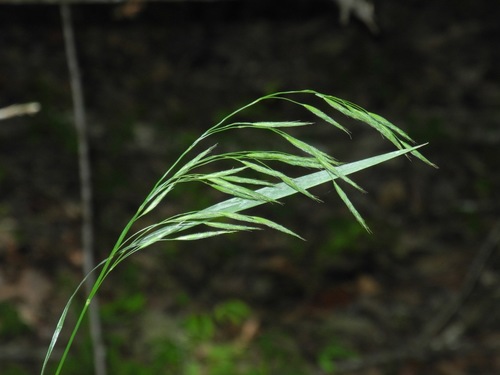
Bromus nottowayanus Fernald is a perennial grass that does not grow rhizomes. It produces solitary or tufted culms that reach heights of 0.6–1.5 m (2 ft 0 in – 4 ft 11 in). It has six to eight cauline leaves with reversed sheaths covered in soft hairs; these sheaths almost completely cover the nodes, and hide the ligule. Its nodes may be either pubescent or glabrous, while its internodes are glabrous. This species does not have auricles. Its leaf blades measure 15–30 cm (5.9–11.8 in) long and 0.6–1.3 cm (0.24–0.51 in) wide, and are covered with short hairs on their upper surface. It bears a lax, nodding panicle that is 5–20 cm (2.0–7.9 in) long, with slender pulvini. The panicle branches, which are often recurved, typically grow ascending or spreading. Its often purplish spikelets each hold three to eleven flowers, and measure 1.8–4 cm (0.71–1.57 in) long. The lower glume has one to three nerves and measures 5.5–8 mm (0.22–0.31 in) long; the upper glume has five or seven nerves and measures 7–10 mm (0.28–0.39 in) long. Its lemmas are shortly hairy, measure 8–13 mm (0.31–0.51 in) long, and bear straight awns 5–8 mm (0.20–0.31 in) long. Its palea is densely hairy and has a flat tip. This species can be distinguished from Bromus pubescens by the satin-like sheen on the underside of its leaves, which gives the species its common name. It also flowers later than B. pubescens, flowering in late July instead of late June. In terms of habitat and distribution, Bromus nottowayanus grows in shaded hardwood forests, especially near streams, and usually grows in areas above the lowest, wettest sites. It can occasionally be found in drier locations. It is native to the eastern and central-eastern United States, ranging from Iowa to New York, south to Oklahoma, and grows throughout Virginia.