About Bromus diandrus Roth
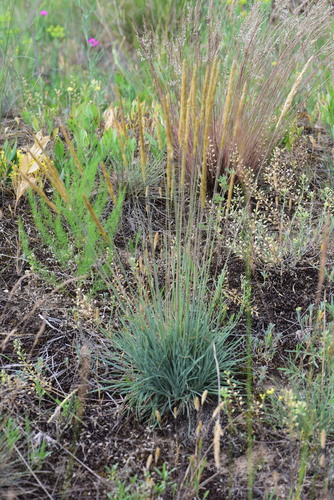
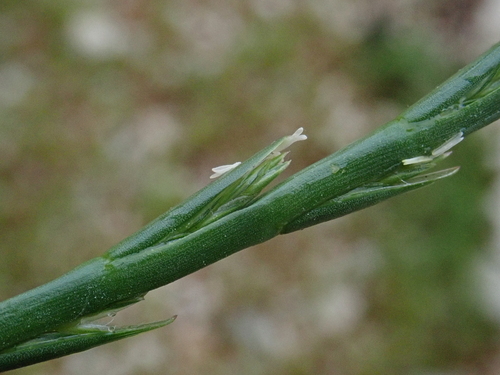
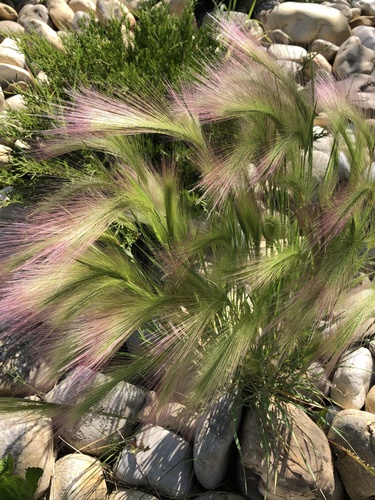
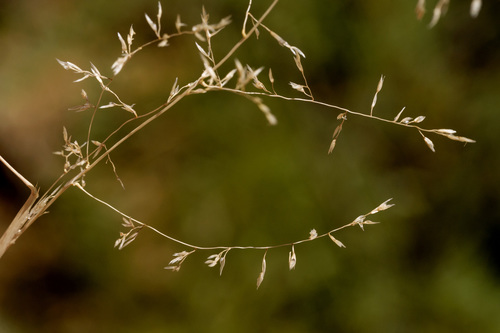
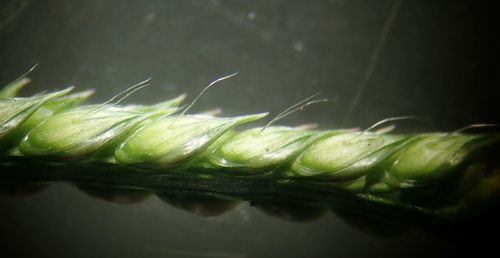
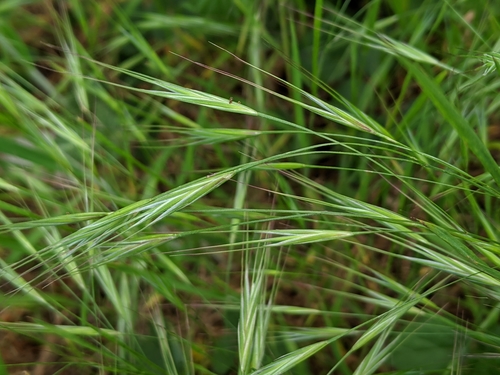
This species of brome grass, Bromus diandrus Roth, is native to the Mediterranean region and has been introduced to most other parts of the world. It grows best in areas with a Mediterranean climate, such as California and parts of southern Australia, but it tolerates a wide range of climates well. Known as ripgut brome, it is a winter annual that grows through winter and spring, maturing in summer. Mature plants reach 1 to 3 feet in height, with hairy, rough leaves around 1 centimeter wide. It has a prominent membranous ligule that is white and covered in spiky hairs. Its wide panicle nods similarly to the panicle of an oat plant, and it produces large, splayed spikelets with very long awns that can exceed 5 centimeters in length. Seeds break out of the spikelet easily. They are very sharp and rough due to tiny backward-facing barb-like hairs, that let the seed catch and lodge like a fish hook. This trait makes the seeds dangerous to animals, as seeds can easily become lodged in an animal's paw or eye. Movement can cause the seed to work deeper into the animal's flesh. This is one of the grass species referred to by pet owners as "foxtails", a backyard hazard for outdoor cats and dogs.