About Bromus carinatus Hook. & Arn.
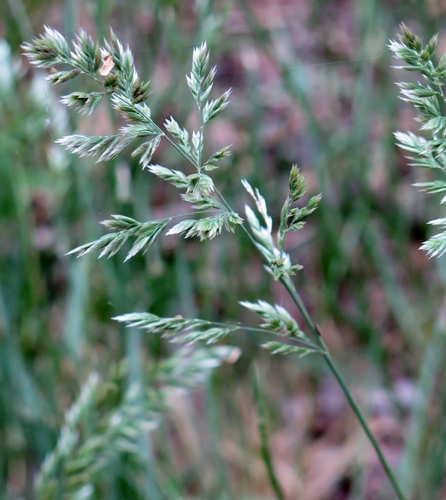
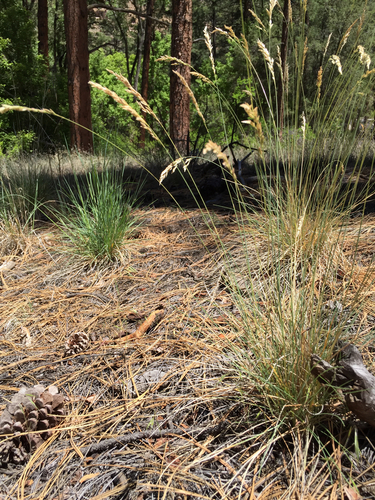
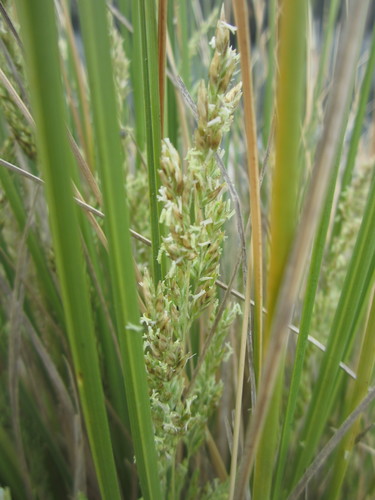
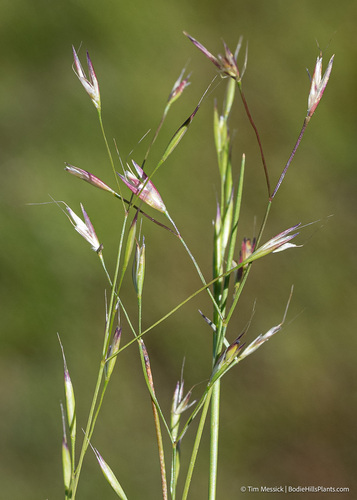
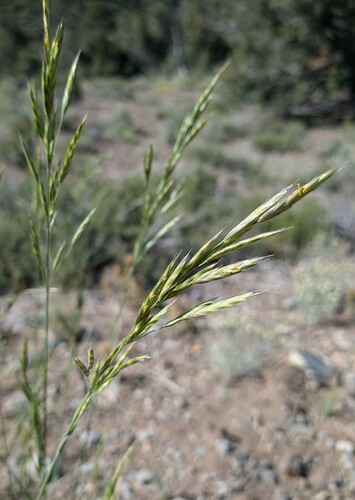
Bromus carinatus Hook. & Arn. is a perennial bunchgrass that grows in clumps 0.5 to 1.5 metres (1 1⁄2 to 5 feet) tall, with many narrow leaves reaching up to 40 centimetres (15 1⁄2 inches) long. Its inflorescence is a spreading or drooping arrangement of flat spikelets that are longer than they are wide. This species is primarily wind-pollinated, but it also sometimes produces cleistogamous flowers that self-pollinate, especially when growing under stressful conditions. It can also reproduce vegetatively through tillers. Bromus carinatus is a highly variable species, and can be easily confused with Bromus catharticus and Bromus stamineus. It is native to western North America, ranging from Alaska to northern Mexico, where it grows across many different habitat types. It occurs as an introduced species in parts of the American midwest and eastern North America. This grass is used for erosion control and revegetation of damaged land, and it serves as highly palatable forage for livestock. However, it has the ability to become a noxious weed in agricultural areas.