About Bromus briziformis Fisch. & C.A.Mey.
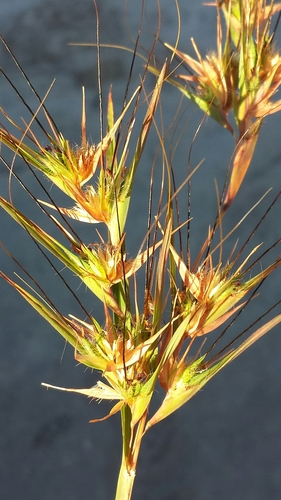
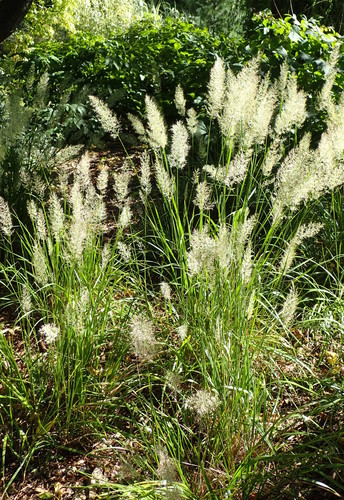
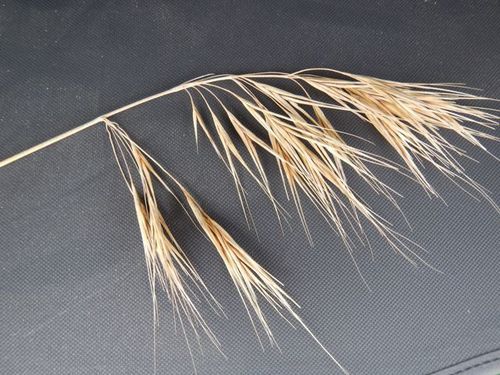
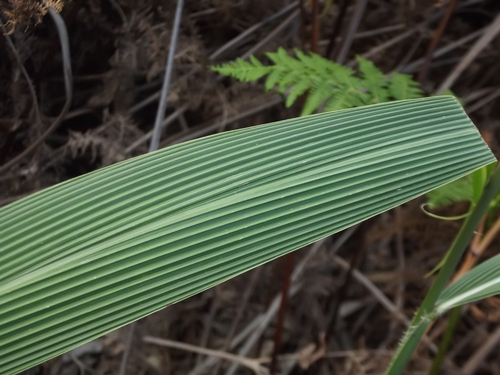
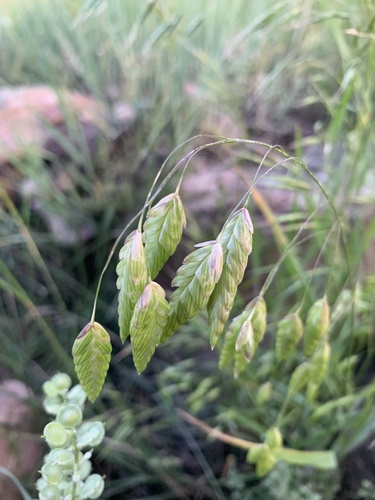
Bromus briziformis Fisch. & C.A.Mey. is an annual grass species that produces erect or ascending culms that reach 20 to 80 cm (7.9 to 31.5 inches) tall. Its leaf sheaths are shaggy, and its ligules, which measure 0.5 to 2 mm (0.020 to 0.079 inches) long, are densely hairy. The leaf blades are 3 to 13 cm (1.2 to 5.1 inches) long and 2 to 4 mm (0.079 to 0.157 inches) wide, and range from lightly hairy on both sides to completely hairless (glabrous). Its panicles are lax and secund, with long spreading or drooping branches that each bear a single terminal spikelet. The panicles measure 5 to 15 cm (2.0 to 5.9 inches) long and 3 to 7 cm (1.2 to 2.8 inches) wide, and the branches are typically longer than the spikelets. The flat spikelets are 15 to 27 mm (0.59 to 1.06 inches) long and 0.8 to 1.3 cm (0.31 to 0.51 inches) broad. The glumes are either smooth or slightly rough (scabrous): the lower glumes have 3 to 5 veins and measure 5 to 6 mm (0.20 to 0.24 inches) long, while the upper glumes have 7 to 9 veins and measure 6 to 8 mm (0.24 to 0.31 inches) long. The lemmas are ovate or slightly rhombic, with broad translucent margins, and do not have awns. The anthers are 0.7 to 1 mm (0.028 to 0.039 inches) long. The caryopses are equal in length to or shorter than the paleas, and are flat or slightly rolled inwards. This grass grows in waste areas, disturbed areas, and road verges on dry soils. It is native to southwest Eurasia, and has become naturalized across much of North America: it occurs from New Mexico north to southern British Columbia, and is found in scattered locations throughout the eastern United States.