About Brodiaea filifolia S.Watson
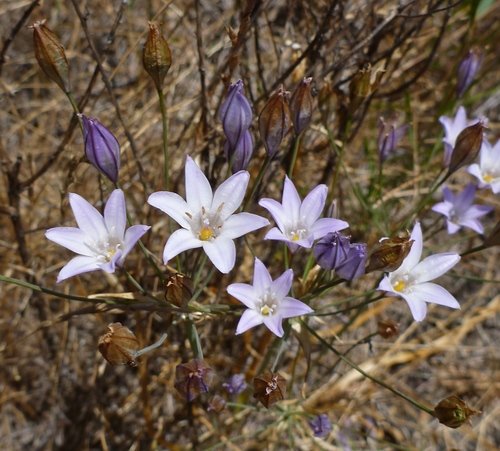
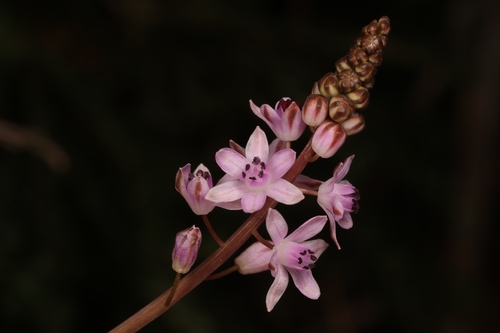
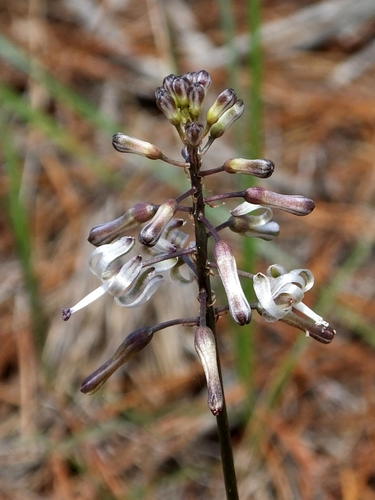
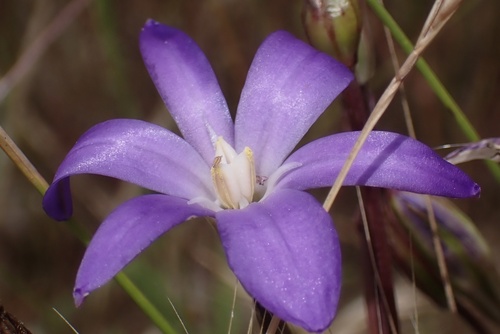
Brodiaea filifolia, commonly called thread-leaved brodiaea, is a perennial plant. It produces an inflorescence 20 to 30 centimeters tall that bears bright purple flowers. Each flower has six spreading tepals 1 to 1.5 centimeters long; the flower center holds three stamens and narrow or small staminodes, which are flat sterile stamens that lie against the tepals. At the start of its life cycle, thread-leaved brodiaea exists as a dormant, water-retaining corm. This dormant period can last from late summer to mid-winter, or until ideal growth conditions occur. Its blooming season runs from spring to early summer. This plant grows in grassland areas, often on floodplains, and is a member of local vernal pool flora. It grows best in a slightly acidic to nearly neutral pH range, specifically between 6.1 and 6.4. These required habitats and conditions are becoming increasingly rare, as they are cleared for development, especially with the expansion of residential areas. Undeveloped land near residential areas is degraded by exotic vegetation, mowing and other fire suppression efforts, sewage dumping, livestock grazing, off-road vehicle use, and processes that displace or redirect water sources. The plant also faces risk from reduced genetic variability. While thread-leaved brodiaea can produce seeds like most other angiosperms, it primarily reproduces vegetatively by growing new corms. This cloning method does not produce individuals with new combinations of genes. Successful pollination by other organisms is also uncommon, because only two species effectively pollinate Brodiaea filifolia: the tumbling flower beetle and the sweat bee. When the plant does reproduce sexually, it requires unrelated individuals with different genes. It cannot self-fertilize, and cannot successfully reproduce with closely related individuals. Small population sizes with low genetic diversity and large distances between populations lower the chance of successful sexual reproduction for the plant. Brodiaea filifolia sometimes hybridizes with Brodiaea orcuttii. Brodiaea filifolia is concentrated in specific areas of Southern California. There are about 68 remaining occurrences in widely spaced locations between the San Gabriel Mountains and west-central San Diego County. Several new occurrences have been discovered since the species was listed as endangered, including locations at Camp Pendleton, and a few occurrences have been extirpated.