About Brithys crini (Fabricius, 1775)
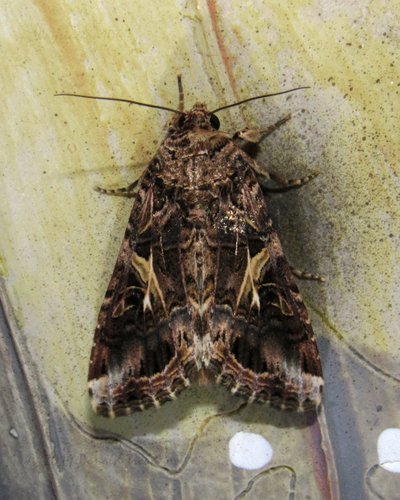
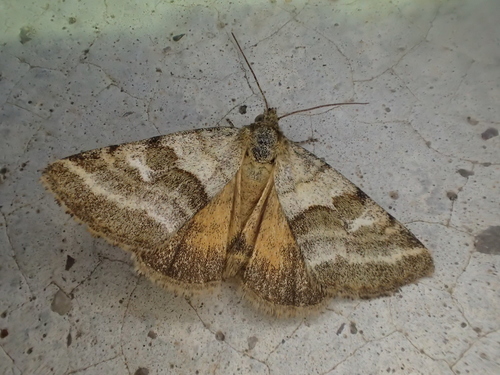
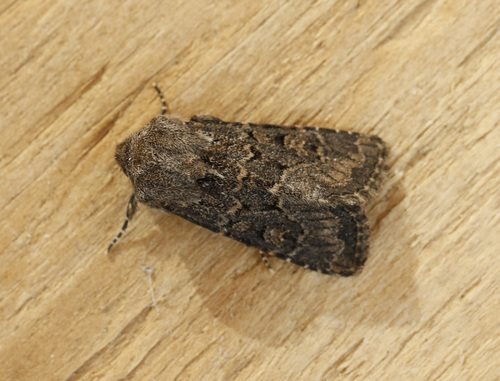
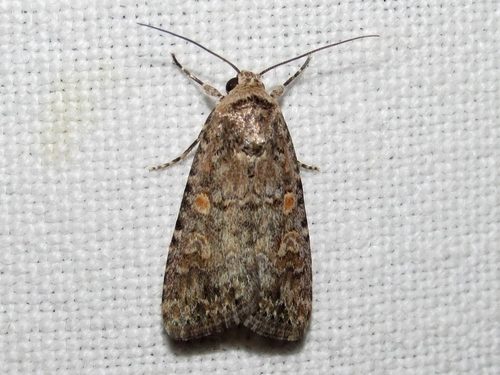
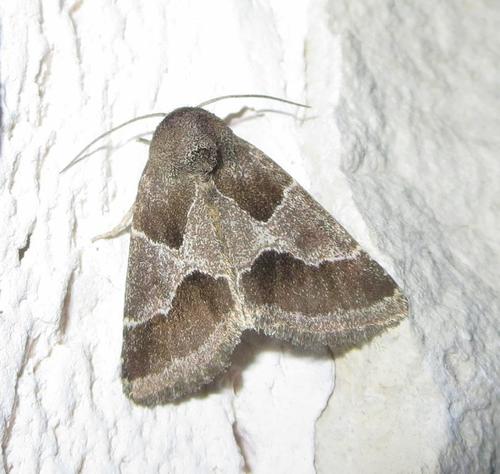
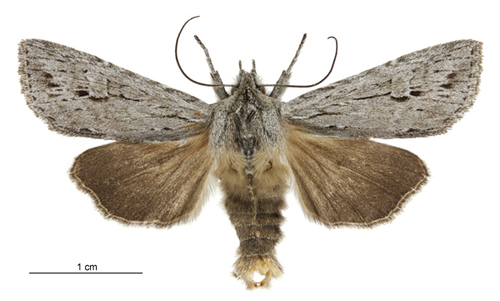
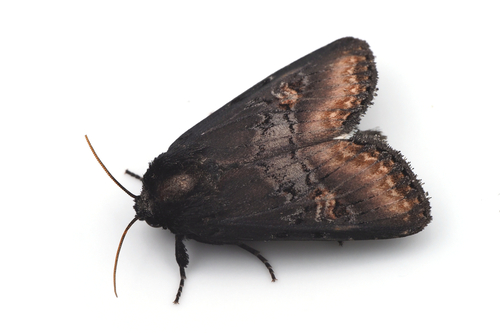
This moth species has a wingspan of approximately 40 mm. Its head, thorax, and forewings are very dark brown, and become paler closer to the wingtips. Indistinct black waved lines, including sub-basal, median, and postmedial lines, are present on the forewings. A curved ochreous submarginal line has ferrous-colored lunules on each side of it, and a series of black marginal lunules is also present. The hindwings are almost completely white, and the tarsi have black and white stripes. In Europe, adult moths are active during flight in July. This species occurs in coastal areas of Southern Europe and North Africa, ranging south to South Africa. It is also found in Japan, Queensland and Northern Territory in Australia, and across the region from Australia toward India and Sri Lanka. The larvae of Brithys crini feed on all species of the genera Crinum, Clivia, and Hippeastrum. Additional recorded host plants include Crinum angustifolium, Haemanthus species, Hippeastrum procerum, Pancratium maritimum, Zephyranthes candida, Crocus tommasinianus, Narcissus species, and Amaryllis belladonna. The larvae commonly bore into thick leaves or even into the bulbs of host plants. Mature larvae usually feed externally, particularly on plants with thin leaves. Heavy infestations of these caterpillars can kill host plants.