About Brickellia eupatorioides (L.) Shinners
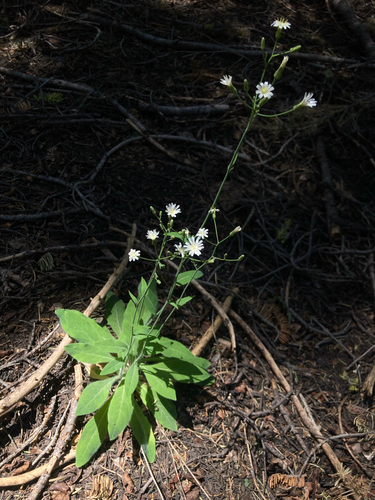
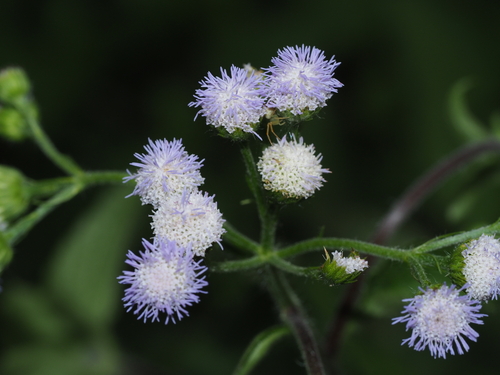
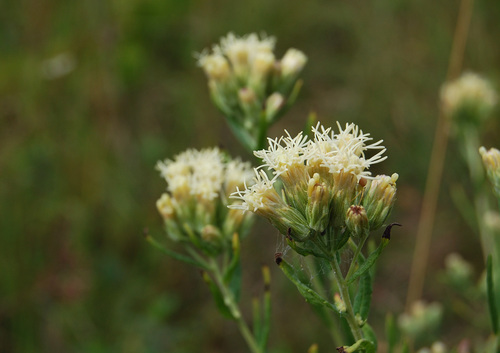
Brickellia eupatorioides, commonly called false boneset, is a North American flowering plant species belonging to the Asteraceae family. This species is widely distributed across Mexico, ranging from Chihuahua to Oaxaca. In the contiguous United States, it is found in all regions except New England, New York, and the West Coast. Brickellia eupatorioides is a perennial plant that can grow up to 200 cm (80 inches) tall, developing from a woody base. It produces numerous small flower heads that contain yellow, lavender, or maroon disc florets, with no ray florets. The accepted varieties of this species are: Brickellia eupatorioides var. chlorolepis (Wooton & Standley) B. L. Turner, native to Mexico and the southwestern United States; Brickellia eupatorioides var. corymbulosa (Torr. & A.Gray) Shinners, found in the Great Plains and Mississippi Valley; Brickellia eupatorioides var. eupatorioides, native to the eastern United States; Brickellia eupatorioides var. floridana (R.W.Long) B.L.Turner, found in southern Florida; Brickellia eupatorioides var. gracillima (A.Gray) B.L.Turner, native to Arkansas, Missouri, Oklahoma, and Texas; and Brickellia eupatorioides var. texana (Shinners) Shinners, found in Arkansas, Kansas, Missouri, Oklahoma, and Texas. In ecological settings, Brickellia eupatorioides most commonly occurs in grassland communities. It is fire tolerant, able to survive repeated annual burns, and its populations may become more abundant over time when subjected to repeated summer burns.