About Brickellia californica (Torr. & A.Gray) A.Gray
Species Identity and Growth Form
Brickellia californica (Torr. & A.Gray) A.Gray is a thickly branching shrub that reaches 5–200 cm (2–78.5 in) in height.
Leaf Characteristics
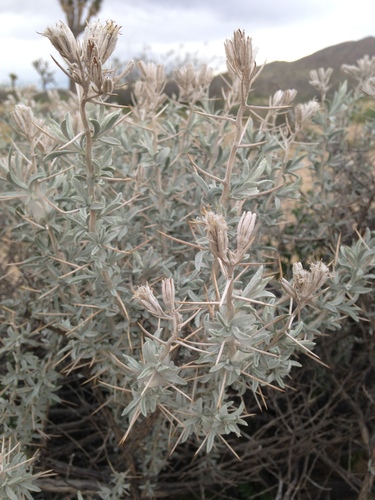
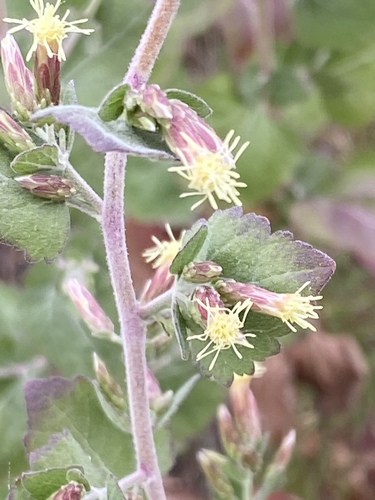
Its leaves are fuzzy, glandular, roughly triangular in shape, with toothed to serrated edges, and measure 1 to 6 centimeters long.
Inflorescence Structure
Inflorescences at the end of stem branches hold many small leaves and clusters of narrow, cylindrical flower heads.
Flower Head Morphology
Each flower head is around 13 millimeters long, wrapped in overlapping, flat, wide, purplish green phyllaries.
The tip of each head holds a number of long white to pink disc florets.
Flowering Period
This species blooms from August through November.
Fruit and Seed Characteristics
Its fruit is a hairy cylindrical achene 3 millimeters long, with a bristly pappus.
Native Distribution Range
This plant is native to northern Mexico, specifically the states of Baja California, Sonora, Chihuahua, and Coahuila, as well as most of the western United States.
Its range extends from California north to Oregon, northeast to Idaho and Wyoming, and east through the Southwestern states to Colorado, New Mexico, and West Texas.
Elevation and General Habitat
It grows at elevations below 2,700 metres (8,900 ft) in a wide variety of habitat types, including forests, woodlands, scrub, grasslands, and deserts.
California Specific Habitats
It is a common species across many habitat types in California, including chaparral, coastal sage scrub, oak woodland, valley grassland, yellow pine forest, Sierra Nevada subalpine zone, and Mojave Desert sky islands.
Traditional Ethnobotanical Uses
The Navajo and Kumeyaay (Diegueño) peoples have traditionally used this plant as a medicinal plant to treat fevers, coughs, and prenatal complications.