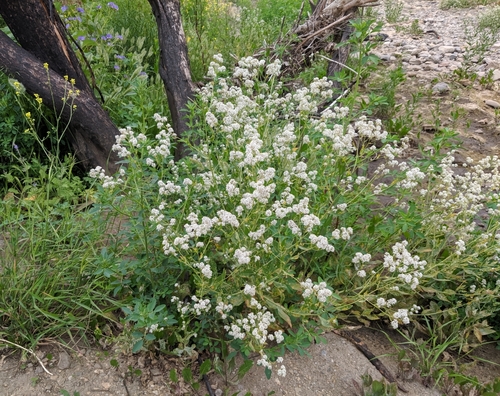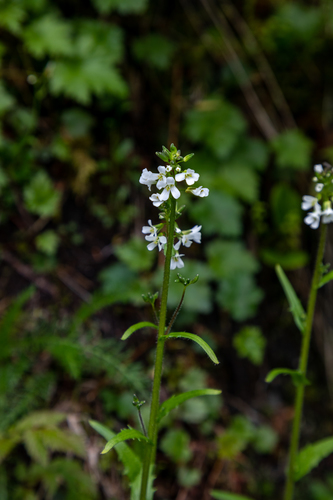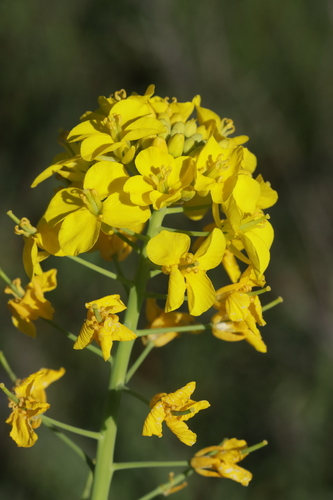
About Brassica rapa L.
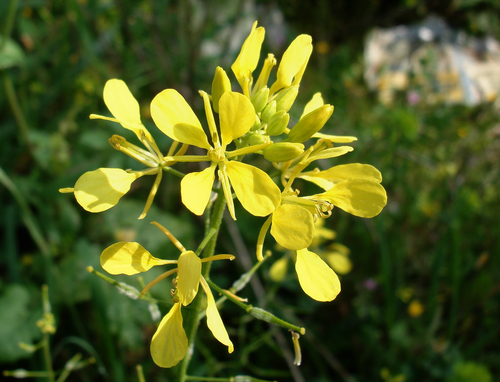
Brassica rapa is an annual to biennial plant species in the Brassicaceae family, native to Eurasia. It has been widely cultivated into many distinct forms, including the root vegetable turnip, plus leafy vegetables komatsuna, Chinese cabbage (napa cabbage), bomdong, and pak choi (bok choy), and rapini. Domesticated forms are divided into turnips, leafy greens, and oilseed types; oilseed types are grown for both food and industrial uses. Genetic studies show that B. rapa was one of the earliest domesticated brassicas, with turnip-like forms evolving first, and additional morphotypes developing independently across Eurasia. Wild, feral, and cultivated populations of the species occur worldwide, and it holds high importance in agriculture, economy, and ecology. The subspecies Brassica rapa subsp. oleifera is an oilseed most commonly known as turnip rape, and also called field mustard, bird's rape, and keblock. Rapeseed oil is a general term for oil produced from several Brassica species. Food-grade oil made from the seeds of low-erucic acid strains developed in Canada is called canola oil, while non-food oil from this group is called colza oil. Canola oil can be sourced from Brassica rapa and Brassica napus, both commonly grown in Canada, as well as the less common Brassica juncea. In ecological terms, Brassica rapa acts as an early-season source of nectar and pollen for a wide variety of insects. Its bright yellow flowers attract numerous pollinators, including bees, flies, and butterflies. A frequent visitor, the small white butterfly Pieris rapae, uses B. rapa both as a nectar source and as a host plant for its larvae to feed on. In turn, insect pollination is very important for the plant: insect-pollinated B. rapa produces 30% higher yield compared to self-fertilizing control plants. Additionally, B. rapa can develop rapid genomic adaptations when受到 selection pressure from bumblebees. Cultivated varieties of B. rapa are widely eaten as vegetables, including turnip roots, napa cabbage, komatsuna, pak choi, and other leafy greens, and feature prominently in East Asian, South Asian, and Mediterranean cuisines. Young leaves are eaten raw as a leaf vegetable, while older leaves are usually cooked. The taproot and seeds can also be eaten raw, though the seeds contain an oil that may cause irritation in some people. Rapeseed oil from this plant is used to produce both canola and colza oils. B. rapa is also commonly used as a rotational cover crop for vegetable production, because it can prevent soil erosion and reduce plant disease. Thanks to its fast life cycle and high genetic diversity, the B. rapa cultivar Wisconsin Fast Plants is widely used for genetics and plant biology education.