About Brassica oleracea L.
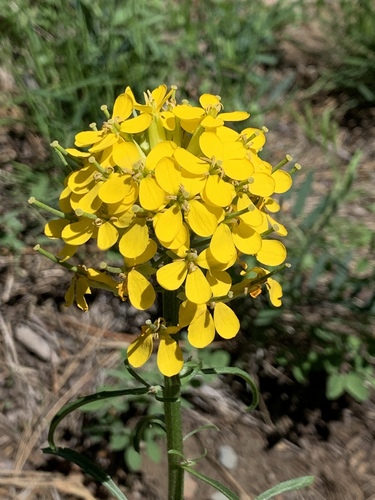
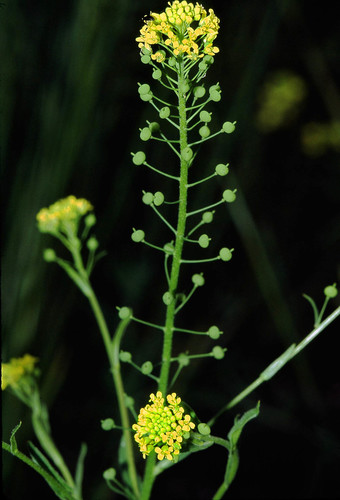
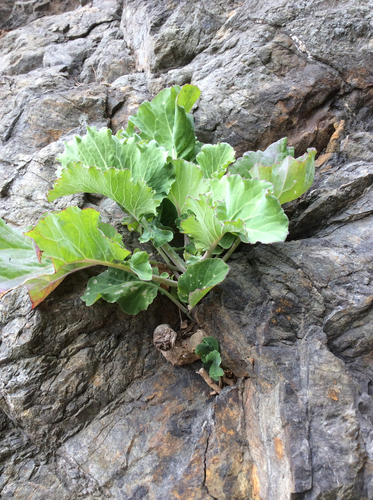
Wild Brassica oleracea, also called wild cabbage, is a tall biennial or perennial plant. In its first year of growth, it produces a stout rosette of large, thick, fleshy grayish-green leaves. This leaf structure helps the plant store water and nutrients to survive in harsh environments. In its second year, a woody flowering spike grows up to 1.5 metres (5 ft) tall. Branches extend from this spike, holding long clusters of yellow four-petaled flowers. Wild cabbage is considered native only to the coasts of France, Great Britain, and Spain, though it is widely naturalized in other regions outside its native range. It can also be found growing wild on the coasts of Ireland, Italy, and the German island of Heligoland, though it is rarely abundant in these locations. It is a hardy plant with high tolerance for salt and lime. Its inability to tolerate competition from other plants generally limits its natural growth to limestone sea cliffs, including the chalk cliffs on both sides of the English Channel. Brassica oleracea has become an important human food crop, valued for the large food reserves it stores in its leaves over winter. It has been selectively bred into a wide range of common cultivars, including cabbage, broccoli, cauliflower, brussels sprouts, collards, and kale. Some of these cultivars are hardly recognizable as belonging to the same species, or even the same genus. Beyond shared taste characteristics, the only unifying feature across all these cultivars may come from the plant's historical classification in the genus Crucifera, a name meaning "cross-bearing" that references the plant's distinctive four-petaled flowers. This species tolerates a variety of soil conditions with a pH between 6.0 and 7.5, but grows particularly well in alkaline soils that receive full sunlight, have good drainage, and contain high levels of nitrogen. It can grow in partial shade, but sufficient ventilation must be provided in these conditions to lower the risk of downy mildew.