About Brassica nigra (L.) W.D.J.Koch
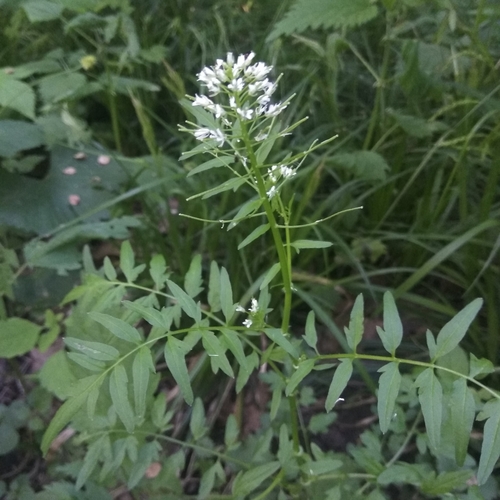
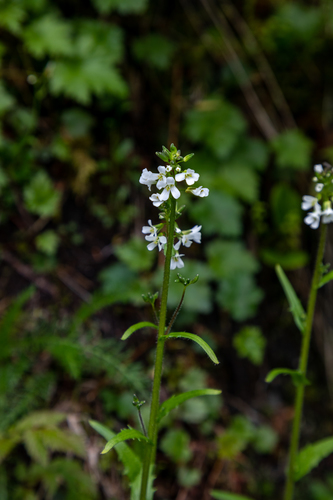
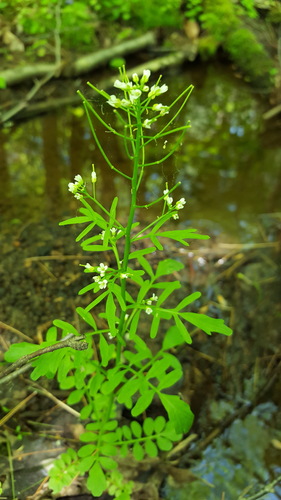
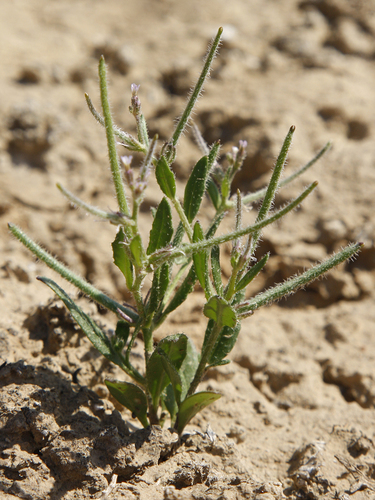
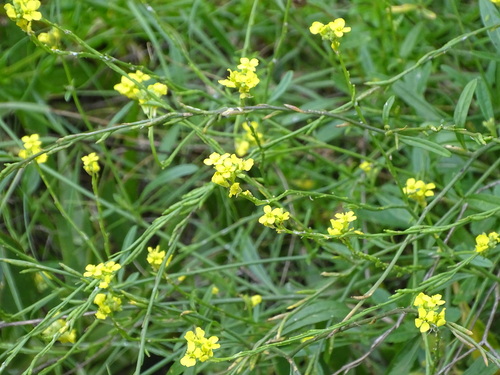
Brassica nigra (L.) W.D.J.Koch is an upright plant that reaches 70 cm (28 in) wide and up to 1.2 m (4 ft) tall when grown in moist, fertile soil. Its large stalked leaves have hairs or bristles at the base, and the plant’s stems are smoother. It blooms in summer, starting from May in the UK. Each flower has four yellow petals, which are twice as long as the sepals. Around four flowers grow at the top of each stem, arranged in a ring around the stem. After blooming, the plant produces long, beaked seed pods that hold rounded seeds.
This species is native to tropical regions of North Africa, temperate regions of Europe, and parts of Asia. In North Africa, it occurs in Algeria, Egypt, Eritrea, Libya, Ethiopia, Morocco, and Tunisia. In Asia, it is found in Afghanistan, Armenia, the Caucasus, China (specifically the provinces of Gansu, Jiangsu, Qinghai, Xinjiang, and Xizang), Cyprus, India, Iran, Iraq, Israel–Palestine, Kazakhstan, Lebanon, Syria, and Turkey. In Europe, it is found in Belarus, Moldova, and Ukraine in eastern Europe; Austria, Belgium, Czech Republic, Germany, Hungary, Netherlands, Poland, Slovakia, and Switzerland in middle Europe; Ireland and the United Kingdom in northern Europe; Albania, Bosnia and Herzegovina, Bulgaria, Croatia, Greece, Italy, Montenegro, North Macedonia, Romania, Serbia, and Slovenia in southeastern Europe; and France and Spain in southwestern Europe.
It was introduced to the Pacific coast of North America, where it is classified as an invasive species. According to Matt Loftis, manager of the Mountain Forestry Department at TreePeople in Los Angeles, California, Spanish Catholic missionaries brought the plant centuries ago during exploration and colonization to grow as a food crop. It has since grown unchecked, helped by the similar Mediterranean climate of Southern California.
Humans have used this plant as a condiment for over 2,000 years; it was referenced by Roman author Columella in the 1st century CE. Its leaves were also pickled in vinegar. In 13th-century France, ground seeds of the plant were mixed with unfermented grape juice (called must) to create "moût-ardent", meaning "burning must". This name later evolved to "moutarde", which became mustard in English. A spice is typically produced from the plant’s ground seeds with their seed coats removed. The small, hard seeds measure around 1 mm across, range in color from dark brown to black, have a distinct flavor, and almost no aroma. The seeds are commonly used in Indian cuisine, for example in curry, where they are called rai. They are usually tossed into hot oil or ghee, where they pop and release a characteristic nutty flavor. The seeds contain a large amount of fatty oil, which is primarily oleic acid. This oil is frequently used as cooking oil in India, where it is called "sarson ka tel".
The young leaves, buds, and flowers of Brassica nigra are edible. In Ethiopia, the plant is cultivated as a vegetable in Gondar, Harar, and Shewa; its shoots and leaves are eaten cooked, and its seeds are used as a spice. Its Amharic name is senafitch. Since the 1950s, black mustard has become less popular than brown mustard, because some brown mustard cultivars have seeds that can be harvested more efficiently by mechanical methods.
In folk medicine, this plant was used in the UK to make "hot mustard baths" that relieved symptoms of colds. Ground seeds mixed with honey are widely used as a cough suppressant in eastern Europe. Before modern medicine, the mustard poultice treatment called mouche de moutarde was popular in Eastern Canada for treating respiratory infections. This treatment involved mixing ground mustard seeds with flour and water to make a paste cataplasm. The poultice was applied to the chest or back and left in place until the person felt a stinging sensation. Mustard poultices could also be used to relieve muscular pains.