About Brachymyrmex patagonicus Mayr, 1868
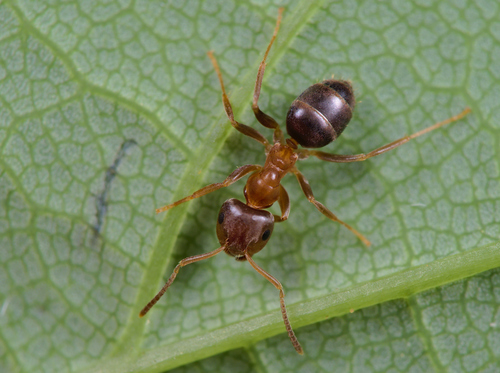
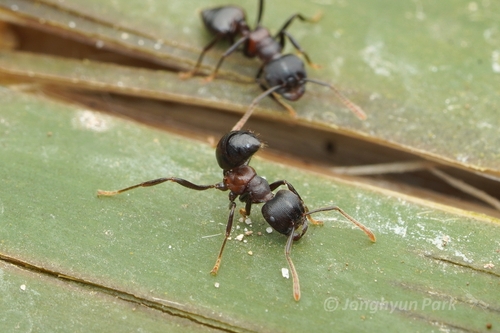
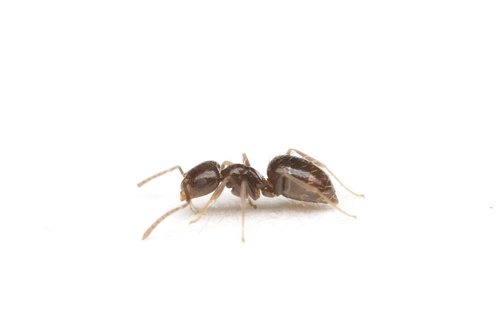
Identification: Dark rover ants (Brachymyrmex patagonicus Mayr, 1868) are small brown ants, typically less than 2.5 millimeters in total length. Worker individuals of this species range from 1.0mm to 2.0mm long, queens measure around 3.0mm, and males measure around 1.0mm long. Like all other species in the Brachymyrmex genus, worker ants have nine-segmented antennae. B. patagonicus has long hairs along its mesosoma, and relatively large eyes compared to other species in the Brachymyrmex genus. The dorsal surface of its gaster has a sparse distribution of appressed hairs. Dispersal and Habitat: B. patagonicus is native to South America, specifically Argentina and Paraguay. It has been introduced to many regions across the world, including the United States, Asia, and parts of Europe. In less than 50 years after its introduction to the United States, the species is now commonly found across 14 states, ranging from North Carolina to California. B. patagonicus typically forms colonies in soil, at the bases of trees, in leaf litter, and in wood and trash piles. In the southern United States, colonies occur in both natural and disturbed areas, and are more prevalent in locations near human activity. In landscaped areas, they are commonly found in mulch and man-made structures. Laboratory studies have confirmed that B. patagonicus prefers moist environments.