About Brachinus crepitans (Linnaeus, 1758)
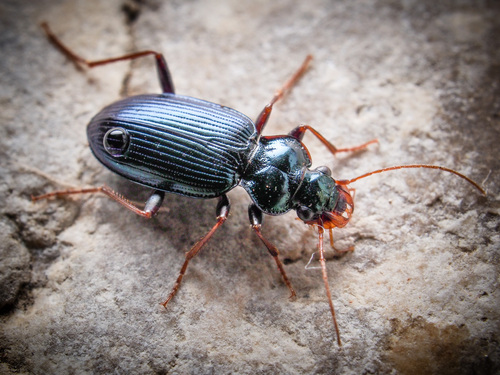
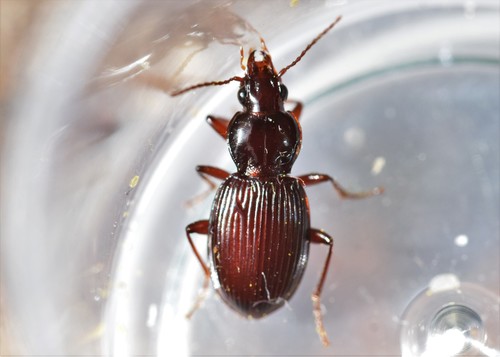
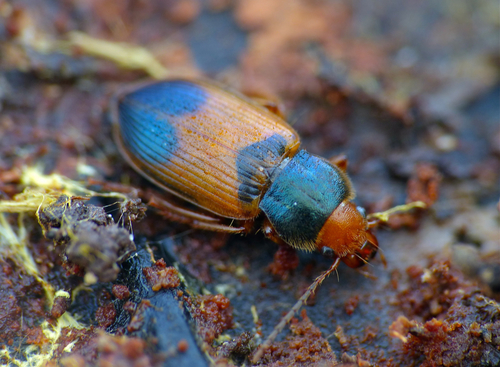
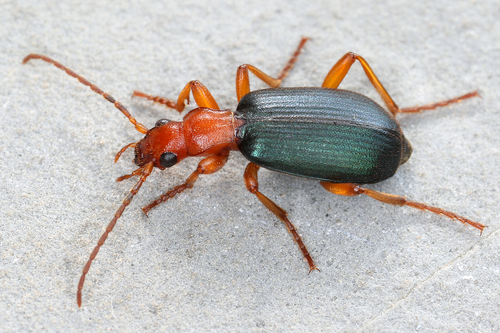
Brachinus crepitans (Linnaeus, 1758) can reach a length of 7–10.2 millimetres (0.28–0.40 in), with an average length of 8 millimetres (0.31 in). Its head and pronotum are brown, while its elytra are greenish. This species is very similar to Brachinus efflans. In Ukraine, this species occurs in the steppes of Lviv, near Osovitsa village of Podolian Province in western Ukraine, and also in Zolochiv, Kharkiv Oblast. In the United Kingdom, the species is found in southern England and southern Wales, where it is abundant in coastal areas. Inland locations have also been recorded; the most recent inland discoveries are in the Cotswolds and Northamptonshire, where it was found on limestone. It has also been found in boulder clay in Huntingdonshire, and at Brotheridge Green, an old railway line and wildlife reserve near Malvern, Worcestershire. This population was discovered in the 1970s by Ian L. Crombie. Brachinus crepitans occupies dry, sunny open habitats, most commonly under stones. It can also be found in calcareous grasslands, arable land, and chalk quarries. Adult Brachinus crepitans fly from May to June. The full species lifecycle is not known, but larvae are thought to be external parasites that feed on the pupae of other beetle species, including Amara convexiuscula and the staphylinid beetle Tasgius ater (Gravenhorst, 1802). When disturbed, this species expels a defensive liquid from two glands through its anus. One gland contains hydrogen peroxide and the other contains hydroquinone; when these two contents mix with enzymes in a specialized "firing chamber", the liquid reacts explosively to harm attacking organisms.