About Bothriochloa barbinodis (Lag.) Herter
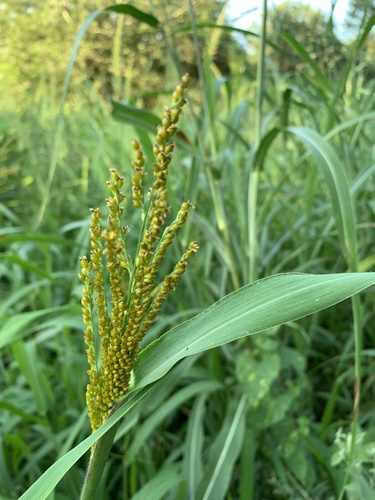
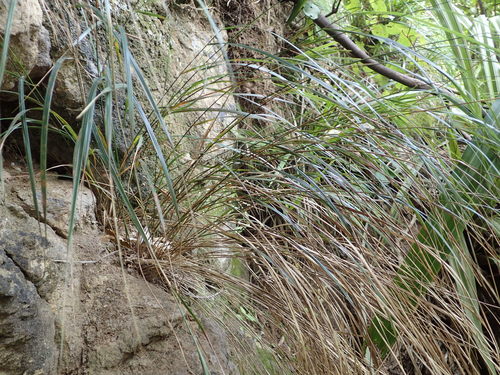
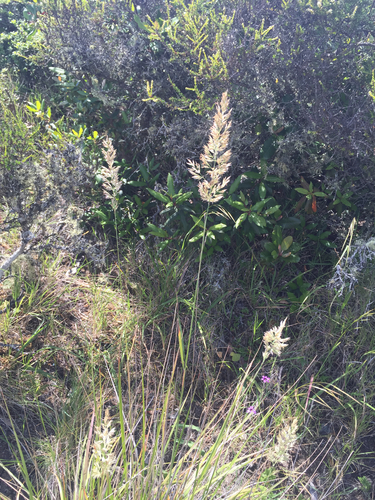
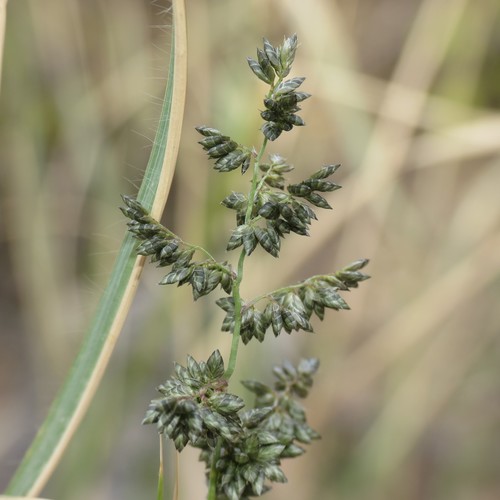
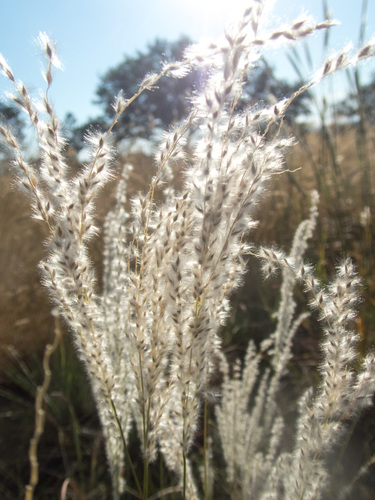
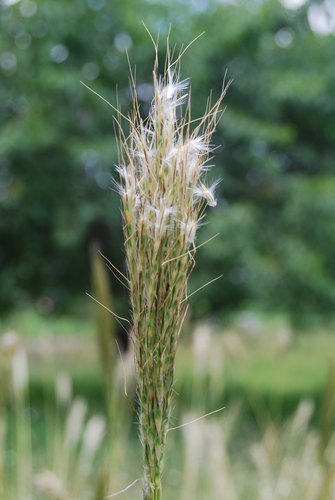
Bothriochloa barbinodis is a grass species commonly called cane bluestem. It is native to the Americas, occurring across most of South America, Central America, Mexico, and the southernmost continental United States, stretching from California to Florida. This is a perennial bunchgrass that grows in upright clumps between 60 and 120 centimeters (24 to 48 inches) tall. Its straw-colored stems have regularly spaced nodes that are fringed with fluffy hairs. The leaves are 20 to 30 centimeters (8 to 12 inches) long; they are blue-green when new, and dry to a reddish yellow shade. Its inflorescence is a feathery arrangement of spikelet units. Each unit is made up of one hairy, tan, fertile spikelet with a twisted awn up to 3.5 centimeters long, paired with a stalked, sterile spikelet that is much smaller and has no awn. The long-haired spikelets are dispersed by wind. Within its native range, this grass is used as forage for grazing animals and as ground cover for revegetating cleared land. It is highly drought resistant. It is recognized as an indicator of rangeland damage, because it is often one of the first native species to be eliminated when an area is overgrazed. Outside its native range, it is known as an introduced species and sometimes a weed, for example in Hawaii. It is also cultivated as an ornamental plant for its showy inflorescences.