About Boronia inornata Turcz.
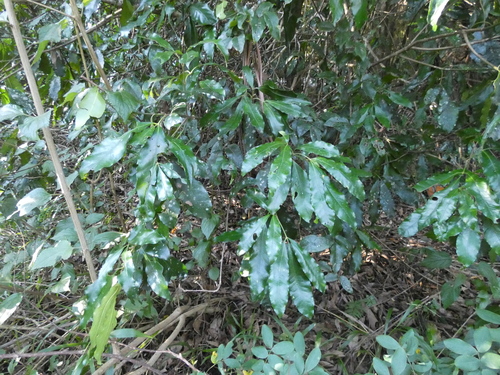
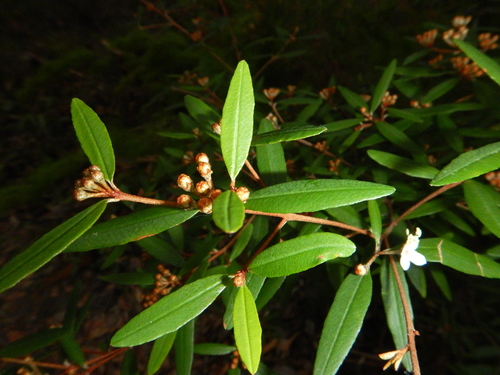
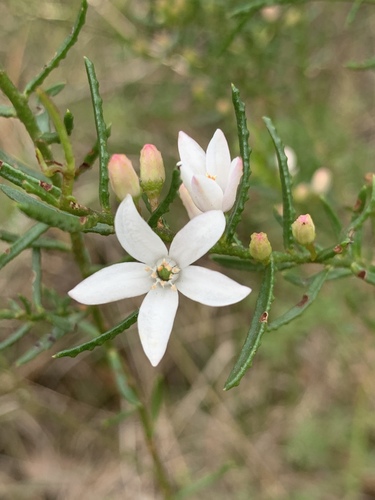
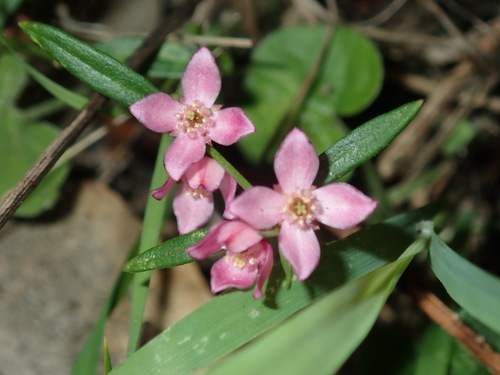
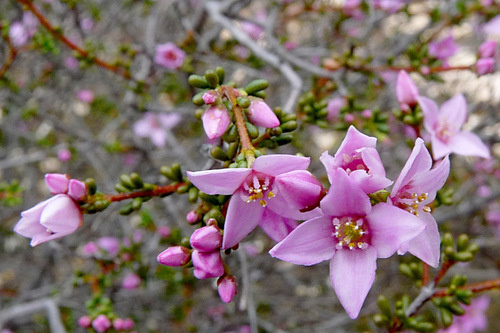
Boronia inornata, commonly known as desert boronia, is an erect or spreading shrub that reaches 0.2 to 1.2 meters (0.66 to 3.9 feet) in height. Its stems are warty, glandular, and covered with short, soft hairs. This species produces leaves with three thick, hairless leaflets that measure 1.5 to 4 millimeters (0.059 to 0.16 inches) long. Its flowers are pink, red, or white, and are arranged singly or in groups of two or three, growing either in leaf axils or at the tips of branches. The flowers have four rounded sepals 1.5 to 2 millimeters (0.06 to 0.08 inches) long, which are sometimes hairy, and four petals 3 to 5 millimeters (0.1 to 0.2 inches) long. Flowering takes place from May to December, and the smooth fruits that develop after flowering are 4 to 5 millimeters (0.16 to 0.20 inches) long. Desert boronia grows on undulating plains, rocky hills, and near salt lakes. Subspecies inornata occurs only in Western Australia, where it grows in mallee woodland, sometimes forming large populations, particularly on disturbed soil and after bushfires. Both recognized subspecies are found in the Coolgardie, Esperance Plains, and Mallee biogeographic regions of Western Australia. Subspecies leptophylla is also widely distributed across the southern part of South Australia.