About Borassus aethiopum Mart.
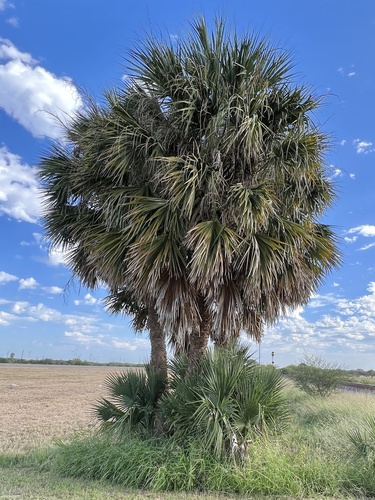
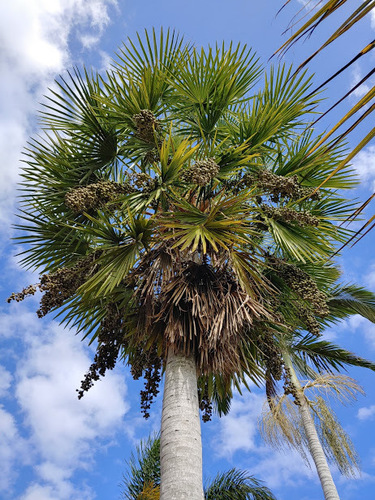
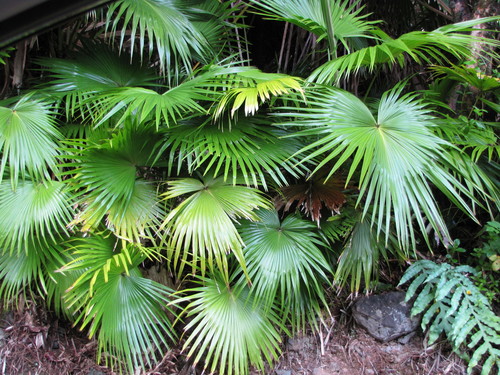
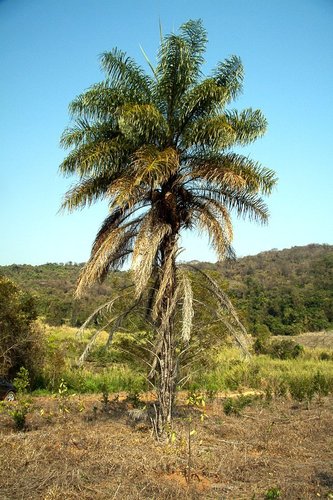
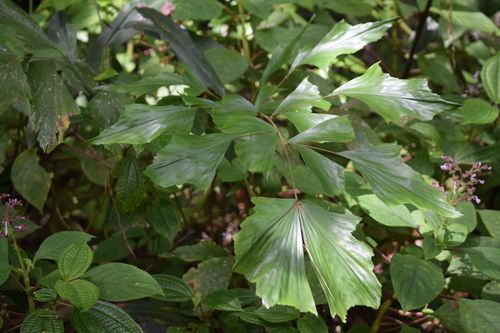
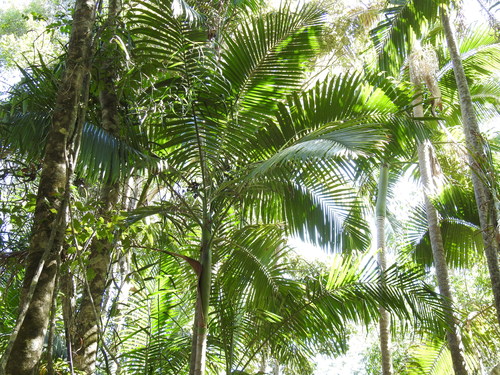
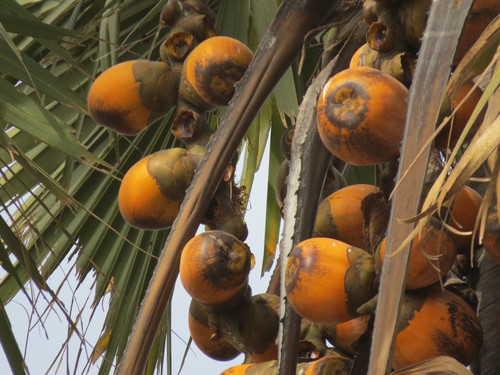
The typical form of Borassus aethiopum is a solitary palm that grows up to 25 metres (82 feet) tall, with a trunk diameter of 1 metre (3.3 feet) at the base. In the floodplains (river bottoms) of many East African rivers, including the Rufiji in Tanzania and the Tana in Kenya, a closely related form of this palm can reach 2.1 metres (7 feet) thick at breast height (1.2 metres or 4 feet above ground), retains this thickness through its swollen upper trunk section, and grows up to 30 metres (100 feet) tall. The species has fan-shaped leaves that are 3 metres (9.8 feet) wide; the floodplain form has larger leaves, growing up to 3.7 metres (12 feet) wide. All forms have leaf stalks (petioles) 2 metres (6.6 feet) long, with spines along the petiole margins. Small flowers on male plants are mostly hidden inside scaly catkins. Female flowers are much larger, growing up to 0.79 inches (2 centimetres) wide, and develop into yellow to brown fruits. Each fruit holds 1 to 3 seeds, with every seed enclosed in a woody endocarp. The floodplain variety is almost certainly the most massive palm species in the world, comparable in size to Jubaea chilensis, the Chilean wine palm. This tree has many uses: the fruits are edible, as are the tender roots produced by young plants. Fibres can be collected from the leaves, and the wood, which has a reputation for being termite-proof, can be used for construction.