About Boraginaceae
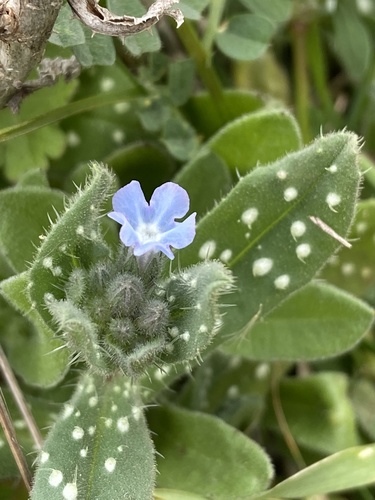
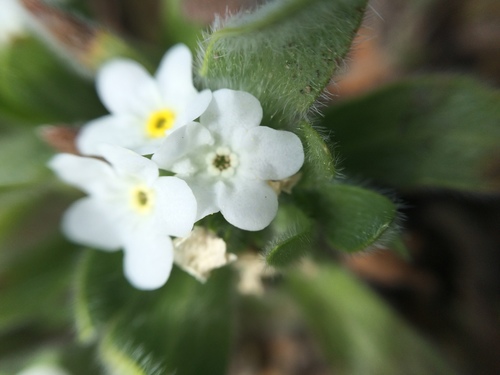
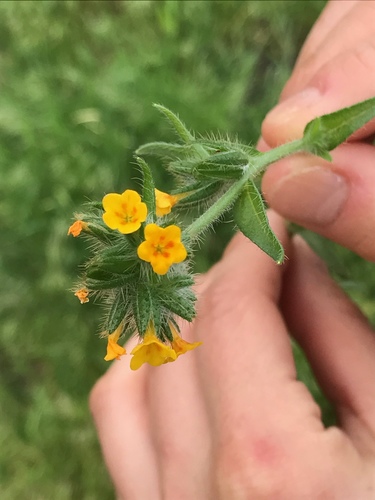
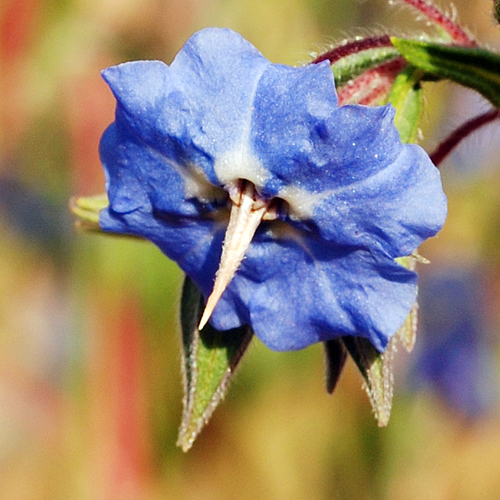
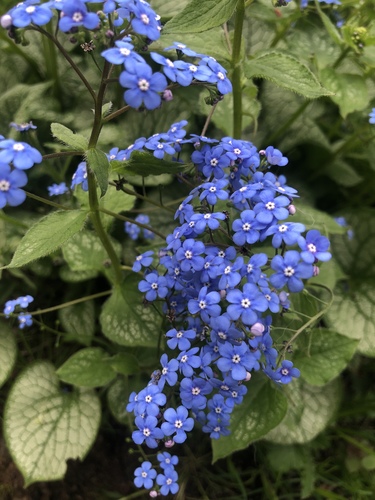
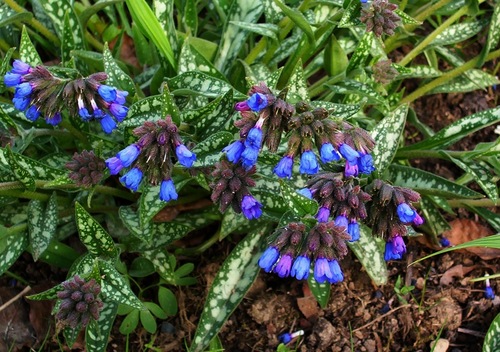
This description covers the characteristics of plants in the Boraginaceae family. These plants have alternately arranged leaves, or a mix of alternate and opposite leaf arrangement. Their leaf blades are usually narrow, with many being linear or lance-shaped. Leaf edges can be smooth or toothed, and some leaves have petioles. Most species in the family produce bisexual flowers, while some taxa are dioecious. Pollination is most often carried out by hymenopterans, such as bees. Most species bear inflorescences called scorpioid cymes, which have a coiled shape, at least when they are new. Flowers have a usually five-lobed calyx. Corolla shape can range from rotate to bell-shaped to tubular, but corollas generally have five lobes. Corollas may be green, white, yellow, orange, pink, purple, or blue. Each flower contains five stamens and one style with one or two stigmas. The fruit produced is a drupe, which is sometimes fleshy. Most members of the family have hairy leaves. The coarse texture of these hairs comes from cystoliths made of silicon dioxide and calcium carbonate. These hairs can trigger an adverse skin reaction, including itching and a rash in some people, especially those who handle the plants regularly like gardeners. In some species, anthocyanins cause flowers to change color from red to blue as they age. This color change may act as a signal to pollinators that a flower is old and no longer has abundant pollen and nectar. Well-known members of the Boraginaceae family are: alkanet (Alkanna tinctoria), borage (Borago officinalis), comfrey (Symphytum spp.), fiddleneck (Amsinckia spp.), forget-me-not (Myosotis spp.), green alkanet (Pentaglottis sempervirens), hound's tongue (Cynoglossum spp.), lungwort (Pulmonaria spp.), oysterplant (Mertensia maritima), purple viper's bugloss/Salvation Jane (Echium plantagineum), Siberian bugloss (Brunnera macrophylla), and viper's bugloss (Echium vulgare).