About Bonamia grandiflora (A.Gray) Hallier fil.
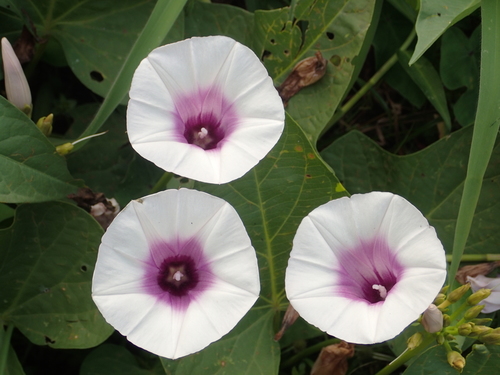
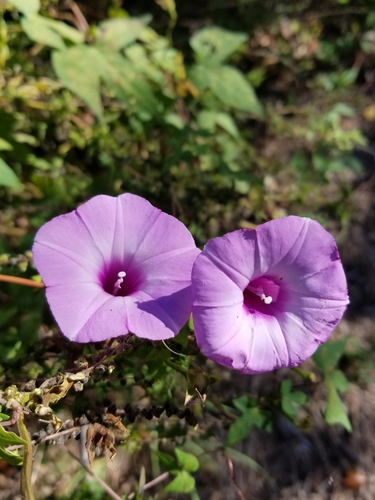
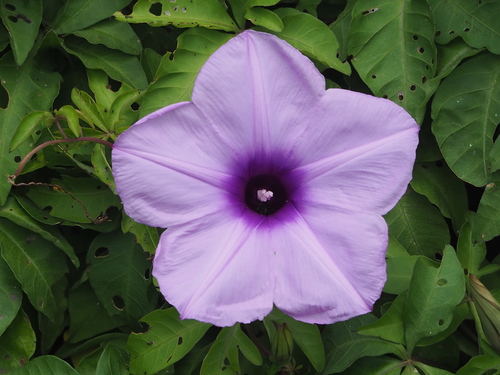
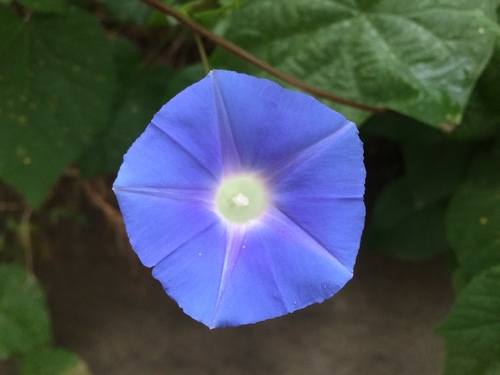
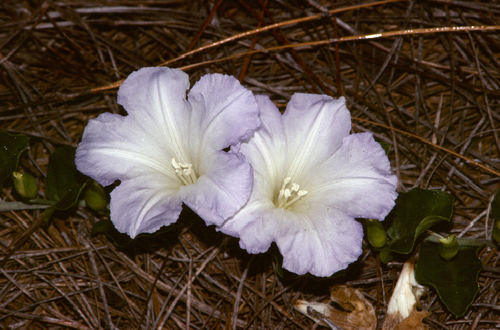
Bonamia grandiflora is a flowering plant species in the morning glory family, known by the common names Florida lady's nightcap, Florida bonamia, and scrub morning glory. It is endemic to Central Florida, where approximately 100 known populations remain, and many of these are located within the Ocala National Forest. The species has declined in recent decades, primarily because its habitat is being developed and converted to urban zones and citrus groves. This habitat loss is the main reason the plant was federally listed as a threatened species in 1987. This native Florida wildflower is a perennial vine that trails along the ground, reaching a maximum length of around 3 meters. It has a deep root and multiple underground stems. Hairy stems are lined with leathery, gray-green leaves up to 5 centimeters long. The inflorescence is a single showy flower borne on a short, erect peduncle. The flower corolla opens in the morning, spreading 7 to 8 centimeters wide and up to 10 centimeters long. It is pale to bright blue-purple with a white throat. At the center of the funnel-shaped corolla are five stamens tipped with yellow anthers. The fruit is a capsule around a centimeter in length containing a few seeds. The plant grows in Florida scrub habitat on deep, dry, white sand in clearings among sand pines (Pinus clausa) and other scrub flora. Other rare plants in the same region include highlands scrub hypericum (Hypericum cumulicola), papery whitlow-wort (Paronychia chartacea), scrub plum (Prunus geniculata), and scrub lupine (Lupinus aridorum). It is adapted to the occasional natural wildfire that occurs in scrub habitat. Fire clears brush and heavy forest canopy that shade out the morning glory, creating the clearings the plant requires. Fire suppression efforts are generally harmful to the species. Controlled burns and other methods to clear excessive vegetation are part of the species' recovery plan. When provided with appropriate habitat, this morning glory can become plentiful and even abundant. It can colonize newly cleared, sandy plots and establish itself vigorously, but it does not tolerate much disturbance after it becomes established.