About Bombus sichelii Radoszkowski, 1860
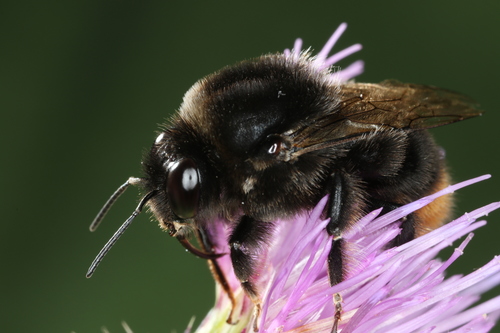
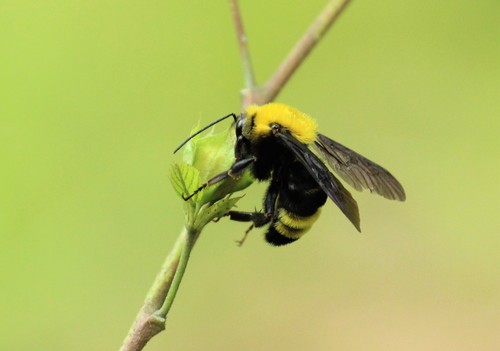
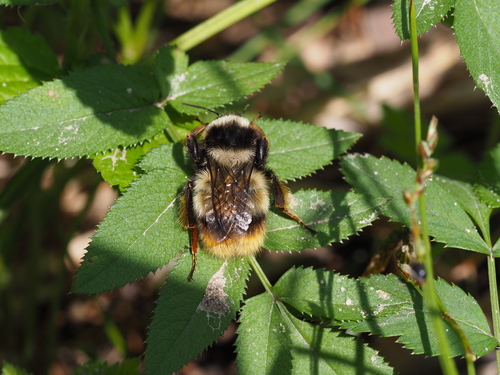
Sichel's bumblebee, scientifically named Bombus sichelii Radoszkowski, 1860, is a species of bumblebee. This species has a disjoint distribution across Eurasia, split across several subspecies. In Europe, it occurs in the Cantabrian Mountains, the Pyrenees, the Alps and the Balkans, with no confirmed records from Fennoscandia. In Central Europe, it is restricted to the Alps. In Germany, it is only found in the Bavarian Alps at altitudes above 1300 m, most often between 1900 and 2700 m (as documented by Trautmann & Trautmann 1924), and it is very rare in this region. In Austria, it can be found in all federal states except Burgenland. In Switzerland, it has been recorded both historically and currently in the Alpine region, and occasionally in the Central Plateau and the Jura. In West Asia, it occurs in the eastern Pontic Mountains of Asia Minor, the East Anatolian mountains, and the Caucasus. Asian populations range west to Arkhangelsk and Moscow, south to Penza and Bashkortostan, and east to Kamchatka and Japan. Its habitat consists of mountain slopes with open forests, forest edges, and meadows, ranging from the subalpine to the alpine altitude level. Bombus sichelii is a univoltine species, meaning it produces one generation per year. Overwintered females emerge from the end of April to mid-June, with emergence timing dependent on altitude. Young females and males emerge starting from the beginning of August. This species is polylectic, meaning it collects pollen from a wide range of plant species. It nests in underground cavities, such as abandoned mouse nests. It is classified as a nest-taker and pollen storer. Colonies contain between 80 and 150 individual bees. The known cuckoo bee parasite of Bombus sichelii is Bombus rupestris.