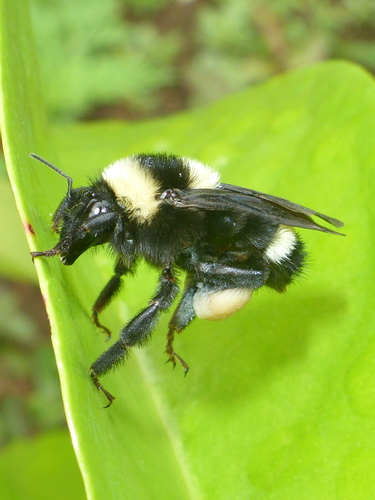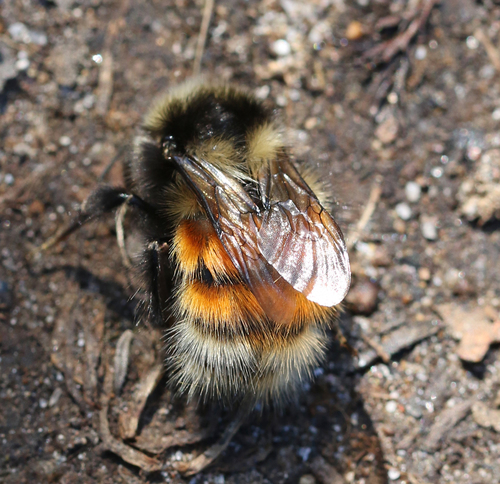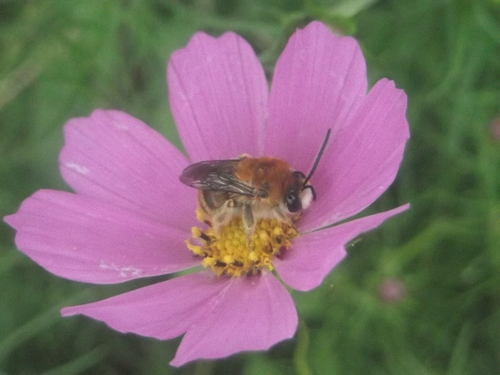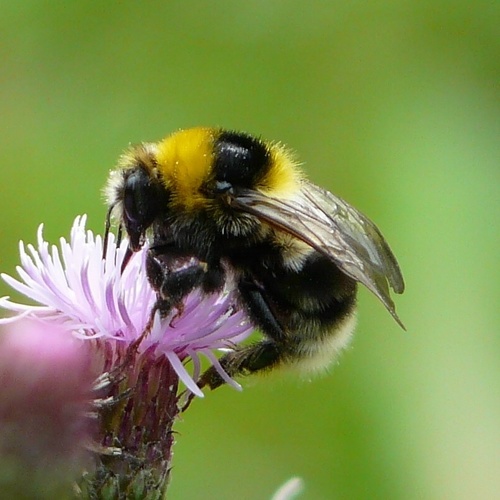
About Bombus semenoviellus Skorikov, 1910
Bombus semenoviellus Skorikov, 1910 is a bumblebee species in the insect family Apidae, native to Europe. In recent years, this species has been expanding its range westward. Its current confirmed range extends from its westernmost point in Lower Saxony eastward to Tuva; east of Tuva, there is only one 1961 report from Sakha (also called Yakutia) published by Panfilov et al. To the north, it reaches southern Norway, where it was first discovered in 2013 in Hvaler, with no confirmed records from Sweden; in Finland it reaches the Arctic Circle, and in Russia it is found in Karelia, Arkhangelsk, Komi, and Perm. To the south, it reaches Bavaria, Northern Austria, Slovakia, Ukraine, and Orenburg.
The first recorded observation of this species in Central Europe was in Schleswig-Holstein, Germany, in 1998, as documented by van der Smissen & Rasmont 2000. In subsequent years, the species was also recorded in Brandenburg, Saxony, Thuringia, Saxony-Anhalt, Bavaria, Mecklenburg-Western Pomerania, and Lower Saxony in Germany. To date, the only confirmed record in Austria is a 2009 find from Waldviertel in Lower Austria, documented by Streinzer 2010.
Originally, this species inhabited sparse boreal coniferous forests of the southern taiga. It can also be found in forest steppe, extensively used grassland, semi-arid grassland, ruderal areas, and wet meadows, occurring from lowland elevations up to the colline altitude zone. In Central Europe, it occupies forest clearings, forest paths, and forest edges, as well as diverse, flower-rich cultural landscapes such as meadows, ruderal areas, gardens, and parks near human settlements that have warm, dry summers (Frommer 2018).
Bombus semenoviellus is active from late April to late August. Overwintered females emerge at the end of April, and young males appear in July. This is a polylectic species that collects pollen from a wide range of plant types. During the summer colony development phase, it prefers plants in the family Asteraceae as food sources. It nests underground in abandoned underground mouse nests, and is classified as a pollenstorer. Colonies of this species do not have large numbers of individual bees.