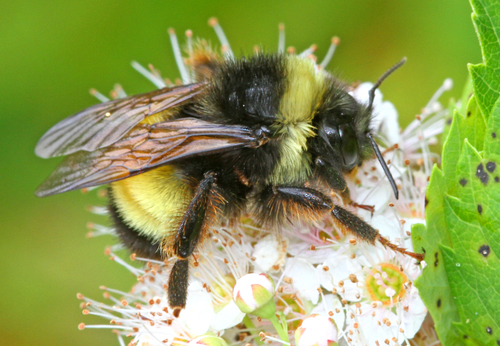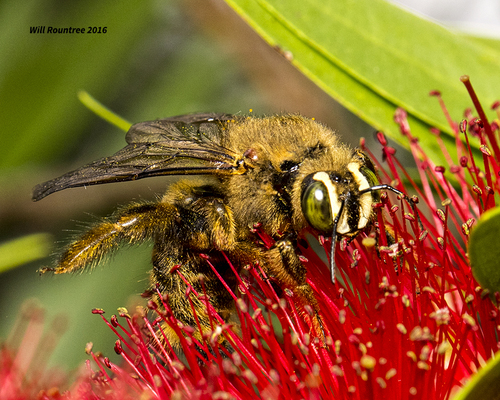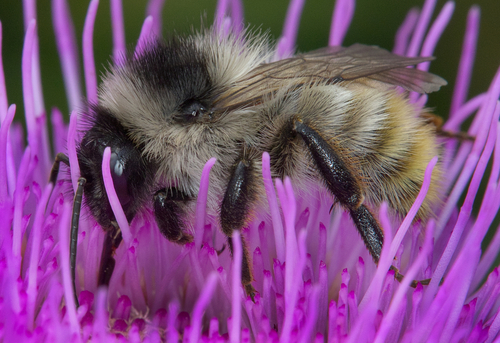
About Bombus mesomelas Gerstäcker, 1869
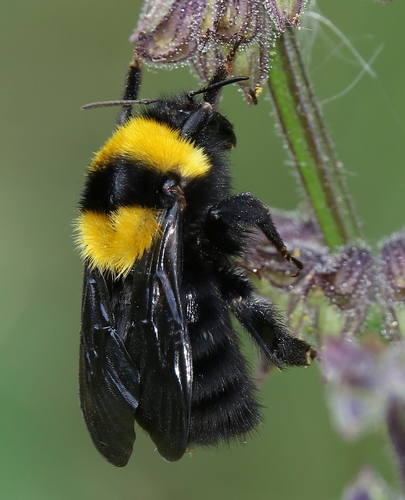
Bombus mesomelas, commonly called the black-backed bumblebee, is a species of bumblebee. The nominate form of this species is found in the Cantabrian Mountains, Pyrenees, Alps, Apennines, Giant Mountains and Carpathian Mountains, and occurs less often in the Central European Central Mountains. The subspecies Bombus mesomelas alboluteus VOGT, 1909 has a disjoint distribution, with a western population in the mountains of the Balkan Peninsula and an eastern population in the East Anatolian highlands, the Caucasus, extending as far as the Elburs. This species is considered lost in Germany, where it was previously recorded in Thuringia, Saxony and Bavaria, with the last confirmed find dating to 1956. In Austria, it has been reported from all federal states except Burgenland. In Switzerland, it occurs across the entire Alpine region and the Jura, and was historically also found in the northern Alpine foothills. This species lives on sunny mountain slopes, and prefers dry, warm locations in middle and high mountains. It occurs from montane to alpine altitudes, and can be found starting at 600 m in Central Europe. Bombus mesomelas produces one generation per year, a life cycle known as univoltine. Overwintered females emerge around the end of May, and young females and males emerge starting at the end of August. It is a polylectic species that collects pollen from a wide range of plant hosts. It nests mainly underground in abandoned mouse holes, acting as a pocketmaker, and only rarely nests in the herb layer as an open nest-builder. Colonies of this species contain between 50 and 120 individuals.