About Bombus insularis (Smith, 1861)
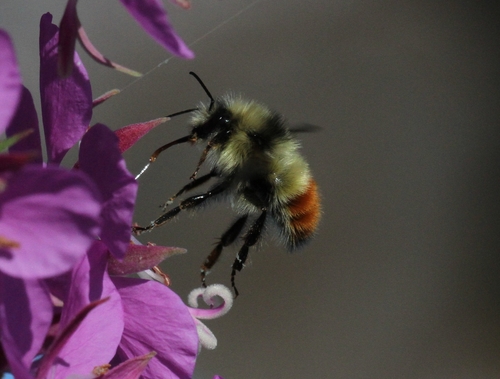
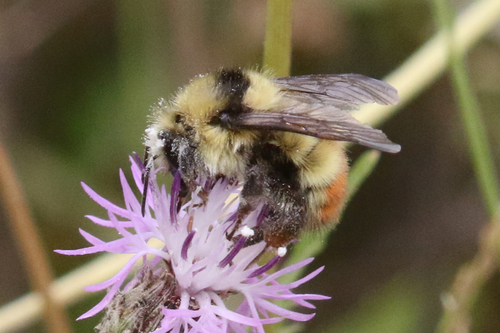
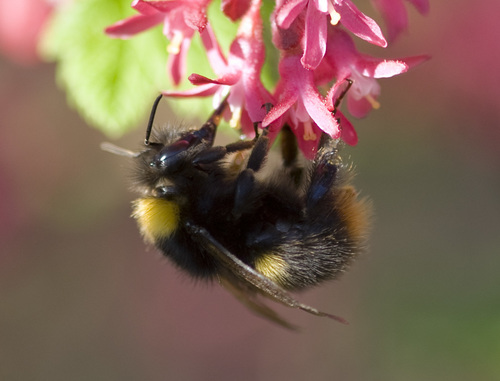
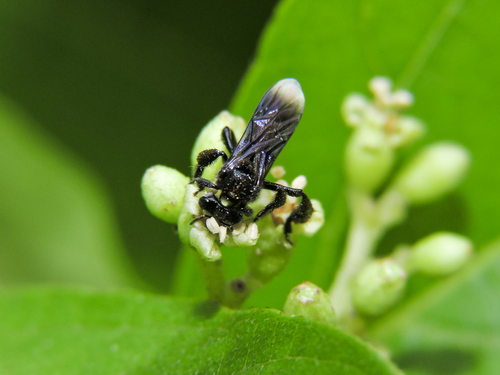
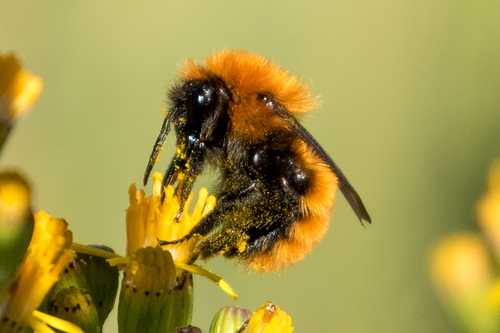
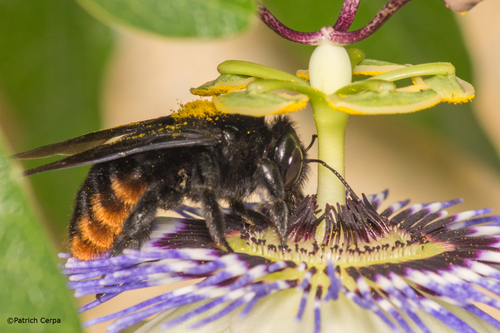
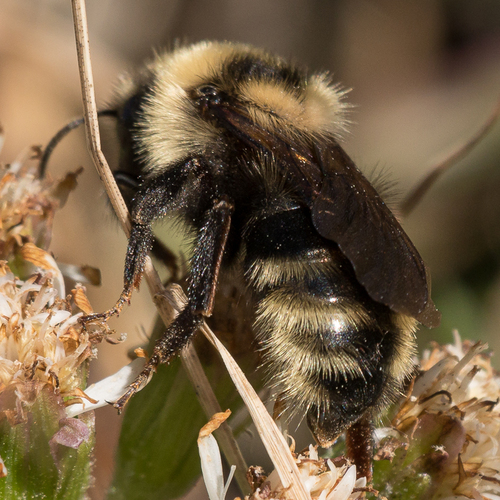
Bombus insularis (Smith, 1861), commonly called the indiscriminate cuckoo bumblebee, is a species of cuckoo bumblebee that belongs to the bumblebee subgenus Psithyrus. It is native to northern and western North America, found across Canada, Alaska, the northern United States, and some western U.S. states. This species inhabits tundra, taiga, western mountain ranges, and some maritime regions. Females of the species measure 1.6 to 1.9 centimeters long and just under one centimeter wide. Their heads are black with tufts of yellow hairs, their thoraxes are covered in long pale yellow hairs, and their legs are hairy and black. Their abdomens are black with yellow coloration along the sides. Males are smaller, with abdomens approximately half a centimeter wide. Their heads have long black hairs with small yellow patches, and their abdomens have bands of yellow and black hairs. Like other cuckoo bees, the queen of this species invades the nest of a host bumblebee species, kills the resident host queen, and lives and breeds in the nest, which is tended by the host's worker bees. Documented host species for Bombus insularis include the white-shouldered bumblebee (B. appositus), yellow bumblebee (B. fervidus), yellow-fronted bumblebee (B. flavifrons), Nevada bumblebee (B. nevadensis), and orange-belted bumblebee (B. ternarius). This bumblebee remains common and widespread across most of its range, though it has declined in some areas and disappeared from a small portion of its historical distribution. Several of its host species have experienced more severe population declines. Known potential threats to the species include habitat loss, pesticides, pathogens spread by domesticated pollinators, competition from introduced bees, and climate change.