About Bombus hypnorum (Linnaeus, 1758)
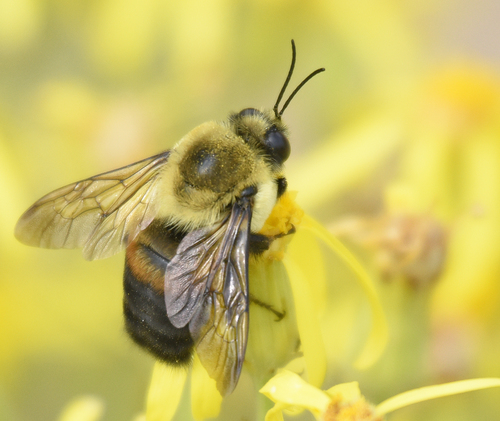
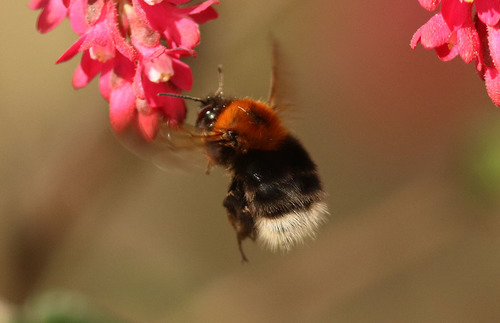
Bombus hypnorum has a short proboscis and a rounded head. Its thorax is typically uniformly ginger in color, though darker or even entirely black thoraxes can occur. The abdomen is covered in black hair, and the tail is always white. In workers, the first abdominal segment (tergite) has black hair; a portion of males may have ginger hairs mixed with black hairs, both on the face and on the first abdominal tergite. On the European continent, there are individuals with extended yellow coloration. Workers are often (but not always) small, while drones are much larger in comparison. Queen size varies across individuals. Bombus hypnorum is a common bumblebee species found across continental Europe and northern Asia. Its range extends from northern France east to Kamchatka, and from the Pyrenees north to the mountains of northern Europe. In the Balkans, it occurs in northwestern Greece. It is not present in the Mediterranean or the steppes of eastern Europe. It is only found in the mountains of the Iberian Peninsula, and does not occur south of Tuscany in Italy. This bumblebee was first observed in the United Kingdom on 17 July 2001, near the village of Landford in Wiltshire, and has since spread widely across the country; it now ranges from England as far north as northern Scotland and Wales, and reached Ireland in 2017. In August 2008, Bombus hypnorum was found in Iceland. New queens have been recorded in Iceland each year since this first sighting, and the species is likely to remain and thrive there close to humans near dense settlements such as Reykjavík. It is not expected to spread into Iceland's more rural, colder areas. This bumblebee often lives near human settlements. It prefers to build nests above ground, and frequently occupies bird boxes. It also inhabits forests; in more open areas with fewer trees, it favors human dwellings. Unlike other members of the Bombus genus, it prefers to live in holes and cavities in tree walls. It does not occur in areas with extensive rapeseed cover.