About Bombus campestris (Panzer, 1801)
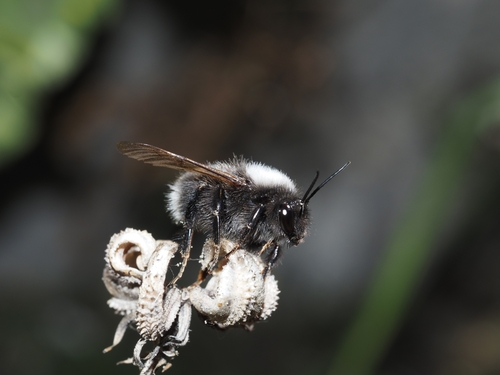
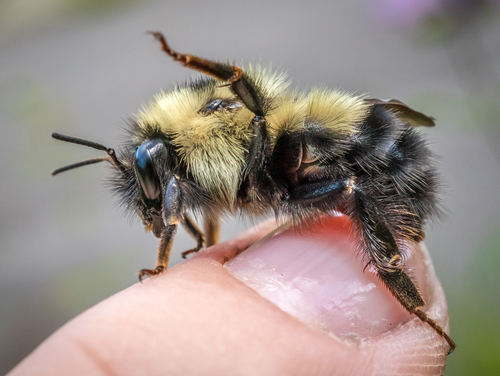
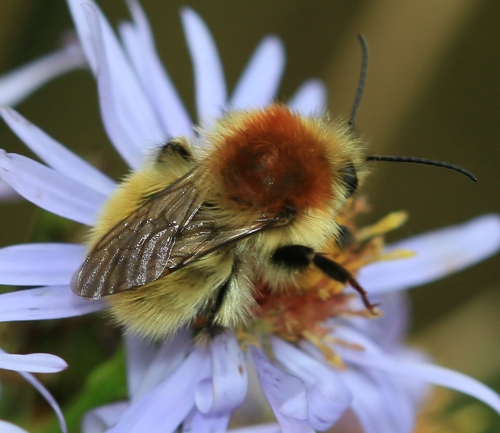
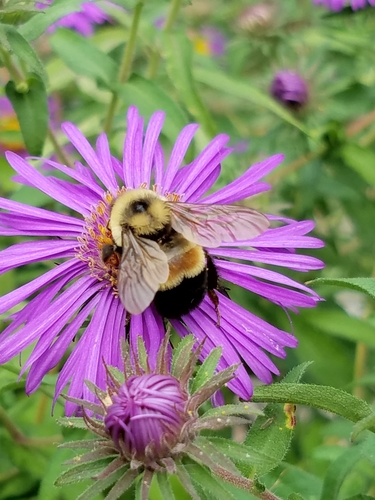
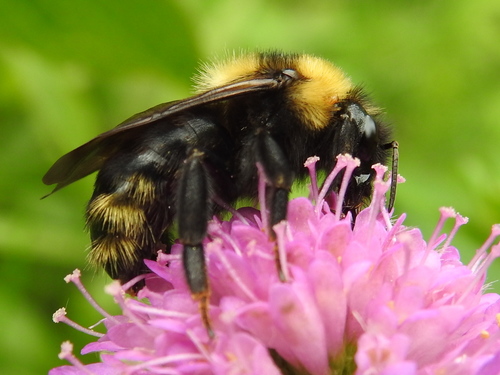
Bombus campestris (Panzer, 1801) is a medium-sized bumblebee. Queens average 18 mm (0.7 in) in length, while males average 15 mm (0.6 in) in length. Queen dorsal (upper) fur is quite thin. Their collar, and in some cases the top of the head, is orange-yellow. Abdominal segments (terga) 3–5 have yellow sides with a black center, and the rest of the queen's body is black. Male fur coloration is much more variable. One pale morph of male has a broad pale yellow collar, yellow hairs on the top of the head, pale hairs on the sides of the otherwise black first tergite, a yellow line along the posterior rim, and pale yellow terga 3–6 that usually have a thin black central line. Like queens, the rest of this morph's body is black. The dark male morph is entirely black except for a thin, diffuse band on the collar and yellow hairs on the sides of terga 4–6. Intermediate forms also exist, and both queens and males can be melanistic. The subspecies B. c. swynnertoni is found in western Scotland. Queens of this subspecies have an almost entirely pale yellow thorax, yellow hairs on terga 1 and 2, and a yellow tail. Males of this subspecies have more black on the thorax, but extensive yellow on the abdomen. This species occurs across most of Europe, ranging from central Fennoscandia in the north to northern Spain, southern Italy, and Greece in the south, and from the British Isles in the west to far eastern Russia in the east. In Britain, it is mostly found in England and Wales, and has a patchy distribution across Scotland. B. campestris is a cuckoo bumblebee whose main host species are bumblebees in the subgenus Thoracobombus, including Bombus pascuorum, the common carder bee. In continental Europe, it also parasitizes the nests of Bombus humilis (brown-banded carder bee) and Bombus pratorum (early bumblebee), even though the latter species belongs to the subgenus Pyrobombus rather than Thoracobombus. Both sexes of B. campestris visit flowers of green alkanet, devil's-bit scabious, and thistle. Queens additionally forage from dandelion, red clover, germander speedwell, and ground ivy, while males feed from bramble and knapweed.