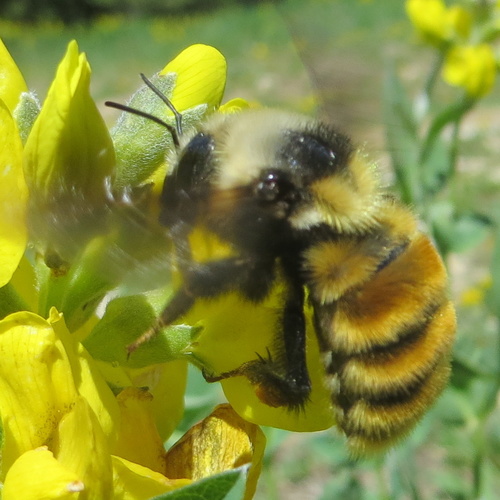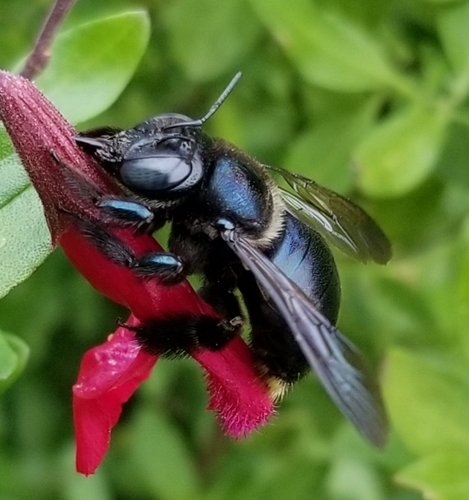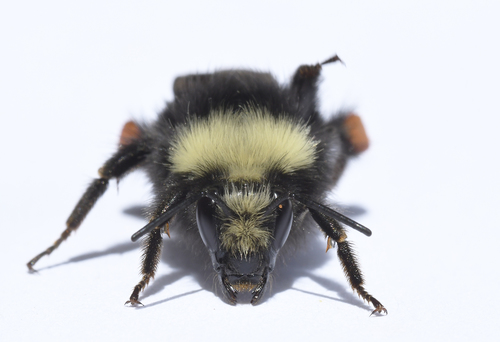
About Bombus caliginosus (Frison, 1927)
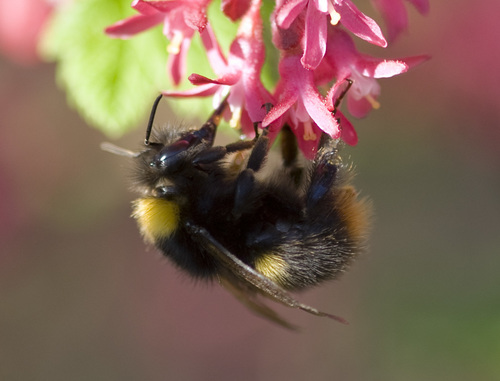
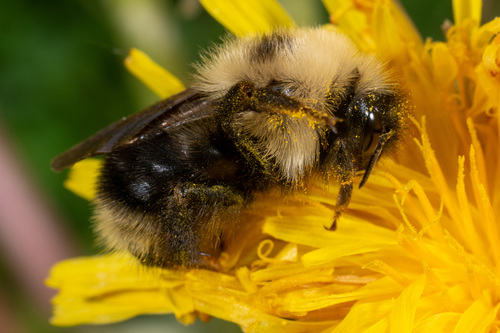
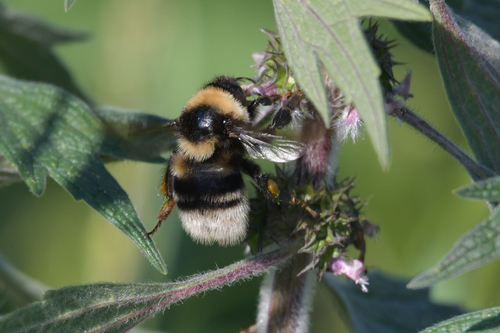
The obscure bumblebee, Bombus caliginosus, is very similar to the closely related yellow-faced bumblebee (B. vosnesenskii). The only certain way to distinguish the two species is by examining the structure of male genitalia. However, there are subtle visual differences that help identify the obscure bumblebee: it generally has longer hairs, and its abdominal underside has yellow hairs, while the yellow-faced bumblebee has only black hairs on this area. This bumblebee species has been recorded feeding from plants belonging to 19 different plant families. Worker obscure bumblebees are most frequently found on plants in the legume family, Fabaceae. Queens are most often seen on plants in the heath family, Ericaceae, while males are most commonly observed on plants in the aster family, Asteraceae. In one study sample, common plants visited by workers included ceanothus, thistles, sweet peas, lupines, rhododendrons, Rubus, willows, and clovers. The annual life cycle of this bumblebee follows a predictable schedule: queens emerge from hibernation in late January, the first worker bees appear by early March, adult males emerge by the end of April, and the entire colony dissolves in late October. All colony members die at this point except for the newly produced young queens.