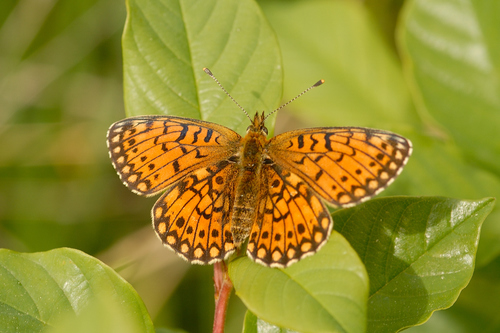
About Boloria selene (Denis & Schiffermüller), 1775
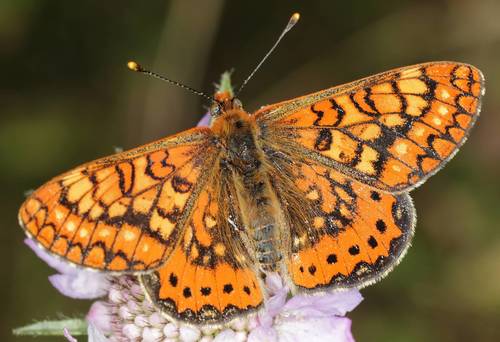
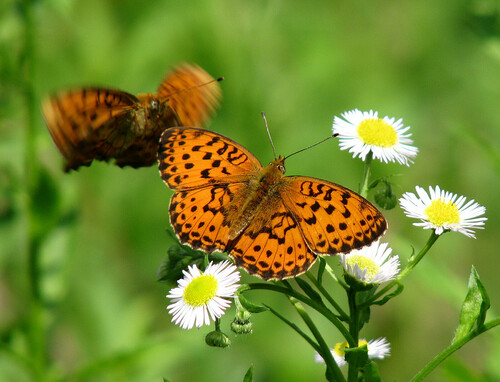
Boloria selene (Denis & Schiffermüller), 1775, commonly called the small pearl-bordered fritillary in Europe, is a butterfly species belonging to the family Nymphalidae. It is distributed across Europe, Asia, and North America. In its larval stage, this species feeds exclusively on violets. It prefers wet grassland habitats, where its larval food source violets grow. It overwinters as a larva, and its eggs hatch between late summer and early autumn. Adult and larval members of this species are prey for multiple types of birds and other insects. Modern agriculture has fragmented or entirely lost most of the grassland habitats that support Boloria selene, to make space for farmland. This has caused a serious population decline for the small pearl-bordered fritillary across Europe, with declines reaching as much as 80% in some regions. Additional factors contributing to population loss include limited habitat range, low dispersal rate, and strong food specialization. Despite ongoing modern conservation efforts, the population of the small pearl-bordered fritillary continues to decline. North American populations, at least those in the continental United States, appear to be experiencing the same decline. The species is widespread across central and northern Europe, North America, and extends through Asia to Korea. Specific recorded locations include Germany, the United Kingdom, Sweden, and Midwestern US states such as Iowa and the Dakotas. In the United Kingdom, it is widespread across upland and western Britain, but does not occur in central or eastern England, or in Ireland. While its range is stable across much of Europe, declines have been reported in at least nine countries, including England. It occurs in damp grassy habitats, woodland clearings, and moorland, and has also been recorded in dune slacks and on coastal cliffs, always in grassland environments with native violets.