About Boletus subalpinus (Trappe & Thiers) Nuhn, Manfr.Binder, A.F.S.Taylor, Halling & Hibbett
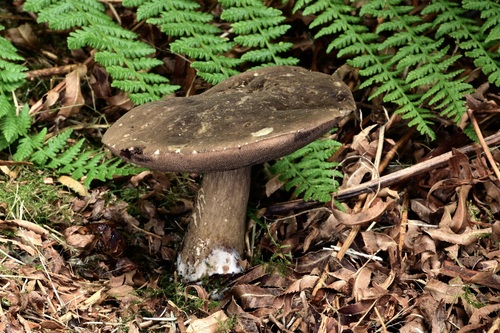
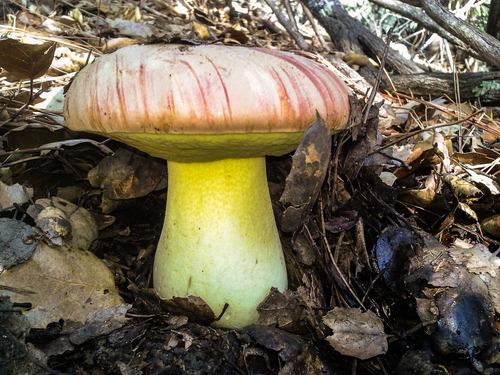
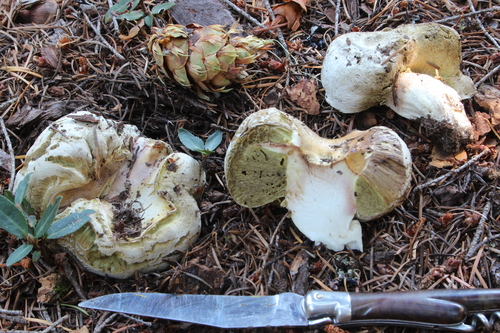
Boletus subalpinus, commonly known as the gasteroid king bolete, is a species of fungus belonging to the family Boletaceae. It was first scientifically described in 1969 by American mycologists Harry Delbert Thiers and James M. Trappe. Originally classified as a species of the genus Gastroboletus, a 2013 molecular phylogenetics study determined it actually belongs to Boletus sensu stricto. Its cap measures 5–12 centimetres (2–4 3⁄4 inches) wide, is buff-colored, and becomes flatter as it matures after starting as convex. The flesh is whitish, and stains bluish, or sometimes pink, when cut or damaged. The pores start pale and darken as the fungus grows, and this species does not produce a spore print. The stalk can grow up to 6 cm long and 5 cm thick; it is pale when young, darkens with age, and sometimes is darker at the base. This species is found in California and Oregon.