About Boletus nobilis Peck
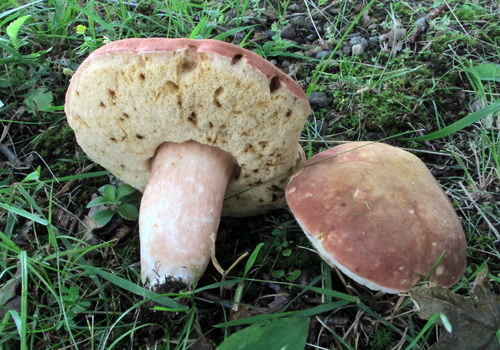
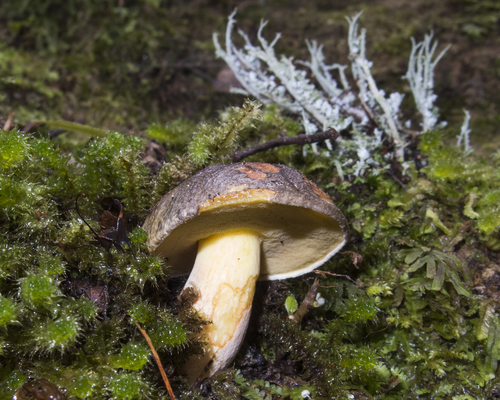
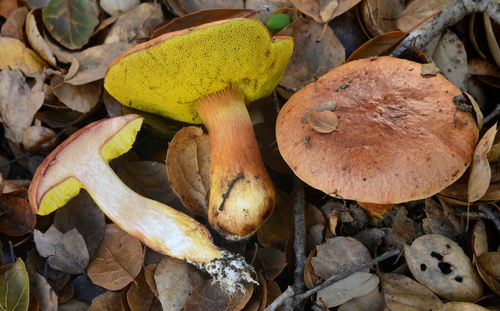
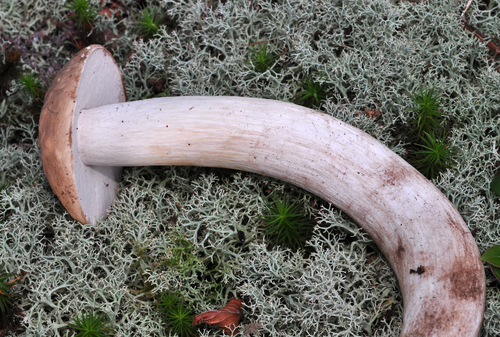
Morphology: Like other boletes, the fruitbody (basidiocarp) of Boletus nobilis Peck varies in size, but does not grow as large and prominent as Boletus edulis. The flesh remains thin even in very large specimens. For the hymenium, the pores are white, even when the fungus is old, and do not develop the greenish tint seen in B. edulis. The pores do not form depressions around the stipe. The pileus (cap) is 7 to 20 centimeters wide, starting convex before flattening into a plane shape as it ages. It has a dry surface with a yellowish to reddish brown skin, which is lighter in the center of the cap, and fades to pale ochraceous as it ages. The stipe (stem) is elongated, sometimes bulbous, and is generally white in color, sometimes with a lilaceous tinge. It is finely reticulated just below the hymenium, and the reticulation is shallow. The spore print is dull ochre brown to dull rusty brown. Distribution and habitat: Boletus nobilis grows under oak and beech trees on the East Coast of the United States, including in Appalachia, Pennsylvania, and Ohio. It can be found from summer to fall.