About Bolboschoenus fluviatilis (Torr.) Soják
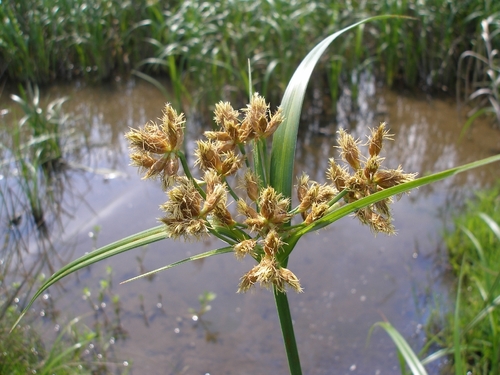
Bolboschoenus fluviatilis, commonly known as river bulrush, is a flowering plant species that belongs to the sedge family Cyperaceae. Its native range covers Australia, New Zealand, New Caledonia, Canada, the United States, and northeastern Mexico. Both B. fluviatilis itself and its fruits are important food sources for waterfowl, including geese, ducks, bitterns, and swans. This plant also provides cover and nesting sites for these waterfowl, other bird species, and small mammals. Like other members of the Bolboschoenus genus, B. fluviatilis grows sturdy tubers and rhizomes. These structures help stabilize intertidal habitats by preventing erosion. River bulrush grows in freshwater or brackish marshes, as well as in the calm waters of streams and lakes. It is able to propagate and thrive across a wide range of water depths, but produces the largest amount of biomass when growing in shallowly flooded conditions. In the Hudson Valley, B. fluviatilis and other bulrush species face threats from pollution, habitat destruction, and competition from invasive plant species including Typha angustifolia and Phragmites australis.