About Bolbitis heteroclita (C.Presl) Ching
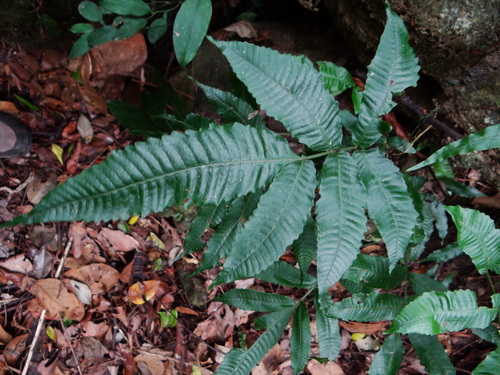
Bolbitis heteroclita (C.Presl) Ching is an aquatic fern species in the genus Bolbitis. It is native to subtropical and tropical regions spanning Asia, Melanesia, and Micronesia. Its native range includes Assam (India), Bangladesh, Nepal, and Bhutan in northeastern South Asia; southern China (including Hainan), Taiwan, and Japan’s Ryukyu Islands in southern East Asia; Myanmar, Thailand, and Vietnam in Mainland Southeast Asia; Malaysia, Indonesia, and the Philippines in Island Southeast Asia; Papua New Guinea and the Solomon Islands in Melanesia; and Pohnpei and Kosrae of the Caroline Islands in Micronesia. This species is commonly cultivated and sold as an aquatic ornamental plant for planted aquariums and garden ponds. It is one of two popular Bolbitis species used as freshwater aquarium plants, the other being Bolbitis heudelotii. Despite their popularity, these plants are generally not suited for most novice aquarists. They can be unexpectedly sensitive, requiring gentle, minimal water flow, and they prefer soft, acidic water with a pH ideally between 6.0 and 7.0, though exceptions may occur based on local water quality. These ferns are naturally adapted to a riparian, semi-submerged growth habit rather than a fully aquatic submerged one, so long-term full submersion can be stressful for the plants. The best cultivation method for aquarium use is to tie or attach the plant’s roots to driftwood or rocks, placing only a few inches of the plant below the water’s surface. Its leaves grow best when floating just at or above the waterline, where they can access fresh air while the plant’s delicate, hair-like roots remain fully saturated. Adding carbon dioxide can greatly improve the health of all aquarium plants, especially epiphytes like this fern, and many online resources demonstrate how to do this. For the average aquarist, adding carbon dioxide is often unapproachable, particularly at first, and may feel like a difficult task for many, but it is not a required step for cultivation. More critically, weekly water changes of 25 to 75% of the total aquarium volume are vital, with the exact percentage depending on the aquarium’s bioload and the number of fish and other vertebrates living in it. Clean, regularly renewed water boosts the health of aquatic ferns: it circulates the water column and cleans the broad surfaces of the plant’s leaves, preventing buildup of algae, mulm, and detritus. This buildup can block sunlight, stop photosynthesis, and eventually cause the plant to decline. This species is easy to grow as a terrestrial or potted immersed plant for garden ponds. When its fronds reach a certain size, they are notably similar in appearance to poison ivy leaves. Some plant nurseries and growers sell this species under its older synonym, Bolbitis asiatica.