About Boehmeria cylindrica (L.) Sw.
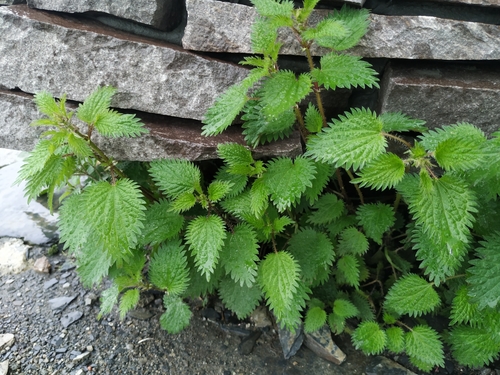
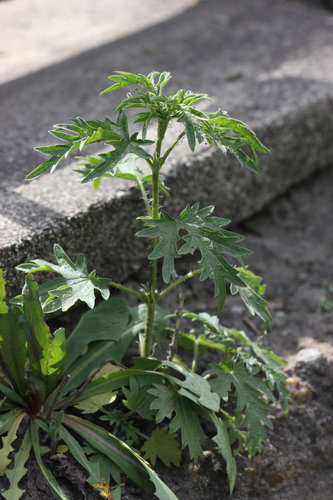
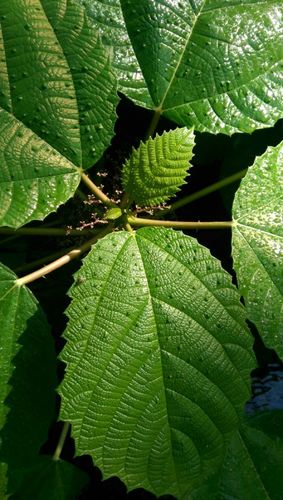
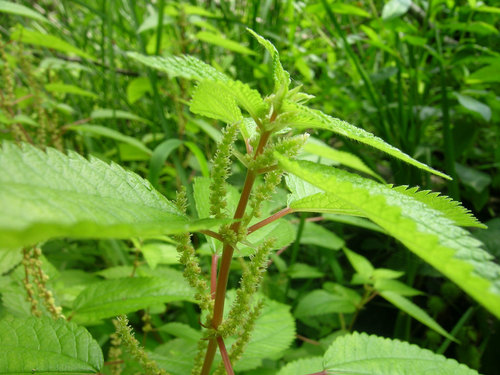
Boehmeria cylindrica (L.) Sw. is a deciduous plant that is occasionally dioecious. It reaches a height of 0.5 to 1.0 m (1 ft 8 in to 3 ft 3 in) and has oppositely arranged leaves. Spike-like hairs grow in the leaf axils. The leaves are ovate, measuring 6–8 cm (2.4–3.1 in) long and 3–4 cm (1.2–1.6 in) wide.
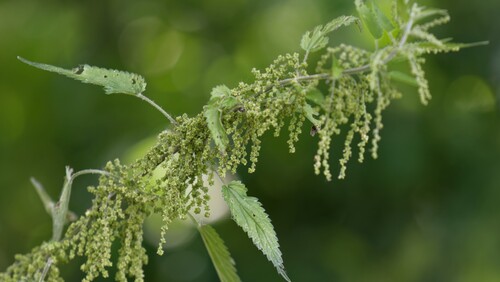
The flowers are green or greenish-white, and emerge from the axils of upper leaves. The inflorescences are spike-shaped, and can grow 1–3 cm (0.39–1.18 in) long. Male and female flowers typically grow on separate plants. Male flowers are clustered prominently along the inflorescence spikes, while female flowers are less continuously distributed along the spikes. Unlike most other members of the nettle family, B. cylindrica does not have stinging hairs.
The plant produces small, oval-shaped seeds that are covered in small hook-like hairs, and turn dark brown when mature.
B. cylindrica is distributed across North America, extending into Central and South America. It is native to northeastern Canada, most of the United States ranging from Maine to Florida and westward to South Dakota and California. It grows in wet to mesic deciduous woodland habitats, and grows most vigorously in floodplain and bottomland areas.
B. cylindrica is wind-pollinated, meaning its plants are fertilized by pollen carried by wind. Because of this, its flowers do not attract many insects. Flowering occurs from summer to fall, and its pollen acts as an allergen for some people during this season. Larvae of the fly Neolasioptera boehmeriae form small spindle-shaped galls on this species. It is a larval host plant for the eastern comma, question mark, and red admiral butterflies, and also acts as a host for the false spider mite in North America.