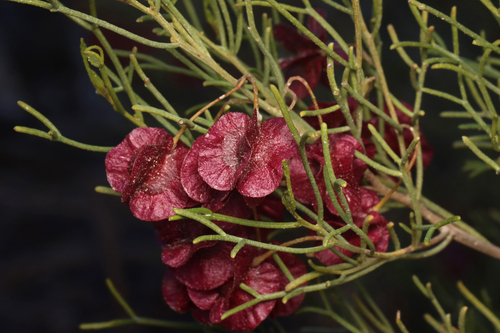
About Blighia sapida K.D.Koenig
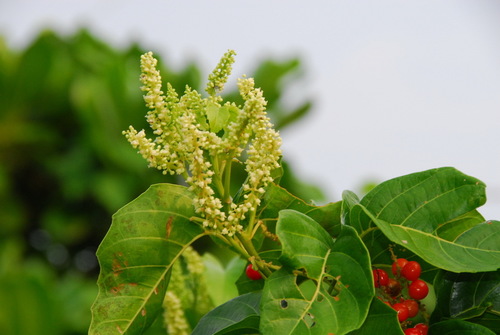
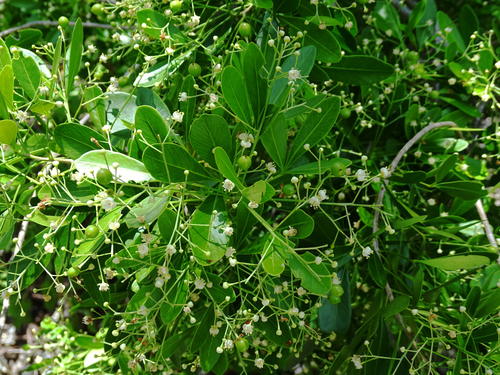
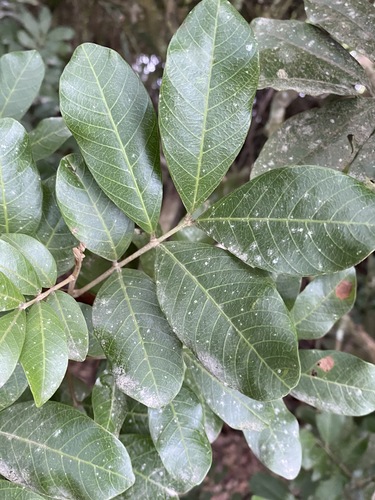
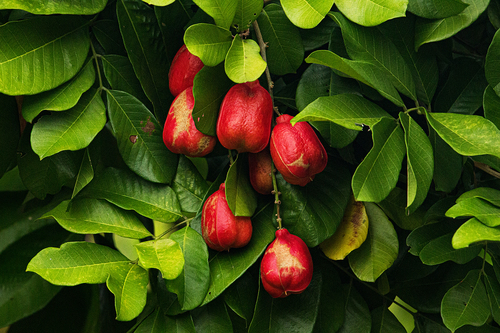
Botany: Blighia sapida, commonly called ackee, is an evergreen tree that grows to around 10 metres tall, with a short trunk and a dense crown. Its leaves are paripinnately compound, measuring 15–30 centimetres (6–12 inches) long, and bear 6–10 elliptical to oblong leathery leaflets. Each individual leaflet is 8–12 cm (3–4+1⁄2 in) long and 5–8 cm (2–3 in) wide. The tree produces fragrant inflorescences up to 20 cm long, which hold unisexual flowers that bloom during warm months. Each flower has five fragrant greenish-white petals. The fruit is pear-shaped, most commonly with three lobes (two to four lobes are also common). When the fruit ripens, it changes colour from green to bright red to yellow-orange, and splits open to reveal three large, shiny black seeds. Each seed is partly surrounded by soft, creamy or spongy white to yellow flesh called the aril, which has a nut-like flavour and a texture similar to scrambled eggs. A typical ackee fruit weighs 100–200 grams (3+1⁄2–7 ounces). The tree can produce fruit year-round, though peak fruit production typically occurs between January–March and October–November. Toxicity: The unripened aril and inedible portions of the fruit contain hypoglycin toxins, including hypoglycin A and hypoglycin B, which are classified as "soapberry toxins". Hypoglycin A is found in both the seeds and the arils, while hypoglycin B is only found in the seeds. Only minimal quantities of these toxins are present in fully ripe arils. In unripe fruit, toxin concentration can be up to 10 to 100 times higher, depending on the season and sun exposure. These two toxin molecules are converted to methylenecyclopropylacetic acid (MCPA) in the body, and are toxic and potentially lethal. MCPA and hypoglycin A inhibit several enzymes involved in the breakdown of acyl CoA compounds, often binding irreversibly to coenzyme A, carnitine and carnitine acyltransferase I and II. This binding reduces the bioavailability of these molecules, and consequently inhibits beta oxidation of fatty acids. Glucose stores are then depleted, leading to hypoglycemia and a condition called Jamaican vomiting sickness. These toxic effects only occur when unripe aril or another inedible part of the fruit is consumed. Although ackee is widely used in traditional dishes, research on its potential hypoglycin toxicity has been sparse and preliminary. Well-designed clinical research is still needed to better understand its pharmacology, food uses, and effective detoxification methods. In 2011, researchers found that as the fruit ripens, the seeds act as a sink that causes hypoglycin A in the arils to convert to hypoglycin B in the seeds. This means the seeds help detoxify the arils, bringing the concentration of hypoglycin A down to a level that is generally safe for consumption. History and culinary use: Ackee was imported to Jamaica from West Africa before 1773, and it has a prominent place in Jamaican cuisine. It is the national fruit of Jamaica, and the dish ackee and saltfish is Jamaica's official national dish. To reduce toxicity, ackee is only picked after the fruit has opened fully, when it has "yawned" or "smiled". After picking, seeds are discarded, and the fresh, firm arils are parboiled in salted water or milk, then may be fried in butter to prepare a dish. In Caribbean cuisine, ackee arils may be cooked with codfish and vegetables, or added to stew, curry, soup, or seasoned rice. Commercial use: Ackee canned in brine is a common commodity exported by Jamaica, Haiti and Belize. If grown from seed, ackee trees begin to bear fruit in 3–4 years. Trees grown from cuttings may produce fruit in 1–2 years. Other uses: In West Africa and rural areas of the Caribbean, the fruit has various uses. Its natural soap-like properties let it be used as a laundering agent or fish poison. The fragrant flowers may be used for decoration or in cologne. The durable heartwood is used for construction, pilings, oars, paddles and casks. In African traditional medicine, ripe arils, leaves or bark were used to treat minor ailments. The seeds were formerly used as standardized weights to weigh gold dust, which led the British-issued currency in the former colony of Gold Coast to be named the "Gold Coast ackey".