About Biston strataria (Hufnagel, 1767)
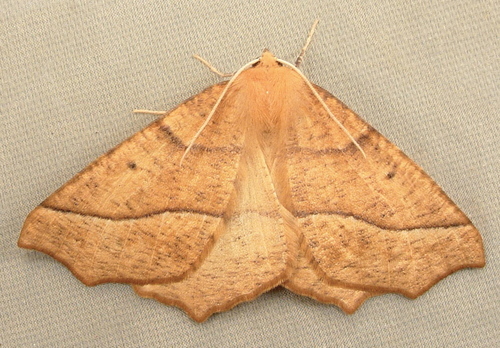
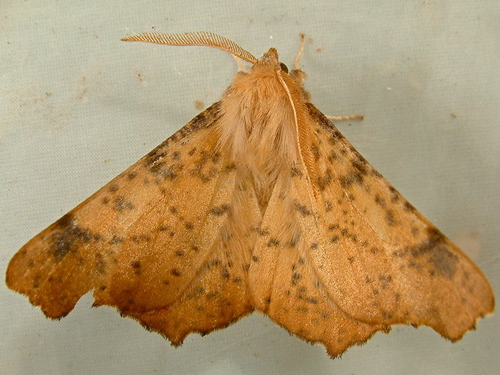
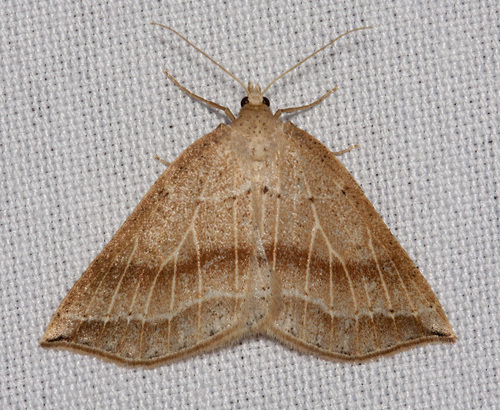
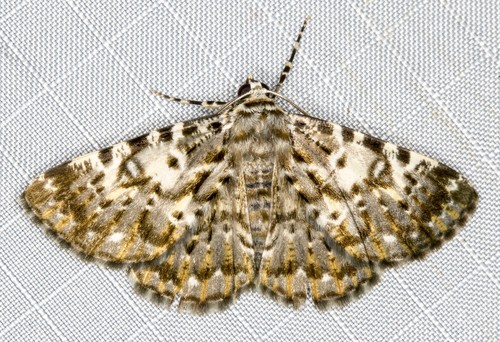
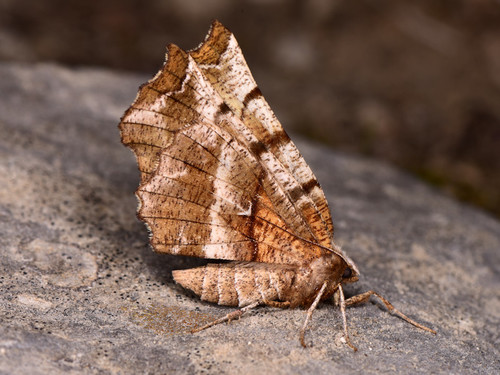
This species, commonly called the oak beauty, has the scientific name Biston strataria (Hufnagel, 1767). In terms of morphology, the oak beauty has white forewings marked with two irregular broad brown bands on each wing. The first band is short, positioned near the wing base, and surrounded by a black border. The second band lies near the outer margin, with a black border surrounding its inner edge. Between the two bands is a white area sprinkled with black dots, and a crescent-shaped black mark near the center of the wing. This patterning gives the oak beauty an overall mottled appearance. The forewings of B. strataria measure 17–27 mm (0.67–1.06 in) across, and the total wingspan ranges from 40–56 mm (1.6–2.2 in). The oak beauty's hindwings are paler than its forewings, and bear transverse black bands. The forehead and front of the thorax are white, while the sides of the thorax are a blend of white and grey. The entire body is covered in many hairs, and the back of the thorax and the rest of the body are a darker shade of brown. The oak beauty exhibits melanism, and occurs in two distinct variations: a dark melanic form and a light typica form. The melanic form is common in the Netherlands, but has never been observed in Britain, and details explaining this difference are not yet known. The closest relative of B. strataria is the peppered moth, Biston betularia, which also occurs in two forms. The proportion of melanic individuals is higher in B. betularia than in B. strataria. This is unusual, because between the two species, B. strataria would be expected to experience stronger evolutionary selection for melanism due to higher pollution concentrations in the areas it occupies. In terms of distribution and habitat, B. strataria is common across most of Europe, excluding the extreme north and extreme south of the continent. In the southern part of its range, it extends through the whole Mediterranean, Balkan countries, and the Black Sea region, as far east as Asia Minor and the Caucasus. In the north, its range reaches southern Fennoscandia. It is also found in the British Isles, including Ireland. In July and August, larvae of B. strataria can be found feeding on a variety of host plants. This moth is abundant in wooded areas, including parks, gardens, and other suburban habitats. It is most often found resting on tree trunks, where it can blend in with its surroundings.