About Bischofia javanica Blume
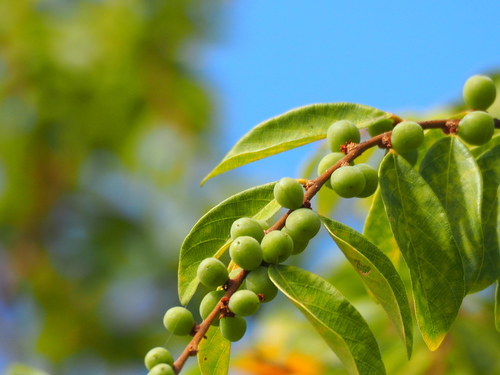
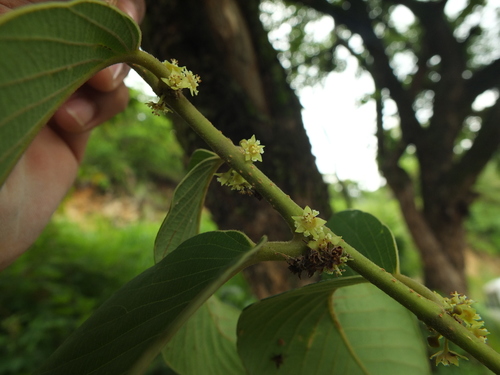
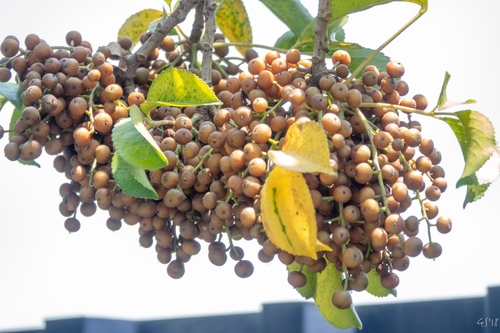
Bischofia javanica, commonly called bishop wood, is a plant species in the family Phyllanthaceae. Along with the related species Bischofia polycarpa, it is one of only two members of the genus Bischofia and tribe Bischofieae. This species ranges across southern and southeast Asia, extending to Australia and Polynesia; it was also introduced to North America as an ornamental decorative plant, where it is now considered an invasive species. In the jungles of Assam, local people call this tree uriam, and tigers commonly use it to scratch-mark their territories. It also grows in southwestern, central, eastern, and southern China, as well as Taiwan. In Taiwan, indigenous peoples consider it a sacred tree. Its dark red, dense wood is used as a building material for items ranging from furniture to bridges. The wood is durable but difficult to air-dry, and it also works well as firewood. The fruits of Bischofia javanica are used to make wine. Its edible seeds contain 30–54% oil, which is used as a lubricant. The bark has a high tannin content, and is harvested as a source of red dye to stain rattan baskets and colour tapa cloth. The roots are used for medicinal purposes. In Southern Laos, the leaves are eaten when dipped into chili sauce.