About Biorhiza pallida (Olivier, 1791)
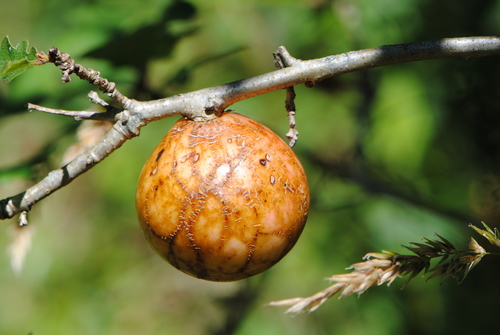
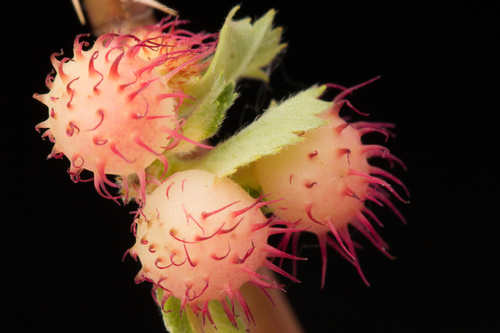
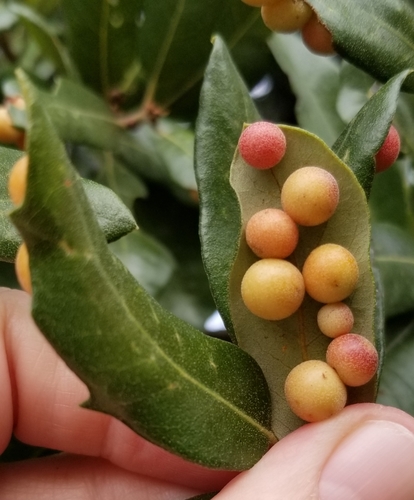
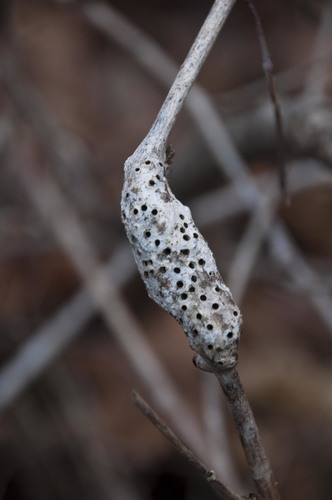
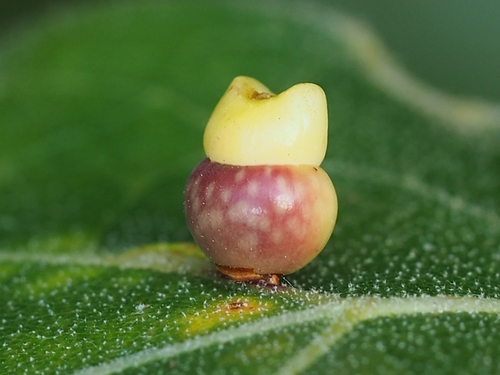
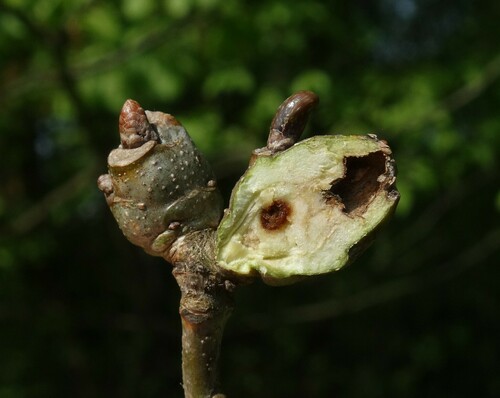
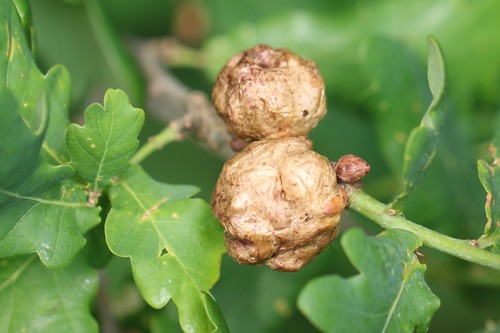
Biorhiza pallida has a complex two-generation life cycle. The first generation, which develops over winter and spring, consists only of agamic (asexual) females that reproduce through parthenogenesis without males. The second summer generation includes both male and female adult wasps, which mate to produce fertilized eggs. The wingless agamic female wasp measures between 4.8 and 6.3 millimetres (0.19 and 0.25 inches) in length. Its head is golden brown, with mid-brown compound eyes and orange simple eyes (ocelli). Its long antennae have 15 segments and are orangeish-brown, and its thorax, legs, and bulbous, glistening gaster (abdomen) are yellowish-brown. Male and female wasps of the summer generation are smaller, ranging from 2 to 3.5 mm (0.08 to 0.14 in) in length. Their head, thorax, and gaster are golden brown and translucent. They have clear wings with dark veins and pale brown hairs. Females have large dark eyes, while males have large pale eyes; the other key sex difference is the shape of the gaster, which is deep and narrow in males, and broad with an ovipositor at the tip in females. In spring, the newly hatched agamic females from the overwintering generation climb the trunks of oak trees, including Quercus robur and Quercus petraea. They lay batches of eggs in the oak's young buds, and inject venom at the same time that causes the oak's leaf tissues to swell and soften. After the eggs hatch, the larvae secrete additional substances that encourage plant growth, forming a globular gall. This gall can grow up to 5 cm (2 in) in diameter; it is soft and pudgy when young, and later becomes dry and papery. The gall provides a nutritious, protective environment, and as many as thirty Biorhiza pallida larvae may develop inside a single gall. After two to three months, adult males and females emerge from separate galls. After mating, females move down to the ground, enter the soil, and lay their eggs one at a time inside small oak rootlets. Small globular galls then form on the roots. Larvae overwinter inside these root galls, before emerging as a new generation of wingless agamic females that crawl back up the oak trunk to start the cycle again. Galls of Biorhiza pallida have been recorded on the following oak species: Algerian oak (Quercus canariensis), Turkey oak (Quercus cerris), Portuguese oak (Quercus faginea), Hungarian oak (Quercus frainetto), holm oak (Quercus ilex), Aleppo oak (Quercus infectoria) and its subspecies veneris, Lusitanian oak (Quercus lusitanica), sessile oak (Quercus petraea), downy oak (Quercus pubescens), Pyrenean oak (Quercus pyrenaica), pedunculate oak (Quercus robur), and cork oak (Quercus suber). In addition to feeding and protecting Biorhiza pallida larvae, the galls provide shelter for several inquiline gall wasp species, including Synergus gallaepomiformis and Synergus umbraculus, which share the food-rich gall tissues with Biorhiza pallida larvae. Around twenty other gall wasp species are hyperparasites that live inside the gall and parasitize the Biorhiza pallida larvae.