About Betula pendula subsp. mandshurica (Regel) Ashburner & McAll.
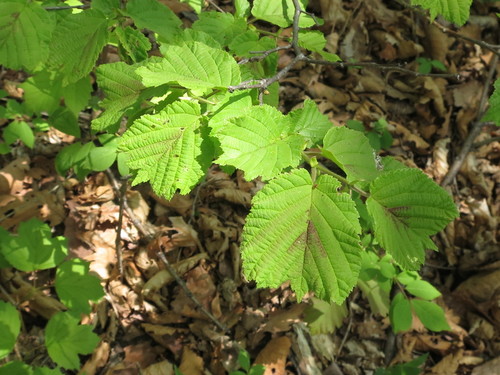
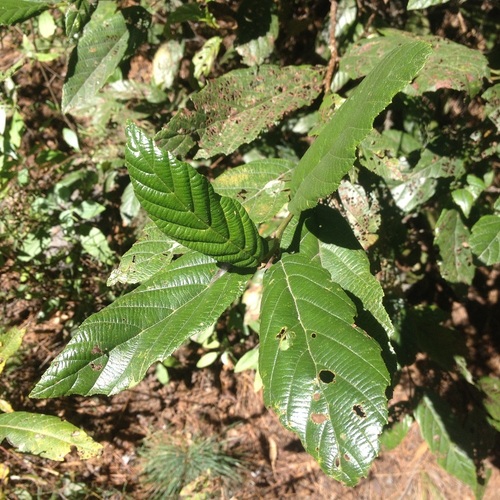
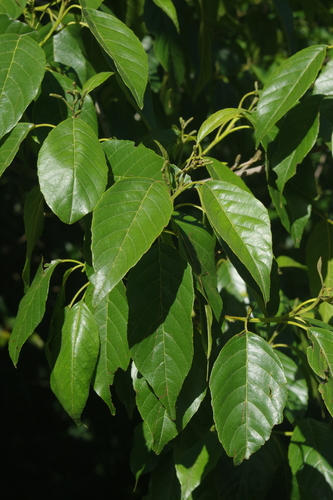
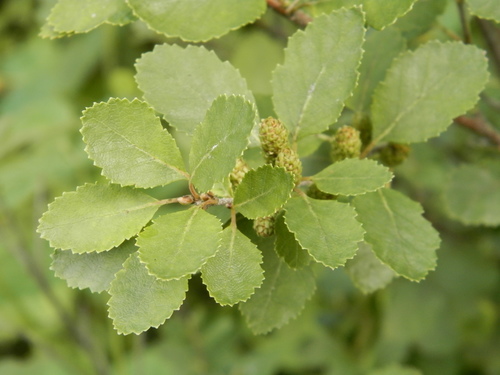
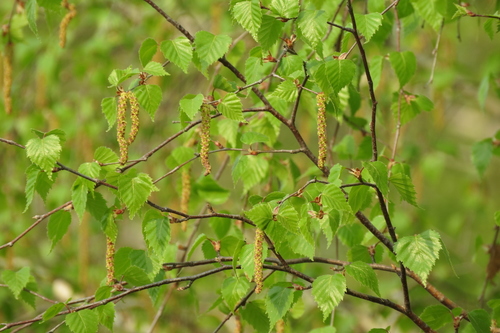
This is the subspecies Betula pendula subsp. mandshurica (Regel) Ashburner & McAll, commonly known as silver birch. Silver birch typically reaches 15 to 25 meters (49 to 82 feet) tall, and may exceptionally grow up to 31 meters (102 feet), with a slender trunk that usually measures under 40 centimeters (1 foot 4 inches) in diameter. The bark on its trunk and branches is golden-brown when young, then turns white over time as papery tissue develops on the surface and peels off in flakes, similar to the closely related paper birch (B. papyrifera). Bark stays smooth until the tree reaches a large size; in older trees, bark thickens and becomes irregular, dark, and rugged. Young branches have whitish resin warts, and twigs are slender, hairless, and often pendulous. Buds are small and sticky, and growth follows a sympodial development pattern: the terminal bud dies away, and growth continues from a lateral bud. The species is monoecious, meaning both male and female catkins form on the same individual tree. Some shoots are long and bear male catkins at their tip, while shorter shoots bear female catkins. Immature male catkins are present through the winter, and female catkins develop in spring, soon after leaves unfurl. Leaves have short, slender stalks, and measure 3 to 7 centimeters (1 1/8 to 2 3/4 inches) long. They are triangular with broad, untoothed, wedge-shaped bases, slender pointed tips, and coarsely double-toothed, serrated margins. Leaves are sticky with resin when young, and the resin dries as they age, leaving small, white scales. Foliage ranges from pale to medium green, and turns yellow early in autumn before leaves fall. In midsummer, female catkins mature, male catkins expand to release pollen, and pollination occurs via wind. An individual silver birch catkin produces an average of 1.66 million pollen grains. Small, 1- to 2-millimeter winged seeds ripen in late summer, growing on pendulous, cylindrical catkins that are 2 to 4 centimeters (3/4 to 1 5/8 inches) long and 7 millimeters (1/4 inch) broad. Seeds are very numerous and separated by scales; when ripe, the entire catkin disintegrates, and seeds are spread widely by wind. Silver birch is easily confused with the similar downy birch (Betula pubescens). Downy birches are characterized by hairy leaves and young shoots, while these same parts are hairless on silver birch. The leaf base of silver birch is usually a right angle to the leaf stalk, while downy birch has rounded leaf bases. The two species have quite different genetic structures, but do occasionally hybridize. Silver birch grows naturally from western Europe eastward to Kazakhstan, the Sakha Republic in Siberia, Mongolia, and the Xinjiang province in China, and southward to the mountains of the Caucasus and northern Iran, Iraq, and Turkey. It is also native to northern Morocco, and has become naturalized in some other parts of the world. In the southern parts of its range, it is mainly found in mountainous regions. Its light seeds are easily blown by wind, and it is a pioneer species, one of the first trees to sprout on bare land or after a forest fire. It requires plenty of light, grows best on dry, acid soils, and is found on heathland, mountainsides, and when clinging to crags. Its tolerance to pollution makes it suitable for planting in industrial areas and exposed sites. It has been introduced into North America, where it is called European white birch, and is considered invasive in the U.S. states of Kentucky, Maryland, Washington, and Wisconsin. It is naturalized and locally invasive in parts of Canada. Silver birch has an open canopy that lets plenty of light reach the ground, which allows a variety of mosses, grasses, and flowering plants to grow beneath it; these understory plants in turn attract insects. Flowering plants commonly found in birch woods include primrose (Primula vulgaris), violet (Viola riviniana), bluebell (Hyacinthoides non-scripta), wood anemone (Anemone nemorosa), and wood sorrel (Oxalis acetosella). Small shrubs that grow on the forest floor include blaeberry (Vaccinium myrtillus) and cowberry (Vaccinium vitis-idaea). Birds found in silver birch woodland include the chaffinch, tree pipit, willow warbler, nightingale, robin, woodcock, redpoll, and green woodpecker. The branches of silver birch often grow tangled masses of twigs called witch's brooms, caused by the fungus Taphrina betulina. Old trees are often killed by the decay fungus Fomitopsis betulina, and fallen branches rot rapidly on the forest floor. This tree commonly forms a mutualistic relationship with the mycorrhizal fungus Amanita muscaria, particularly on acidic or nutrient-poor soils. Other mycorrhizal associates include Leccinum scabrum and Cantharellus cibarius. In addition to mycorrhiza, microfauna living in the soil assist the tree's growth by enhancing nutrient mobilization. The larvae of a large number of butterfly, moth, and other insect species feed on the leaves and other parts of silver birch. In Germany, almost 500 species of insects have been found on silver and downy birch, including 106 beetles and 105 lepidopterans, with 133 insect species feeding almost exclusively on birch. Birch dieback disease can affect planted silver birch trees, while naturally regenerated trees seem less susceptible to the disease. This disease also affects B. pubescens, and in 2000 was reported at many of the sites planted with birch in Scotland during the 1990s. In the United States, silver birch wood is attacked by the bronze birch borer (Agrilus anxius), an insect pest to which the tree has no natural resistance. Silver birch is the national tree of Finland. Leafy, fragrant bunches of young silver birch boughs, called vihta or vasta, are used to gently beat oneself while bathing in the Finnish sauna. Silver birch is often planted in parks and gardens, grown for its white bark and gracefully drooping shoots, sometimes even in warmer-than-optimal locations such as Los Angeles and Sydney. In Scandinavia and other regions of northern Europe, it is grown for forest products such as lumber and pulp, as well as for aesthetic purposes and ecosystem services. It is sometimes used as a pioneer and nurse tree in other areas. Silver birch wood is pale in color with a light reddish-brown heartwood, and is used to make furniture, plywood, veneers, parquet blocks, skis, and kitchen utensils, and is used in turnery. It makes good firewood, but burns quickly. Slabs of silver birch bark are used to make roof shingles, and bark strips are used for handicrafts such as bast shoes and small containers. Historically, the bark was used for tanning. Bark can be heated to collect resin, which makes an excellent waterproof glue and is useful for starting fires. The thin sheets of bark that peel off young wood contain a waxy resin and are easy to ignite even when wet. Dead twigs are also useful as kindling for outdoor fires. At one point, bark removal was so widespread that Carl Linnaeus expressed concern for the survival of silver birch woodlands. Birch brushwood is used for racecourse jumps and besom brooms. In spring, large quantities of sap rise up the silver birch trunk, and this sap can be tapped. It contains around 1% sugars, and can be used in a similar way to maple syrup: drunk fresh, concentrated by evaporation, or fermented into a "wine". Successful silver birch cultivation requires a climate cool enough to produce at least occasional winter snowfall. Because they are shallow-rooted, they may need water during dry periods. They grow best in full sun when planted in deep, well-drained soil.