About Betula davurica Pall.
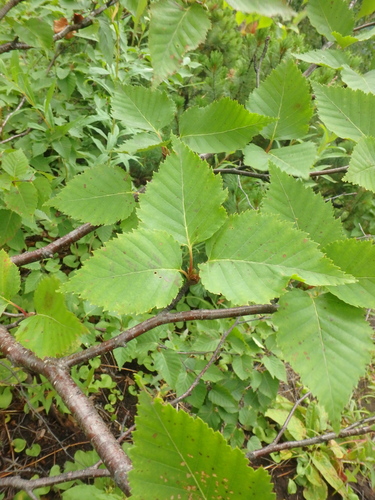
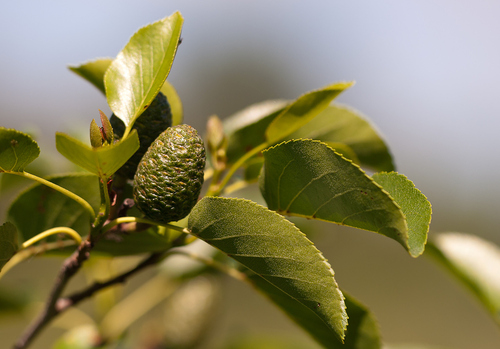
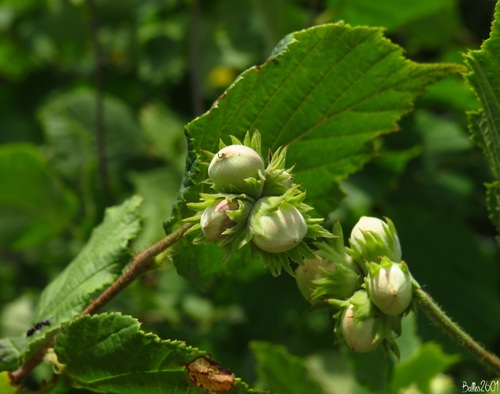
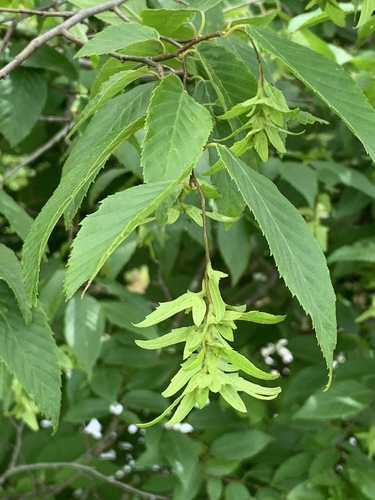
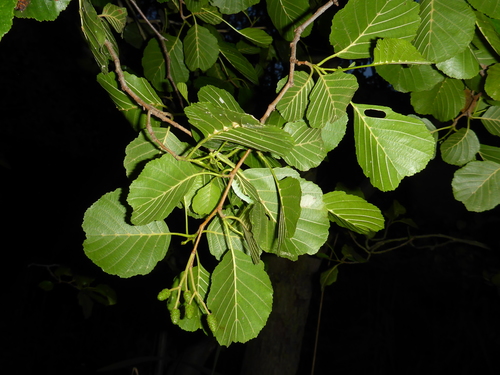
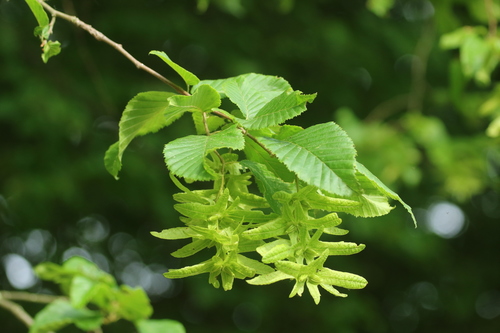
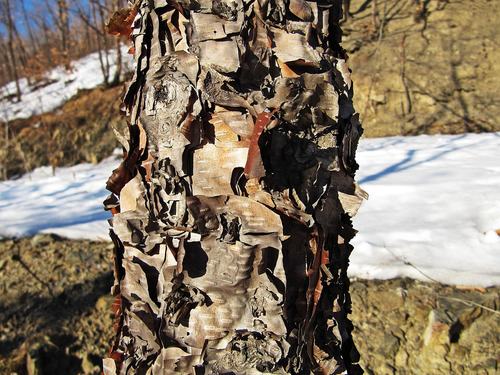
Betula davurica Pall. is a deciduous tree that can reach up to 10 m in height. The bark is grayish - brown or gray and peels off in thin pieces. Winter buds and twigs are egg - shaped with pointed tips, having 3 - 4 scales. The terminal bud is about the same size (3 - 6 mm long) as the lateral buds. Twigs are black - brown, hairy, and have many resinous glands. Leaf scars are crescent - shaped or triangular. Leaves are alternate, ovate, but highly variable due to polyploidy characteristics. They are 3 - 8 cm long and 3.5 - 4.5 cm wide, with an acute, obtuse, or truncate base, irregularly and sharply doubly serrate margins. The upper surface is green with hairs on the veins, and the lower surface is yellow - green, with many resinous glands and fine hairs on the veins. There are 7 - 8 pairs of lateral veins, and the petiole is 5 - 15 mm long and hairy. The male catkins are pendulous, 6 - 7 cm long, with brown, ciliate bracts. The female catkins are erect, cylindrical, 4 cm long and 1.2 - 1.5 cm wide. The fruit is cylindrical, 2 - 4 cm long. The middle lobe of the bract is long - elliptic or broad - lanceolate, and the lateral lobes are oblong, ovate, or circular. The bract is 7.5mm × 7.5mm. The nut is elliptical, light reddish - brown, 4mm × 2mm, and with wings, the width is 4mm. The sporophyte chromosome number is 84. It flowers from early to mid - May and fruits mature in late September, falling in October. It is distributed in northern China, Siberia, the Russian Far East, Mongolia, and Japan, mainly in Baekdudaegan but also across the country. It has shallow roots, and young seedlings grow quickly as their roots establish well. It grows at an altitude of 100 - 1,500 m in humid or slightly dry places like mountain ridges.