About Berlandiera lyrata Benth.
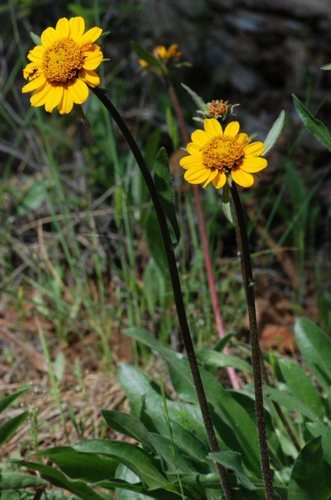
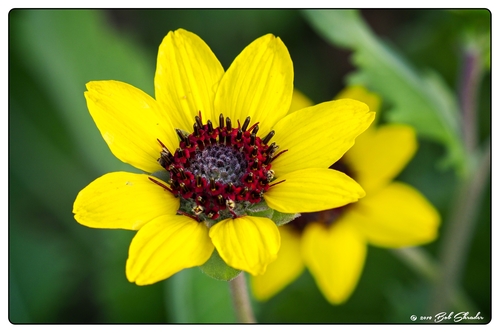
Berlandiera lyrata Benth. typically reaches 30 to 60 centimeters (1 to 2 feet) in both height and width, and may uncommonly grow up to 120 centimeters (4 feet). Its roots can survive freezing conditions to keep the plant alive. Its leaves are velvety, and are either pinnately lobed or scalloped. The plant's flower heads are roughly 4 centimeters (1+1⁄2 inches) in diameter, and bear 5 to 12 yellow ray florets, most commonly 8, each 1.5 centimeters (5⁄8 inch) long. In regions that experience freezing, its flowers bloom at night from spring until the first frost. In frost-free regions, it blooms year-round, most often from April to October. Flowers close or drop by mid-morning. As temperatures rise, flowers turn white and their ray florets drop, leaving behind a green disc shape. Its seed-like fruit is scaleless, and has no hair at the tip. This species is native to the United States, where it occurs naturally in Colorado, Kansas, Oklahoma, Arizona, New Mexico, Texas, and Arkansas. In Mexico, it is native to Chihuahua, Coahuila, Nuevo León, San Luis Potosí, Durango, Sonora, Zacatecas, Aguascalientes, and Jalisco. It grows best in USDA hardiness zones 4 through 9, and can grow at elevations as high as 2,100 meters (7,000 feet). It is most commonly found in grassy areas with rocky soil. Berlandiera lyrata is a hardy perennial cultivated as an ornamental plant. It is grown in gardens for the chocolate-like scent of its flowers; this chocolate scent can also be released by plucking the ray florets from the flower head. Removing spent flowers encourages the plant to continue blooming for as long as possible. It grows best in full sun. It naturally grows in dry, shallow, rocky soils such as sandy loam and limestone soil. In the southwestern United States, it is also found growing along roadsides and in grasslands. It is drought-tolerant, but is prone to root rot in heavy, wet soils. It can be planted in frequently mowed areas, and can tolerate mowing itself. It is propagated by seed; seeds can be collected from existing plants and germinated outdoors from spring to fall. The flower heads of this species attract beneficial insects to gardens. The stamens have a chocolate flavor and are edible. Native American groups used the plant to relieve stomach problem symptoms. Some Native American cultures burned dried roots of the plant to treat nervous conditions or to inspire courage.