About Bergbambos tessellata (Nees) Stapleton
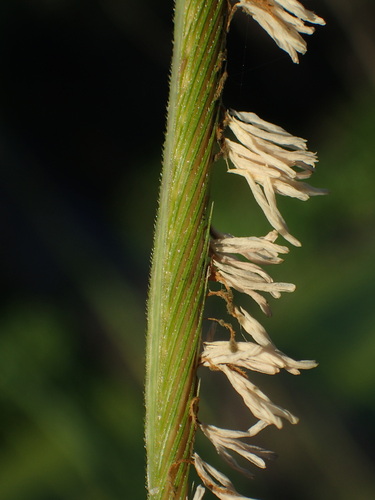
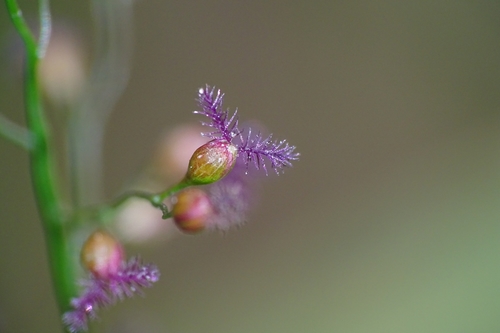
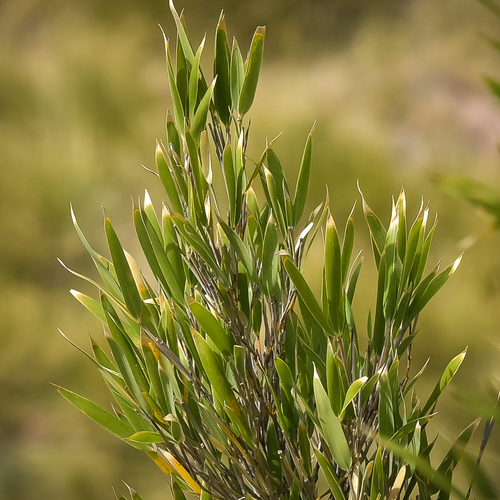
This frost-resistant bamboo species is scientifically known as Bergbambos tessellata (Nees) Stapleton. It is often found growing in association with Leucosidea sericea, in dense clumps that reach up to 5 metres tall. It prefers moist rocky locations. Its hollow culms (canes) grow 2–2.5 cm in diameter. Leaves located at the base of branches are reduced to papery sheaths; other leaves measure 4–12 cm long, are sharply pointed with spiny margins, and have a strongly tessellated surface. This species occurs at elevations between 1500 and 2000 metres in South Africa (the Cape Provinces, Free State, and KwaZulu-Natal), Lesotho and Swaziland, growing along mountain side streams. It can be found in the Amathole Mountains, the Bamboesberg (the location it is named for), and the Drakensberg. Bergbambos is one of only two temperate bamboo species native to the African mainland, and the only bamboo native to South Africa and Lesotho. Bamboos are grouped into three categories based on their flowering cycle: annual flowering, irregular flowering, and gregarious flowering, which occurs at long intervals with synchronized flower and seed production. Most bamboos fall into this last gregarious flowering category, with intervals between flowering events ranging from 3 to 120 years. Bergbambos tessellata belongs to this gregarious flowering category, with flowering occurring at 45-year intervals. Flowering of this species has been recorded in KwaZulu-Natal in 1908, 1953 and 1998/99. It also serves as a host plant for the bamboo sylph butterfly (Metisella syrinx), a species listed as vulnerable on the IUCN Red List.