About Berberis integerrima Bunge
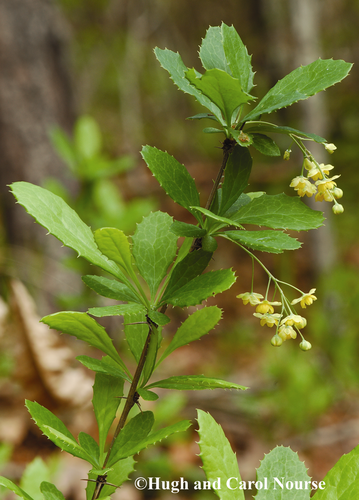
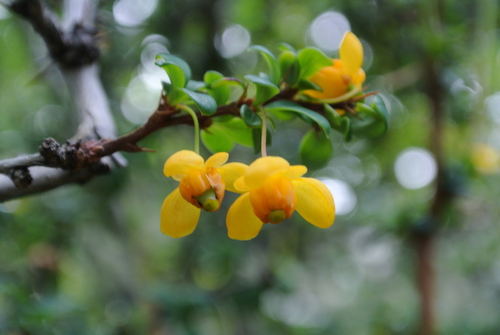
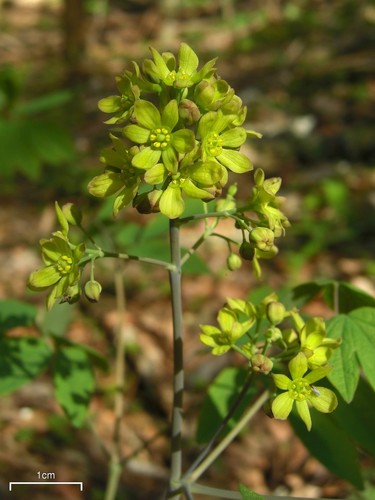
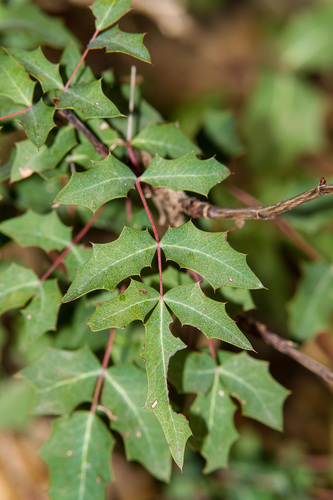
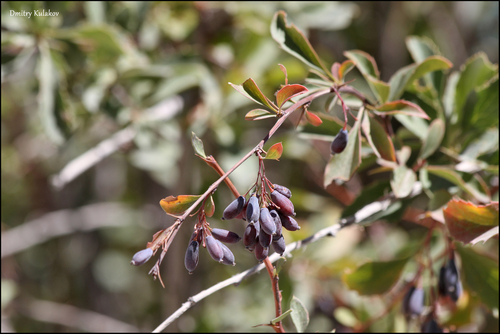
Berberis canadensis, a deciduous shrub, can be hard to distinguish from the introduced weed species Berberis vulgaris within its native range. Useful distinguishing features are that B. canadensis' second-year branches are brown, purple, or reddish (rather than grey), it has fewer teeth along leaf edges, and fewer flowers per inflorescence. On average, this shrub grows 1 meter (3 ft 3 in) tall, and sometimes reaches up to 2 meters (6 ft 7 in) in height. It spreads via rhizomes to form large clonal stands. Rhizomes let the plant absorb more nutrients from soil, allowing it to grow in relatively dry environments. B. canadensis stems are hairless, not extensively branched, and range in color from green, purple, red, to brown. Stems also grow in a dimorphic pattern. Leaves on the shrub are arranged alternately, with petioles 8 mm (5⁄16 in) long, and covered in a white waxy glaucose coating. Leaves are thin, smooth, and ovate, with an apparently random venation pattern visible on the leaf underside. The flowers of Berberis canadensis are arranged in a raceme, usually 2–5 cm (1–2 in) long, with six petals. Petals are cup-shaped, notched at the tips, arranged in a double row with one petal sitting on top of another, and range in color from yellow to a dull whitish yellow; a bright green stigma protrudes from the center of the flower. The stamen responds to physical stimuli, bending toward the stigma when a stimulus is present. This species also produces small, bright red, oblong edible berries with high acid content, which gives the fleshy berries an appealing tart taste. Berberis canadensis is native to 13 of the 50 United States. Historically, it occurred across the Appalachian Mountains from southern Pennsylvania to northern Georgia and Alabama, with scattered populations reported as far west as Missouri. It is considered extirpated from Pennsylvania, Alabama, Maryland, and possibly Arkansas. The species primarily grows on rocky slopes on the sides of hills and mountains. It was much more prevalent in the past, but due to its connection to wheat rust, the United States government has gradually eradicated populations of the species. The species now appears to have reached an equilibrium with its environment, with no further range expansion. Unlike most plants whose growth is restricted by weather, B. canadensis is primarily restricted by soil composition and habitat openness. This perennial plant grows in many diverse open environments, including dry woodlands and exposed hillsides. It can grow in a range of soil types from basic to slightly acidic, with extremely shallow depth. Soils where it grows are well-drained, receiving occasional moisture from seasonal rainfall. It grows alongside a number of other plant species native to its habitat. The fruit of Berberis canadensis is widely used by people and is rich in vitamin C. Historically, it was a major source of nutrition for indigenous peoples of the southeastern United States. The juicy red berries can be cooked to make jelly, and their juice is a popular refreshment. Berries can also be pounded into a paste similar to oatmeal, and are sometimes used to make alcoholic beverages. For medicinal use, Native Americans specifically the Cherokee used this plant as a remedy for diarrhea; bark soaked in water was drunk to alleviate diarrhea symptoms.