About Berberis hispanica Boiss. & Reut.
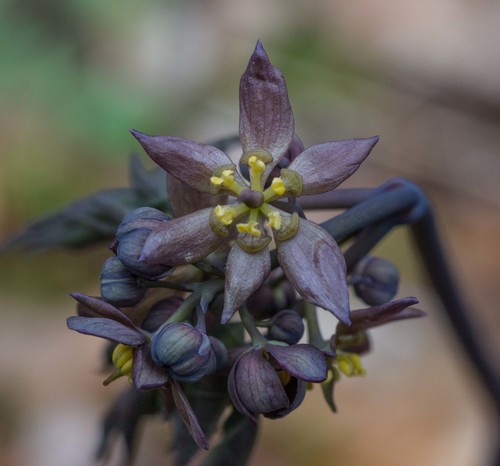
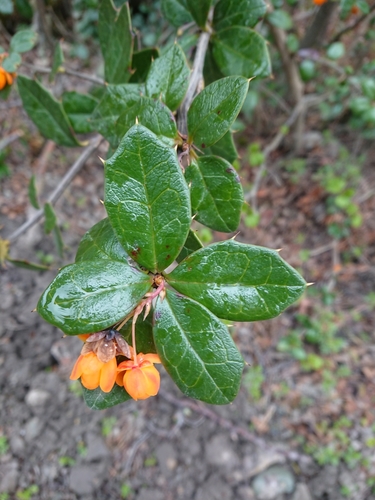
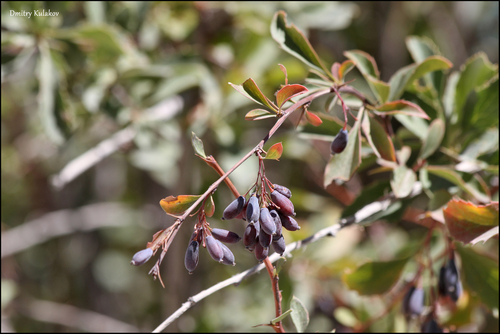
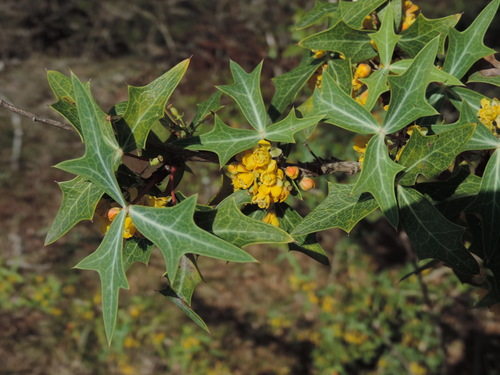
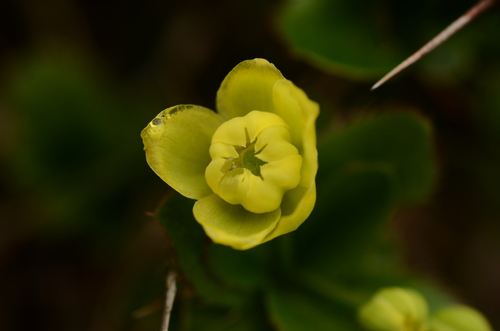
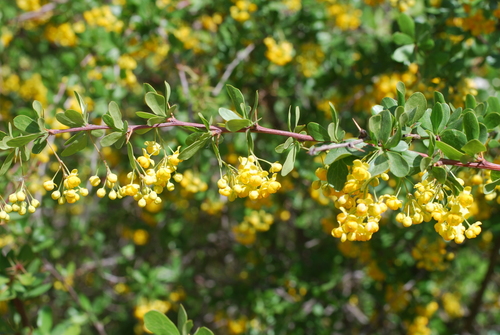
Berberis hispanica Boiss. & Reut. (also treated as Berberis vulgaris subsp. australis) is a deciduous shrub that can reach up to 3 m (10 ft) in height. Its stems and young branches are reddish or dark purple, and its bark bears 3 to 5 branched spines that are modified leaves or bracts; the central spine is typically the largest. Its oval leaves are arranged in fascicles on short peduncles that grow from the axils of the spines. The leaves are thick and leathery, match the spines in approximate size, measure 1 to 5 cm long, and each attaches to a short petiole. The species produces yellow flowers that form raceme inflorescences, arranged in clusters of 3 to 9 flowers attached to a long panicle. Each flower is around 6 mm in diameter, with oval entire sepals and petals that are similar in appearance to the sepals. The base of each flower’s interior holds nectar, and flowers usually contain six stamens. Flowering occurs from April to June. The fruits are oblong lilac or blue berries that are 1 cm long, covered with wax, and each berry holds two seeds. This taxon is native to southern Spain, Morocco, and Algeria. It grows at elevations between 1000 m and 2000 m, and is found on mountain hedges that overlook the Mediterranean. Its root and flowers have been used to extract yellow dyes. The fruits have a sweet and sour taste, and have been used to make syrups and soft drinks; they are also rich in Vitamin C. The bark contains the alkaloid berberine, which stimulates the uterus and intestine, and has been associated with liver complaints, rheumatism, and sciatica. Some species in the genus Berberis are grown as ornamental plants. Barberry is often parasitized by the fungus Puccinia graminis, and forms part of the fungus’s life cycle. For this reason, barberry has been removed from many areas.